
We have discussed water testing at length on this blog. It is a critical component for communities in preparing for oil and gas drilling. Simply put, if you don’t do baseline testing — testing the state of your water before drilling occurs — you are completely unprotected if contamination occurs in the drilling process.
So I thought I would try to figure out what Montana law requires of companies that get drilling permits. I found a rather amazing resource in LawAtlas.
According to its website, “LawAtlas provides a platform for the systematic collection, measurement and display of state-level laws. It is a resource for researchers, practitioners, policy-makers and the public.”
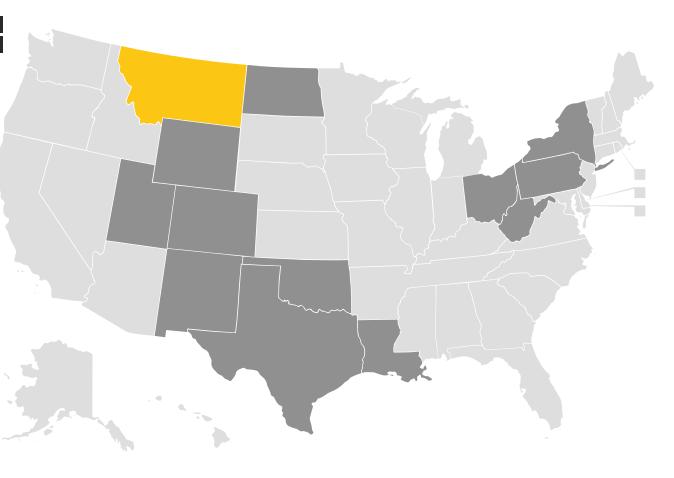 One area they have focused on is water quality, and they’ve developed a database of water quality rules and statutes in thirteen oil and gas producing states, including Montana. From their website:
Because of the number of water quality statutes and regulations, the database is divided into five different stages of oil and gas activities: Permitting, Design and Construction, Well Drilling, Well Completion, Production and Operation; and Reclamation. While this database focuses on water quality, in the coming months databases for air quality and water quantity will be added.
I’ll let you look for yourself, but I pulled out the information for Montana for well permitting, design and construction, and listed it below as a Q & A. It’s not a pretty picture. This is the stage where baseline testing needs to be done, and Montana has few requirements of operators who apply for drilling permits.
This is a key argument for local regulation of the drilling process. As we’ve established, there are few protections in federal law for water quality, and, as you can see below, few provisions in Montana law regarding water testing in the process leading to well construction.
The bottom line is that the balance between oil and gas operators and local property owners is out of whack. We need to act locally to require operators who come to Stillwater and Carbon Counties to protect our water. It’s what’s fair.
See for yourself:
Q. Is baseline water source testing required?
A. Yes, but only for injection wells, not for wildcat or hydraulically fractured wells.
Source: Montana regulation 36-22-1403-1
Q. What location requirements for water source testing are specified?
A. None
Q. What water sources must be tested?
A. Not specified
Q. What parameters for water source testing are specified?
A. Not specified
Q. Is follow-up water source testing required?
A. No
Q. Are water source testing results publicly disclosed?
A. No
Q. Is there a presumption of liability against operators when pollution is found in a nearby water source?
A. No
Q. What subsurface features are operators required to identify?
A. None
Q. What are the siting restrictions for oil and gas wells?
A. Other, well-density restrictions
Source: Montana rule 36.22.501 ; Montana rule 36.22.702
Q. Are there specific siting restrictions if the well is to be hydraulically fractured?
A. No
Q. Are there any exceptions/waivers to the siting restrictions?
A. Yes
Source: Montana rule 36.22.702
Q. What are the siting restrictions specific to pits, holding tanks, and other material storage?
A. None
Q. What are the siting restrictions specific to injection wells?
A. Exclusion areas
Source: Montana rule 36.22.702
Q. Are there any exceptions/waivers to these restrictions?
A. Yes
Source: Montana rule 36.22.702
Q. Is there any restriction to the size of the well pad disturbance
A. No
Q. Other design limitations
A. No
Q. What water quality protection technologies and practices are recommended or required?
A. Pit liners, other best management practices
Source: Montana rule 36.22.1005
Q. Who must operators notify as part of the permitting process
A. State regulatory agency, local government
Source: MT Statute 82-1-302, MT Statute 82-1-103, MT Statute 82-1-107, MT Statute 82-2-301, MT Statute 82-2–302, MT Statute 82-10-503, MT Regulation 36-22-601, MT Regulation 36-22-602.
Q. Must the type or source of water to be used in operations be identified?
A. No
Q. Do operators need a stormwater/erosion mitigation plan?
A. Yes
Source: MT Statute 75-5-402, MT Regulation 17-30-1102-30, MT Regulation 17-30-1105
Q. Do operators need a reclamation plan?
A. Yes
Source: Montana Code Ann 82-11-123(4) (2007)















 Preserve the Beartooth Front