Lawrence VanDyke, the Montana Solicitor General who opposed Montana Supreme Court Justice Mike Wheat in last month’s election, has left the state and resurfaced as the new Nevada Solicitor General.
While most of the press on these donations has focused on VanDyke’s affiliation with the Alliance for Defending Freedom and its religious right agenda, readers of this blog were also concerned that his funders included a number of energy firms.
The Montana Supreme Court stands as a steward of the environment, and it is critical to retain judges who will not serve a political agenda. Since Citizens United, corporate influence is the new normal for Supreme Court elections. Montana voters should congratulate themselves that they made the right choice to protect the State’s water, air and way of life.
Lawrence VanDyke is now Nevada’s problem.
REMINDER:
Three things you can do personally to support responsible oil and gas drilling along the Beartooth Front:
1. Monday, 9am: Carbon County Commissioners meeting: The Commissioners will be giving their response to the revised Silvertip Zone petition. It’s important to be there to support this effort by Belfry landowners.
2. Tuesday, 7pm: Carbon County Growth Plan meeting. The Growth Plan is a five year plan that will be approved by the County Commissioners in January. The plan will inform policy, so it is critical for Carbon County residents to have a voice in is contents.
3. Comment on the Carbon County Growth Plan. If you are a County resident and you can’t make the meeting, or if you want to provide detailed comments, you can provide input by sending an email with your comments to: brentm@ctagroup.com
Here are three things you can do personally over the next week that will make a difference in Carbon County. Don’t pass on these — your involvement will make a difference.
1. Please attend: Commissioners response to Silvertip Zone petition Monday, December 15, 9:00am.
Carbon County Commissioners meeting.
County Administration Building
17 West 11th Street
Red Lodge
The Carbon County Commissioners will be responding to the most recent petition from landowners in the Silvertip Zone in Belfry. When approved, the petition will set up a planning and zoning committee that will consider rules for oil drilling within the zone.
Your attendance will demonstrate support for the Silvertip residents, who seek to protect their personal property and livelihoods. Please come if you can.
2. Please attend: Carbon County Growth Policy meeting Tuesday, December 16, 7:00pm
Carbon County Courthouse
102 North Broadway
Red Lodge
Carbon County is in the final phase of updating its growth policy. This is the first update since 2009. The meeting represents a last opportunity for public input into the plan, which is expected to be adopted by the County Commissioners next month. This meeting is a reschedule of the November 25 meeting.
This plan will be in place for the next five years, and will influence regulation of oil and gas drilling, the protection of water, air and soil; the protection of property rights and the long-term economic viability of the County.
You can download the current draft of the 2014 Growth Policy by clicking on the graphic at right. The document is great reading – well crafted and full of information about the history, land, economy and people of Carbon County. You’ll find plenty of charts, graphs and maps that depict the history and current state of the County.
I recommend you read through it before the meeting and consider giving input on areas that you think are important.
Attending the meeting is important because the Growth Plan informs policy direction for five years. If you come and give your point of view, you can affect the final content of the Plan.
3. Provide comments for County Growth Policy
If you are a County resident and you can’t make the meeting, or if you want to provide detailed comments, you can provide input by sending an email with your comments to:
Some important points you may want to consider making:
One of the five key goals in the growth plan is to “develop the county’s natural resources balancing economic development with environmental responsibility (p. 52).” Key objectives for achieving this goal are to “promote policies and strategies to mitigate potential impacts without deterring natural resource development.” Ways to do this include:
Coordinate with landowners to enable citizen-initiated zoning districts (enabled through MCA 76-2-101) to mitigate potential impacts of natural resource development.
Consider possible impact mitigation policies in the development regulations.
Objectives could also be added to strengthen this section. Examples might include:
Acquisition of baseline data on air, water and soil quality in areas that are to be developed, and development of programs to mitigate any contamination or erosion of quality
The inclusion of the right specifically stated in the Montana Constitution to a clean and healthful environment in Carbon County.
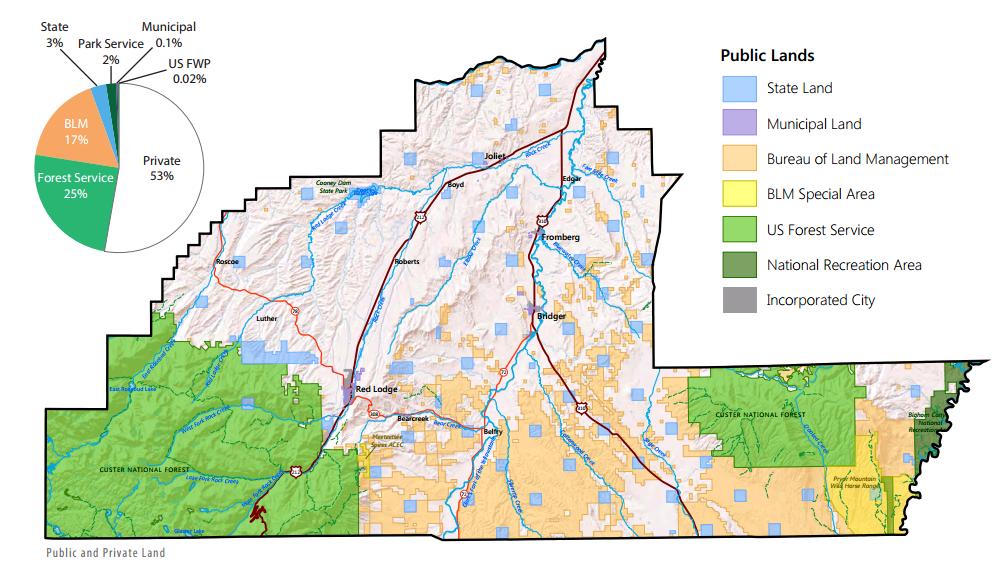
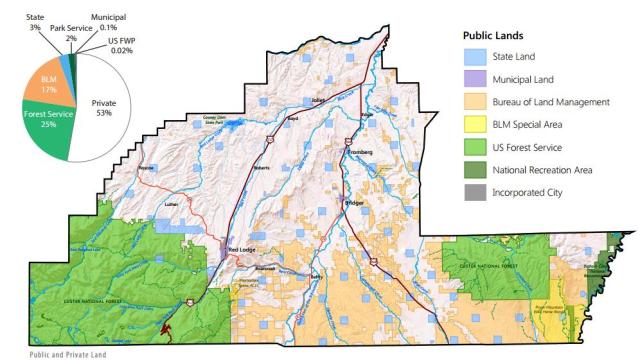
From the Growth Plan: Public and private land in Carbon County. Click to enlarge
If you read pp. 57-60 of the plan, a process for review is explained for any change of use in land — from agricultural, residential, or recreational to commercial or industrial. The review must cover agriculture, water use facilities, local services, natural environment, wildlife habitat, and public health and safety. Every time a landowner wants to subdivide in a way that means a change of use, these criteria must be considered. However, if the change is to natural resources development, all regulation moves to the state level, with no County requirement for involvement. As we have often explained, the State does not concern itself with these areas of review. The County should apply these same standards of review for land converted to oil and gas development in the growth plan.
The importance of maintaining tourism in the County, and making sure that any oil and gas development is done within the context of not allowing a conflict that would lead to an environment inhospitable to tourism. While tourism is mentioned in the growth plan, its essential importance to the County is underplayed, and the potential for conflict between tourism and the heavy industry of oil and gas development is not emphasized.
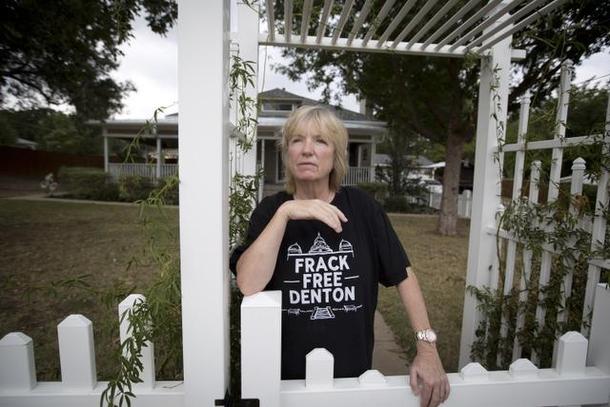
Cathy McMullen, Denton Texas
We’ve talked about the Denton, Texas fracking ban and its legal aftermath. Today we have the personal story of Cathy McMullen, the local citizen who led the fight.
This is one of a series of personal stories told on this site. You can find others by clicking here.
Cathy McMullen at a Denton City Council meeting. Click to enlarge.
McMullen’s story is an inspiring one, and it should help County Commissioners in Carbon and Stillwater Counties understand the importance of listening to local citizens who seek nothing more than to protect their property rights and their way of life.
According to the Guardian, “the oil and gas companies probably would be fracking still in Denton if they had not completely dismissed McMullen’s concerns.”
“They underestimated us completely,” McMullen said. “I think they all just thought: ‘Oh, it’s just Cathy.’ I don’t think they saw the storm clouds on the horizon, and that industry was creating this storm, and that it was going to blow into town, and everybody was just sick of it.”
Lined up against the power of the oil and gas industry, it’s probably pretty easy to underestimate McMullen, a 56-year-old home help nurse. She’s not political, and didn’t even register to vote until a few years ago.
Move to Denton, 2009
She moved to Denton with her husband in June, 2009 to escape drilling in nearby Wise County, the birthplace of fracking and the home of Bob and Lisa Parr, whose personal story we told last April. At that time a well was going in on the fence line of McMullen’s former home on 11 acres.
McMullen was not knowledgeable about fracking. What she was looking for was a safe place to live, and the century-old farmhouse she found in Denton seemed like a perfect place for her growing collection of rescue animals, which now includes five dogs and a cat.
“I am ashamed to say I was one of those apathetic people who are blind to what’s going on,” she says. She doesn’t have strong views about the oil and gas industry, she just believes that local people should have personal property rights that can’t be taken over by drilling.
But when you run away from fracking, fracking often follows in hot pursuit.They had been in their new house for just a few days when a familiar marker went up in a nearby field – a row of five posts with pink plastic flags. “I knew they intended to put wells there,” she said. “My heart sank.”
Her husband suggested they leave, but McMullen says she told him, “If we run now, we’re going to be running forever. If we stay in Texas, we just decide to stay and fight it’.” And fight she has, for the last five years.
Attempts at change
The first thing she tried to do was convince Range Resources, the operator, to move the wells from one end of the field to the other, away from a hospital and a school. They refused, so she talked to the mayor. He told her to let it go. The wells went in. It’s a familiar story from many parts of the country, but McMullen had no say because she owned only the surface rights to her property.
She raised $3,700 from her neighbors for air quality monitors, and for water and soil samples. She kept a log of the smells coming off the well.
McMullen next to a well. Click to enlarge.
She refused to quit. “I think that was the thing that just kept me going all these years: who the hell do they think they are? By any stretch of the imagination, why is it OK to allow heavy industrial use right close to a hospital and a playground? From the wellhead to a swing set was 536 feet.”
New regulations
A year later, the city council began to work on a new set of regulations for fracking in the city limits, and McMullen was invited to participate on the committee that was working on this. She was a voice in the wilderness, at many meetings the only member of the group who voiced concerns about fracking.
“They were dismissive. They were very paternal. They were: look, we know you kids don’t understand this, but we are doing this for your own good,” she said. “They were disrespectful.”
New regulations were adopted in early 2013. While some restrictions were placed on fracking, McMullen felt they were just a drop in the bucket. According to the Guardian, “industry did not feel bound even by those relatively light restrictions. Soon after the ordinance came in, oil drillers began to frack two wells near a new suburban development, which is full of young families. McMullen (was) horrified – and so were the local residents.”
As the wells went in, the stench in the new neighborhood got people angry enough to take action. McMullen decided it was time to press for a fracking ban. It was a pipe dream. It had never happened in Texas before, but McMullen felt there was no choice because there was no support from local regulators to make substantive change.
“They figured…we wouldn’t get the signatures”
“Nobody took us seriously at first,” she remembers, “because nobody has really challenged them in the state of Texas. They figured we would be squashed. We wouldn’t get the signatures.”
She found a lawyer, who is not willing to share his name, and wrote a ballot initiative. The wording of the measure specifically banned fracking – not drilling – a tactic intended to show that opponents were not against all industry activity, McMullen said.
McMullen debating prior to the election. Click to enlarge.
When the measure was put to a vote at the city council last July, nearly 600 people spoke up in support of the ban. The city council, in a significant tactical blunder, voted against a ban. However, the measure did go to the ballot last month.
The campaign was brutal. The oil industry used every bit of its resources to fight the ban, putting up money and recruiting a former mayor and university officials to be the spokespeople for fracking. They tied a loss of fracking revenue to school quality, arguing that a ban would hurt the schools. Flyers circulated reading, “Denton moms oppose drilling ban.”
The fight was so contentious that McMullen was assigned police protection. She got death threats. She recalls, “In one of the Facebook posts, the guy was hoping that so many people would be so mad at us they would put us on a stick and burn us – and he would get to light the match.”
But the town had had enough. Even though the campaign was underfunded, there were hundreds of volunteers going door to door, hosting barbecues, even organizing a free concert in the town square.
The ban passed 59-41. In the end, McMullen and a small group of mostly women had beaten the oil and gas industry. “I would rather be underestimated than overestimated,” she says. “If people don’t think you are going to be a challenge to them, you can fly under the radar and do what you need to do.”
Similarities to Carbon County
Many elements of Cathy McMullen’s story should sound familiar to us along the Beartooth Front.
Like Denton, Carbon County is not a hotbed of liberal environmentalism. Denton is Tea Party country. Denton voted for Romney 65-33 in 2012; Carbon County voted for Romney 60-36. What is clearly true in Denton is also true in Carbon County: this isn’t a traditional partisan issue. Voters respect property rights, and they don’t want oil companies to be able to do whatever they want on private land without permission from surface owners. They care about their way of life, and don’t want it ruined by unregulated drilling.
In both Denton and Carbon County, residents do not oppose all oil and gas drilling. The Denton ordinance banned fracking, not conventional drilling. The Silvertip Zone wouldn’t ban drilling, but would set the conditions under which drilling should occur.
Like Cathy McMullen, the Silvertip residents may be underestimated by local elected officials. In the video below, shot at the August 18 meeting in which Silvertip residents presented their zoning petition, listen to County Commissioner Doug Tucker at 50:16 in this video (transcription is mine, so please forgive and correct errors):
Tucker: “When you state farmers and ranchers, and I’ve followed your articles and stuff with Northern Plains Resource Council, I think that we need to identify first of all, there’s a difference between possibly the farmers and ranchers that you’re stating. When I think of a rancher in the Clark Fork Valley, I think of the large scale ones: the Herdons, the Petersons, the Hergenriders, versus the smaller ones. I’m not saying they should be separated, but I know that when you talk about farmers and ranchers, and I’ve read many of your articles Deb, that state ‘all the farmers and ranchers over there,’ yet when I go over and speak with the farmers and ranchers that I’m thinking in my mind the farmers and ranchers are the ones that are doing most of the ag farming, they’re not on board with what the Northern Plains Resource Council is proposing. So I think there’s a little bit of a difference because when I look at these people here, I know the Nashes have a small operation there, I’m very aware of that, but I’m also noticing, I mean, I don’t know everybody here obviously, but, as far as the farming and ranching community, I don’t see the Hoskins here. I know that somebody spoke on behalf of them, but they’re large scale farmers. Herdons, large scale farmers, Petersons, Aisenbreys…”
The message is clear — even though the farmers and ranchers who have petitioned to form the Silvertip Zone have complied with the legal requirements for zone size, and percentage of owners signing, in Tucker’s mind this group is less relevant than larger ranchers. The smaller property owners somehow are less important.
The beauty of a citizen initiated zone is that it affects only the landowners in the zoned area. It is a way for individuals to protect their property rights, and it doesn’t keep others from exercising their rights as they see fit. The farmers and ranchers in the Silvertip Zone have complied with the legal requirements for forming a citizen initiated zone, and have done so in accordance with the County Growth Plan.
The lesson of Denton should not be lost on the Carbon County Commissioners. They can support their constituents who are acting within the law to protect their property as they see fit, or they can ignore these Carbon County voters and cast their lot with Energy Corporation of America and their Super Lawyer Mike Dockery.
Like Cathy McMullen and the citizens of Denton, the Silvertip landowners are not going away. They should not be underestimated.
Cheap gas
The price of gas continues to fall. Three weeks ago I noted that gas was at $2.99 in Colum- bus and Red Lodge, and speculated on what falling oil prices might mean to oil drilling along the Beartooth Front.
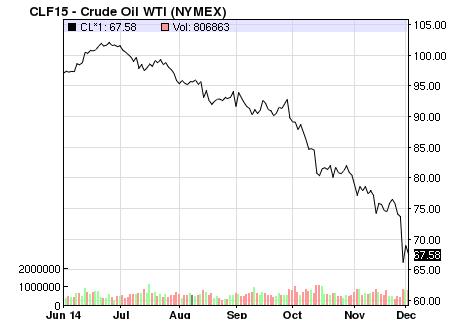
Today the price of gas in Red Lodge is down to $2.77, and the price of oil on international markets has plummeted to about $70 a barrel, down over 40% in five months.
Let’s look at why this is happening from an international perspective, and consider what this continued decline in oil prices might mean to the possibility of expanded drilling in Carbon and Stillwater Counties.
A decade-long increase in oil prices
A decade ago oil was about $40 a barrel, but prices begin to increase sharply because of increases in global demand, particularly from China, where industrialization and economic growth were increasing quickly. This increase in demand caused oil prices to spike. Prices rose to about $100 per barrel and held there from about 2011 to 2014.
The Shale Boom
At that price it became very profitable to start extracting oil from places where production costs were higher. This led to fracking and horizontal drilling in the shale fields of North Dakota and Texas. The increase in production in the United States was dramatic – about four million barrels of crude a day since 2008, on a base of 75 million per day worldwide.
This increase in supply did not lead to a corresponding drop in price, because at the same time the supply from other oil producing areas declined due to political conflicts: the civil war in Libya, the continued unrest in Iraq, sanctions on Iran by the US and Europe. These conflicts reduced oil production from the rest of the world by about three million barrels a day. The market share for US oil increased, but overall global production stayed about the same.
Why prices are dropping today
Things began to change this fall. Global political disruptions began to ease, particularly in Libya. Demand for oil in China, Japan, Germany and elsewhere in Asia and Europe began to decline.
With demand weaker and an increasing supply, oil prices began to drop from a high of $115 per barrel in June to $80 in mid-November. In the last two weeks prices have plummeted to about $70 today.
The most recent decline was caused by a meeting of the Organization of Petroleum Exporting Countries (OPEC) on November 27. OPEC is a cartel that produces 40% of the world’s oil. The sheer size of the organization and the willingness of its member countries to expand or contract production in unison gives it tremendous power over oil prices.
At the November meeting OPEC members were split on what course of action to take. Venezuela and Iran tried to convince membership to cut back on production to increase the price of oil. Saudi Arabia opposed cutbacks because it feared loss of market share.
“For all intents and purposes, OPEC is now engaged in a “price war” with the United States. What that means is that it’s very cheap to pump oil out of places like Saudi Arabia and Kuwait. But it’s more expensive to extract oil from shale formations in places like Texas and North Dakota. So as the price of oil keeps falling, some US producers may become unprofitable and go out of business. The result? Oil prices will stabilize and OPEC maintains its market share.”
New York Times photo.
What it means for us
The impact on oil production in the United States is not easy to determine. According to the International Energy Agency, about 4 percent of US shale projects need a price higher than $80 per barrel to stay afloat. But many projects in North Dakota’s Bakken formation are profitable so long as prices are above $42 per barrel, or as low as $28 in McKenzie County.
However, as has often been said, the Beartooth Front is not the Bakken. Production in Belfry and Roscoe is not expected to match the rich reserves in the Bakken Shale, which means that at $70 a barrel there is no real incentive for Energy Corporation of America (ECA) to rush to pull oil out of the ground. In the short term, low oil prices will probably slow down ECA and its plans to “bring a little bit of the Bakken” to the Beartooths.
In the longer term, it’s anyone’s guess. The world is a complex place. There are many levers that influence the price of oil: economic growth in Europe and Asia may continue to slow demand, geopolitical conflicts may increase or not, and OPEC may decide to cut production to prop up prices.
For people who care about the future of the Beartooth Front, the low price of oil creates an opportunity to work with County Commissioners to put regulation in place to make sure that when economic conditions make it profitable to pull oil out of the ground it is done in a way that protects the long-term future of the area.
You’ll recall that the voters of Denton, Texas passed a fracking ban on election day. The 59-41 victory was remarkable because it made Denton the first city in the largest oil and gas producing state in the country to pass such a ban.
It will probably come as no surprise to you that, as soon as the election results were announced, the Texas Oil and Gas Association filed a lawsuit to stop Denton’s efforts to control drilling.
The premise of the industry association lawsuit is that the ban exceeds the limited power of home-rule cities and intrudes on the authority of several state agencies, particularly the Texas Railroad Commission, which regulates the oil and gas industry.
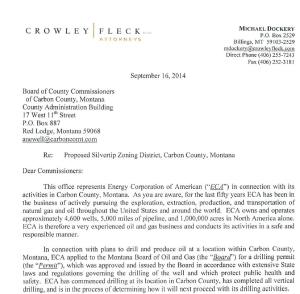
Click to view full letter
This argument should sound familiar. It’s very similar to the one put forward by Energy Corporation of America attorney Mike Dockery with regard to the Montana Board of Oil and Gas Conservation in a letter to the Carbon County Commissioners last September.
“Any proposed rules and regulations that control the activities within the proposed Zoning District unlawfully usurp the jurisdiction and authority of the Board (of Oil and Gas Conservation) to issue oil and gas permits and regulate the activities related thereto.”
Dockery and ECA are telegraphing their intention. The company has no desire to work with Silvertip residents as good neighbors. They want their oil and they’re going to go to court to get it if they need to.
Cathy McMullen, Denton Drilling Awareness Group
But local residents should take a cue from the Denton Drilling Awareness Group, which led the grass roots effort to get the fracking ban passed. Cathy McMullen, leader of the group, said they plan to be an intervenor in lawsuits filed to challenge the ban passed by voters November 4. She said the group will be helped by attorneys with various areas of expertise, something they plan to announce this week.
“It’s a group of high-powered attorneys familiar with these kind of cases,” McMullen said. Hiring the attorneys frees up the group’s volunteers for “the politics of this.”
According to McMullen, the Denton Drilling Awareness Group plans to go to Austin when the Legislature reconvenes after the first of the year. Several lawmakers, including state Rep. Phil King, say they are prepared to offer legislation banning the ban.
The lessons coming to us from Texas are clear:
The oil and gas industry has no interest in working with local residents to find a compromise that meets the needs of local landowners. This puts them in distinct contrast to the Stillwater Mine, which has agreed to a binding Good Neighbor Agreement in Stillwater County. Drillers will sue to get what they want. Dockery’s letter comes right out of the industry playbook and should come as no surprise.
Local residents should not shy from a fight. Expert legal help is available, some of it pro bono, and funds can be raised to pay for challenges to the oil and gas industry. The work of Helen Slottje, who recently spoke in Billings, is a prime example.
The fight is not just about a single zone in Carbon County. As the Denton group shows us, the fight will likely be extended to the legislature, and to reform of agencies such as the Board of Oil and Gas.
Keep in mind that the Silvertip landowners are not proposing a ban. They’re just exercising rights stipulated in Montana law to control how their land is used.
The Silvertip Zone is important work, and what’s important is worth fighting for.
NOTE: The Carbon County Planning Board meeting scheduled for tonight has been postponed due to weather and lack of a quorum. It has been rescheduled for December 16.
NOTE: The meeting tonight has been postponed due to weather and lack of a quorum. It has been rescheduled for December 16.
Here’s something concrete and specific you can do to protect your community from unregulated oil and gas development: attend the regular meeting of the Carbon County Planning Board tonight (Tuesday, November 25) at 7pm at the Carbon County Courthouse, 102 North Broadway in Red Lodge.
This meeting is important because Carbon County is in the final phase of updating its growth policy for the first time since 2009. This meeting represents a last opportunity for public input into the plan, which will affect County policy for the next five years, and will directly impact the central issues addressed on this web site: oil and gas exploration; the protection of water, air and soil; the protection of private property rights; and the long-term economic viability of the County.
The final draft is expected to be approved by the County Commissioners in January.
You can download the current draft of the 2014 Growth Policy by clicking on the graphic at right. The document is great reading — well crafted and full of information about the history, land, economy and people of Carbon County. If you like charts, graphs and maps, you’ll find them here.
I recommend you read through it before the meeting and consider giving your input on areas that you think are important.
After reading through the document, here are some areas I think you may want to consider and give voice to at the meeting:
One of the five key goals in the growth plan is to “develop the county’s natural resources balancing economic development with environmental responsibility (p. 52).” One of the key objectives for achieving this goal is to “promote policies and strategies to mitigate potential impacts without deterring natural resource development.” Ways to do this include:
Coordinate with landowners to enable citizen-initiated zoning districts (enabled through MCA 76-2-101) to mitigate potential impacts of natural resource development.
Consider possible impact mitigation policies in the development regulations.
Objectives could also be added to strengthen this section. Examples might include:
Acquisition of baseline data on air, water and soil quality in areas that are to be developed, and development of programs to mitigate any contamination or erosion of quality
The inclusion of the right specifically stated in the Montana Constitution to a clean and healthful environment in Carbon County.
From the Growth Plan: Public and private land in Carbon County. Click to enlarge
If you read pp. 57-60 of the plan, a process for review is explained for any change of use in land — from agricultural, residential, or recreational to commercial or industrial. The review must cover agriculture, water use facilities, local services, natural environment, wildlife habitat, and public health and safety. Every time a landowner wants to subdivide in a way that means a change of use, these criteria must be considered. However, if the change is to natural resources development, all regulation moves to the state level, with no County requirement for involvement. As we have often explained, the State does not concern itself with these areas of review. The County should apply these same standards of review for land converted to oil and gas development in the growth plan.
The importance of maintaining tourism in the County, and making sure that any oil and gas development is done within the context of not allowing a conflict that would lead to an environment inhospitable to tourism. While tourism is mentioned in the growth plan, its essential importance to the County is underplayed, and the potential for conflict between tourism and the heavy industry of oil and gas development is not emphasized.
I encourage you to read the draft, attend the meeting, and give voice to concerns that are important to the long-term future of Carbon County. This is a way you can have a concrete impact on the future of oil and gas drilling.
If you can’t attend, send comments to brentm@ctagroup.com.
CTA Architects Engineers has been hired by Carbon County to manage the process of putting together the growth plan. The company compiled this video of citizen input:
The landowners in the Silvertip Zone resubmitted their petition to the County Commissioners to establish a citizen initiated zone in Belfry yesterday. Landowners had originally submitted a petition to the Commissioners on August 18, but the Commissioners took no action based on advice from Carbon County Attorney Alex Nixon that the boundaries of the original zone were not contiguous, as required by Montana law. Nixon alos suggested the language in the petition did not provide enough specificity about the intent of the zoning.
The new petition addresses concerns raised by County Attorney Alex Nixon. Click to read the petition.
According to Silvertip landowners Bonnie Martinell and Carol Nash, who presented the petition to the Commissioners, the new document addresses both concerns.
Martinell said she was particularly gratified at the eagerness of her neighbors to continue with the process. All but one of the original signatories in the redefined zone signed the new petition. “They believe this is necessary, and they are committed to seeing this through,” she said.
The petition was signed by 68% of the landowners in the zone. A minimum of 60% is required by Montana state law.
The Commissioners promised to respond soon. We’ll keep you updated.
A timeline of events regarding the Silvertip Zone: October, 2013: John Mork, the CEO of Energy Corporation of America, announced the opening of an office in Billings and plans to hydraulically fracture 50 wells along the Beartooth Front in a move that would bring “a little bit of the Bakken” to the Beartooths. At about this time, ECA approaches a local landowner and offers a one-time payment of $4,500 for access to three acres of land to drill the well. The landowner was told they had no choice but to sign.
Protest in front of the Montana Board of Oil and Gas Conservation.
February 7: Analysis reveals that ECA has an abysmal safety record in Pennsylvania and West Virginia, with 66 inspections with violations, 90 separate violations, 55 enforcement actions, and fines totaling over $80,000 in Pennsylvania alone. You can download a copy of the actual report here.
February: BOGC accepts the demand in the lawsuit and grants a hearing on the well.
March: Neighbors begin to discuss options to protect their land, water and way of life. Given the lack of protect from the BOGC and other state entities, they look specifically at options for local action.
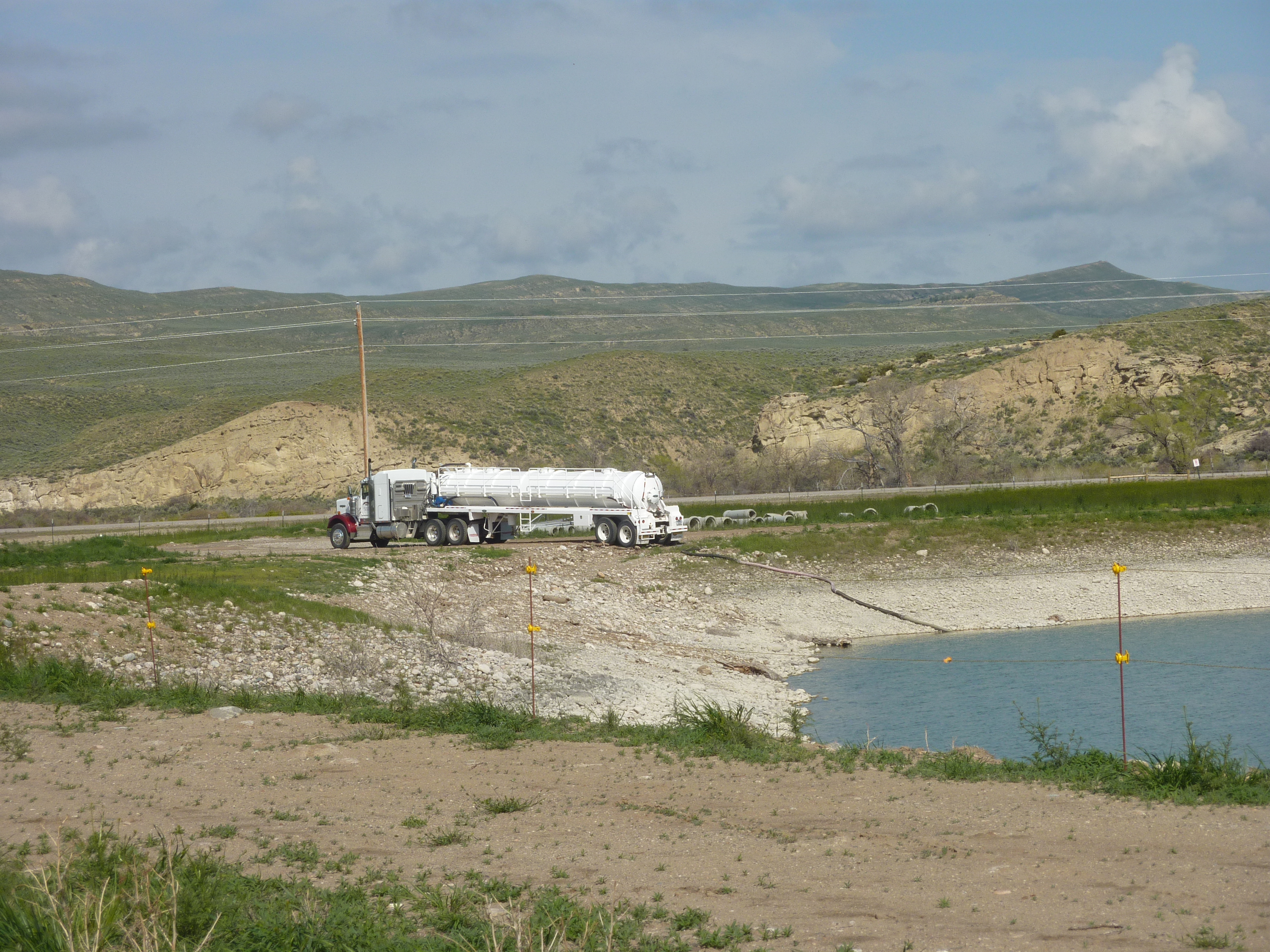
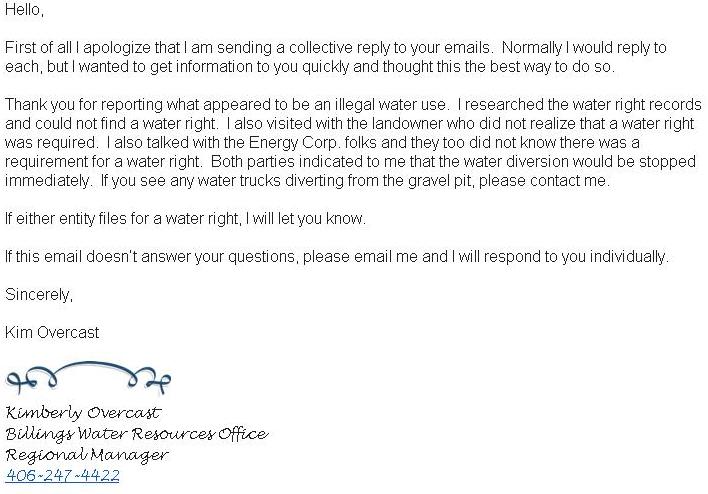
May 14: ECA begins work on the well. Residents immediately become concerned that the company’s contractors are illegally drawing water out of a gravel pit near the site. A water right is required, and none exists.
Tanker truck illegally removing water from well. Click to enlarge.
email update from Kim Overcast, Regional Director of Montana DNRC. Click to enlarge
May 23: The contractor makes a deal with the town of Bridger to get one truckload of water per day until June 10. The deal was made without a public hearing.
June, 13: ECA begins dismantling the well structure. Dismantling is complete on June 16.
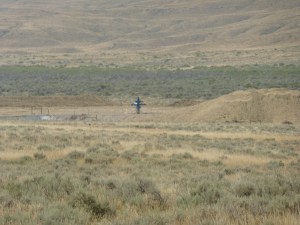
Well head, July 18. Click to enlarge
July 7: ECA gives notice to the BOGC of “intent to perforate” the well. In addition they filed an “intent to stimulate or chemically treat the well.” Both of these are steps toward hydraulic fracturing.
According to Jim Halverson of the Montana Board of Oil and Gas (BOGC), ECA has told him that they plan on monitoring the results of the perforations for 30 days, then will apply to frack if they want to move forward. Fracking requires 48 hours advance notice to the BOGC.
As of November 20, no fracking of the well has taken place.
September 8: The Carbon County Commissioners invite ECA to speak before another packed meeting. Rather than send senior executives, the company sends the Belfry well project manager and a community relations representative based in West Virginia, who are unable to provide adequate answers to questions from the audience. Video of the meeting below, and my comments here, here, and here.
Click to view full letter
September 17: The Carbon County Commissioners hold an evening public meeting at Belfry School to allow public input into issues related to oil drilling in the area. ECA attorney Mike Dockery and the ECA project manager are invited in advance to speak, and Silvertip landowner Bonnie Martinell is asked to join them at the beginning of the meeting. Dockery makes a lengthy presentation in which he outlines ECA’s objections to the Silvertip Zone, detailed in a letter to the Carbon County Commissioners. You can read the letter by clicking on the photo at right.
The video below shows the entire meeting. It is a wonderful example of citizen involvement. There were many speakers with comments, questions and concerns. They represent different points of view, different levels of understanding, and personal experiences. It is exciting to hear people engage in the process.
Alex Nixon, Carbon County Attorney
September 18: County attorney Alex Nixon provides feedback to the Silvertip Zone petitioners on the legal standing of their petition.
He advises the County Commissioners not to take action on the petition for one primary reason: the law requires that the land in a citizen-initiated zone be contiguous, and the Silvertip Zone is not a single contiguous parcel.
He also indicates that he has concerns that the petition is not specific enough about what is to be zoned, even though supporting documents are much more specific. He said that this concern by itself was not enough to keep the Commissioners from acting on the petition.
He says that legal shortcomings are common in petitions of this type, and that he has been involved with many that required multiple iterations to achieve approval.
He recommends that the petitioners redo the petition, define the zone properly and come back.
Video of the meeting:
October 1: It is revealed that Energy Corporation of America is being sued for underpaying oil and gas royalties to hundreds, possibly thousands, of Pennsylvania landowners.
November 20: Silvertip landowners return to the County Commissioners with a new petition for a contiguous zone, signed by all but one of the original petitioners within the boundaries of the zone.
Halliburton, the world’s second-biggest oilfield services provider, said Monday it will acquire its smaller rival Baker Hughes in a deal worth $34.6 billion in cash and stock. The offer will net Baker Hughes shareholders an immediate 31 percent profit.
“The transaction will combine the companies’ product and service capabilities to deliver an unsurpassed depth and breadth of solutions to our customers, creating a Houston-based global oilfield services champion, manufacturing and exporting technologies, and creating jobs and serving customers around the globe,” Dave Lesar, chairman and CEO of Halliburton, said in a statement.
Normally I don’t pay too much attention to oilfield business news, but the combination of the two companies posed an irony that was too good to pass up.
This got a lot of press, since the industry has secured exemptions from federal law that allow them to protect these chemicals as “trade secrets.” But there were disclaimers built in — a sentence buried in the company’s announcement made it clear the industry isn’t going to be reformed overnight. Baker Hughes said it will provide complete lists of the products and chemical ingredients used in frack fluids “where accepted by our customers and relevant governmental authorities.”
Dick Cheney It’s his fault
In other words, if their customers, who are drilling companies, and individual states, which are often in the pockets of the oil and gas industry, don’t want them to disclose, they won’t.
And now, who bought Baker Hughes? Halliburton, the namesake of the infamous “Halliburton Loophole,” embedded in the Energy Policy Act of 2005, which pretty much turned over control of water quality to the oil and gas companies. The Halliburton Loophole one of the reasons why oil companies do not have to tell us what chemicals they use in the fracking process.
In case you’ve forgotten, the Energy Policy Act of 2005 was pushed through by Vice President Dick Cheney, former CEO of Halliburton.
Halliburton is already busy replacing Baker Hughes’ Board of Directors.
So much for oil companies revealing the chemical ingredients in fracking.
Update, 11/21/14: Since I posted this I’ve seen a couple of news stories in the same vein. Here’s one from the Society of Environmental Journalists.
New research shows that American attitudes toward fracking are becoming more negative, but they are crystallizing and becoming more entrenched. While this may be a problem in many communities, it creates opportunity for us along the Beartooth Front.
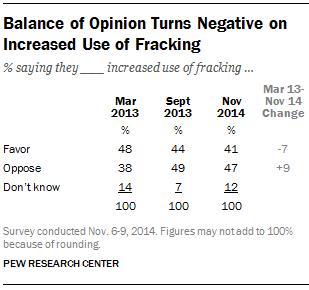
New research on fracking A recent Pew Research Center Poll shows that support for increased use of fracking to extract oil and gas has declined steadily over the last 18 months.
We posted on this last January, saying that “American attitudes about fracking are just forming, but we’re deeply divided.” Nearly a year later, the topic is not so new, and attitudes are becoming more crystallized.
Overall, 41% of Americans favor increased use of fracking, down from 48% in March, 2013, and 47% oppose, up from 38% 18 months ago. That’s a 16% swing in attitudes.
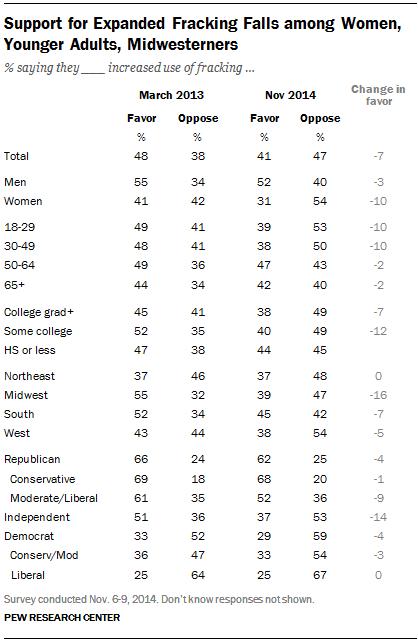
According to the Pew study, opposition to increased fracking has grown among a number of demographic groups. Women now oppose the increased use of fracking by a wide margin (54% to 31%), a negative swing of 22% in 18 months. Support for increased fracking has fallen 10 points among younger adults (those under 50) since then, from 48% to 38%, while holding steady among older Americans (currently 45%).
There has been a particularly dramatic change in views of fracking among those in the Midwest. In March 2013, 55% of Midwesterners favored expanded fracking while 32% were opposed. Today, 47% oppose more fracking while 39% support it. This is not surprising, given that fracking has become a highly contentious political issue in states like Ohio, Illinois and Michigan. In the West, there has been a 15% negative swing over the time period studied, with 54% now opposed to increased fracking.
The partisan gap over increased fracking remains substantial: 62% of Republicans back the increased use of this process compared with 29% of Democrats. Independents now oppose expanded fracking, 53% to 37%, a complete reversal of their attitudes a year and a half ago. Among Republicans, conservatives have stayed steady in their support for fracking, while more moderate Republicans, while still favoring fracking, have moved swung about 10% in a negative direction.
Belief superiority
But public opinion needs to be measured not only by the changes on the favor/oppose scale, but by how strongly people hold their opinions.
Raimi
New research shows that this division is becoming deeper, and is unlikely to lead to easy compromise or resolution. In a new study recently published in the Journal of Environmental Psychology, Kaitlin Toner Raimi of Vanderbilt University and Mark Leary of Duke show that on both sides of the fracking debate, those with stronger views, whether in favor or opposed to fracking, have a higher level of “belief superiority,” meaning that they think their views are more “correct” than the views held by other people.
What the study found was that, when people were shown an article, whether for or against fracking, they were polarized by reading the article. Their “belief superiority,” no matter what side of the issue they were on, they became even more certain of their views.
For people who were less certain of their views, it had the opposite effect:
“It’s kind of classic motivated reasoning,” says Raimi. “People are finding information about the articles to agree with them — what’s new about this is that we’re seeing the people who are feeling superior are more likely to do that.”
It also means that, for people who are just forming an opinion, it is important for us to provide information about issues related to oil and gas drilling to help them understand the risks inherent in the process.
The lesson for us on the Beartooth Front
There’s a clear lesson for those of us working to develop a strong community solution to the issue of how or where fracking should take place along the Beartooth Front:
We can’t make the fight about pro-fracking or anti-fracking. People who have strong opinions on either side of the debate are not going to be moved.
Anyone who is familiar with the voting patterns of Carbon and Stillwater Counties knows that they consistently vote strongly Republican. In the 2012 Presidential election, Carbon County voted for Romney over Obama 60-36. Stillwater County favored Romney 71-26. Statewide, Romney won 55-42.
So, the data tells us that conservatives strongly favor fracking, and that Carbon and Stillwater Counties are conservative, even moreso than the rest of the state. The first clear lesson should be obvious. To the extent that the community discussion becomes a fight pitting pro-fracking vs. anti-fracking, the anti-fracking side will lose.
This understanding is central to the approach local grassroots groups have taken. Unlike groups in Colorado, Ohio, Texas, New York and California, there is no organized anti-fracking group in Carbon or Stillwater County.
Instead, the approach has been to develop a solution that is fair to mineral rights holders, but also to local residents and land owners who want to make sure their water is not contaminated, their property rights are preserved, and their livelihoods remain intact.
Aerial view of ECA well pad across from Montana Jack’s in Dean
Citizen initiated zoning
This led local groups to citizen initiated zoning, set forth in Montana law in MCA 76-2-101, which enables local governments to set the terms on which oil and gas drilling can be done on their properties. Here’s how it works:
Any interested group of citizens in a county can create a zone. It is a democratic process. If 60% of the residents in an area want to create the zone, it can be brought forward to the County Commission.
The rules of the zone must be drafted to be consistent with the county growth plan.
A zone map must be created to reflect the properties to be included in the zone and define the perimeter of the zone
Each landowner who supports the district needs to sign a petition. The signature must match exactly the name on the title of the land.
When more than 60% of the landowners in the district have signed the petition, it can be brought to the County Commission.
After the County Commission receives the petitions, it holds a public meeting to determine whether the zone is in the “public interest and convenience.” If so, the district is established.
If the zone is established it is referred to a county planning and zoning commission. This is a seven member oversight board that reviews the zoning petition and recommends how it should be implemented.
After opportunities for public input, the planning and zoning commission puts in place the regulations for the district.
The planning and zoning commission is responsible for the ongoing administration of the district.
This is a fair and balanced approach to compromise between competing interests in a community. Rather than pit one group against another, it is a way for local governments and communities to look beyond one group claiming “belief superiority” over another, or pitting today’s economic needs against the long-term future of a community.















 Preserve the Beartooth Front