Several people have asked about the exact location of the Hunt Creek 1-H well that the Montana Board of Oil and Gas Conservation (MBOGC) permitted last week. It took a little time to convert the MBOGC data (with some significant help from others), but I think I’ve got a pretty accurate location.

The location is near 22 S. Silvertip Road in Bridger (GPS coordinates 45.151858, -108.963424; marked with an “A” on the map in the link). Here’s a satellite map that will give you the location relative to Red Lodge and local roads. The well site is the lime green marker on the map:Hunt 1-H 22 Silvertip Road, BridgerThe green area just to the west of the site is BLM land, but this well site is on private property.
Here’s a closer look. The well location is marked with an oil well:ECA well2

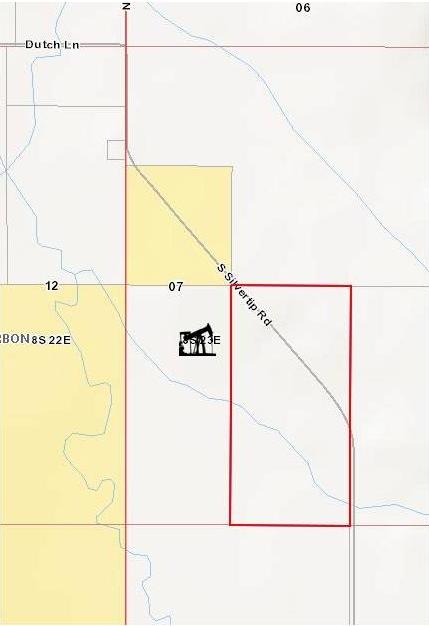
And here’s a closeup, this time from the Montana Cadastral map. You can go to the site and manipulate this yourself to get all kinds of information about the property. Again, the actual well site is marked with an oil well:
ECA well3
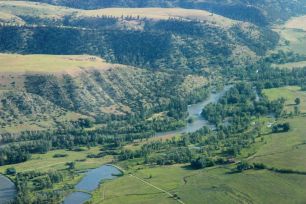
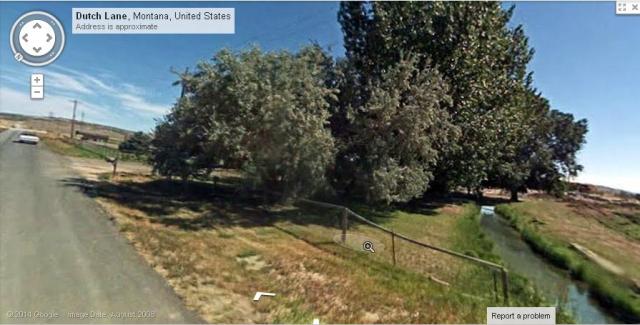
Here’s a photo of the terrain in the area. This is not the exact site, but all I could get on Google maps was this photo off Dutch Lane, just about a quarter mile north at Silvertip Road.Hunt 1-H 22 Silvertip Road, Bridger_3

Last, here’s the BLM map of the area. The coordinates are 8 south, 23 east, section 7. If you look in section 7 in the upper left of the map, you can see Silvertip Road running through the yellow square of BLM land on the left of the section. The site is just south and east of the BLM area. You can also use these coordinates to locate the well precisely on the MBOGC Wellmapper.
BLM map_8s 23e section 7

If you have questions post them in the comments. If I can’t answer them, I’m hopeful others will be able to.

Update: A reader (see comments) has looked through the MBOGC web site and found three well locations in the Belfry area. She’s documented them on this map.

Posted on by davidjkatz | 11 Comments

A personal story: Diana Daunheimer, Didsbury, Alberta

“I have come to see the regulator as nothing short of a bodyguard to the industry.”

-Diana Daunheimer

Telling personal stories
The oil and gas boom has been underway for a number of years in many locations across North America, and there are now a lot of stories about individuals and families whose lives have been personally affected. This post is part of a regular series of those stories on this blog to help you envision what could happen if drilling expands along the Beartooth Front. Look for these once a week.

Today’s thoroughly-researched and well-documented story originally appeared in the Tyee, a widely read and respected independent online magazine that publishes news, reviews and commentary not typically covered by British Columbia and Canada’s mainstream media.

There are a number of themes in this story that we see present elsewhere, and that we should be concerned about along the Beartooth Front: regulators looking out for corporations instead of community, unresponsive oil and gas companies, and careless and uninspected use of chemicals in drilling. Most importantly, it’s about a relentless person who is determined to get justice.

It’s a long read, but a great story and definitely worth the time.

Previous posts in this series:
Tim and Christine Ruggiero, Wise County, Texas
Laura Amos, Encana, Colorado
Helen Ricker, Poplar, Montana

Diana Daunheimer, Didsbury Alberta
When a tight oil boom invaded rural Alberta five years ago, Diana Daunheimer was, as she puts it, just another “ignorant landowner.”

The mother of two and vegetable farmer knew little about the practice of horizontal drilling or multi-stage hydraulic fracturing.

The practice involves the injection of highly pressurized fluids into mile deep wells that later mole out horizontally for another mile or two, in order to break open shale rock as tight as granite.

Diana Daunheimer

Diana Daunheimer, her kids and farm in Alberta (click to enlarge)

To coax lower-quality oil out of the Cardium Formation as well as other pancakes of shale rock deep below west-central Alberta, industry increased its use of the practice around 2009 and created a black gold rush that has industrialized many rural communities with constant traffic and polluting flare stacks.

Daunheimer knew even less about the Alberta Energy Regulator, formerly the Energy Resources Conservation Board, which referees the industry in the province.

But as the number of horizontal fractured wells in the Cardium Formation jumped from 70 to 2,000 over four years, and oil production skyrocketed from 2,000 to 80,000 barrels a day, Daunheimer quickly became informed.

Posted in Personal stories | Tagged , , , , | 6 Comments

ECA Pennsylvania violations just the tip of the iceberg

You’ve read about Energy Corporation of America well violations in Pennsylvania. An analysis of data from the Pennsylvania Department of Environmental Protection shows that, since 2005, they’ve had 66 inspections with violations, 90 separate violations, and 55 enforcement actions, with fines totaling over $80,000. The Billings Gazette touched on community reactions to this record in an article last Friday.

But what is not covered in the Gazette article is that ECA violations are dramatically underreported. According to Breaking All the Rules: The Crisis is Oil and Gas Regulatory Enforcementa study published by Earthworks Action in September, 2012 (during the period of analysis above) the ECA violations are almost certainly much greater than those in the report. Among the report’s findings:

  • Every year hundreds of thousands of oil and gas wells – 53 to 91% of wells in the states studied (close to 350,000 active wells in the six states, including Pennsylvania) are operating with no inspections to determine whether they are in compliance with state rules.
  • When inspections do uncover rule violations, the violations often are not formally recorded – and the decision whether or not to record a violation is often left to the discretion of the individual inspector.
  • When violations are recorded, they result in few penalties.
  • When penalties are assessed, they are minor. They provide little incentive for companies to stop the offense.

The report states that in Pennsylvania in 2010, inspectors were unable to monitor 82,000 wells, 91% of the state’s total number of active wells!

So let’s do some back of the envelope math. The Pennsylvania DEP report shows 10 violations in 2010. If, as suggested above, only 9% of wells were inspected, should we expect that there were actually an additional 100 violations that went unreported? That instead of 90 violations, they’ve committed 1000 since 2005? We have no way of knowing, but the fact that most wells went untested shows that we need to regard ECA as a serial polluter.

Is the situation different in Montana? Not likely. The state has a total of seven field inspectors: three in Sidney, two in Billings, and two in Shelby.

It looks like Montana is ready to make the same mistakes made elsewhere: letting the fox into the henhouse.

Posted in Community Organization, Politics and History, Fracking Information | Tagged , , , , , | 11 Comments

Letter to the Editor: Bonnie Martinell

If you read this blog, by now you are aware that the Montana Board of Oil and Gas Conservation (BOGC) approved the permit allowing Energy Corporation of America (ECA) to drill near Belfry. If you haven’t seen it, the Billings Gazette did a piece this morning voicing the concerns of Carbon and Stillwater county property owners. While the article clearly expressed concern, it was disappointing that it didn’t delve very deeply into ECA’s serial polluting record.

Here’s a letter that Bonnie Martinell of Bridger sent to the Gazette today, voicing her disgust at a process in which an agency chartered to protect the public aligns itself with industry. She’s given her permission to post it here.

I am one of the farmers that spoke at the BOGC on Thursday about the ECA’s permit. I am not surprised that the BOGC gave them their permit. When you have on the board Bret Smelser, who has to throw his 2 year old fits/ rages accusing people of things he knows nothing about and walks off in a rage when people are talking.  And then you have Tom Richmond who is rolling his eyes and mocking what the experts are saying. We were respectful to them, why couldn’t they respect us? When you have to file a lawsuit just to be heard and then they are still complaining that they have to hear you? Not only did the board protest it but ECA, the one who says they are a good neighbor, also protested our right to speak. ECA has made no effort to work with the neighbors; they are already bullying the land owner.

It is very sad that in a state that prides itself on agriculture and tourism that one of our own agencies is not willing to protect them. The BOGC, whose board members say they are rural Montanans, have no humanity. They heard very legitimate concerns from people who make their living/ lifestyle off the land and understand this area better than anyone, and refused to protect them despite the fact that is part of their job, job description and mission statement.

I was very proud of all my neighbors who spoke. We all have real concerns. These are not if’s, they are when.  In the lack of humanity that this board and oil company has I hope they understand they are responsible for what happens.

-Bonnie Martinell, Bridger

Bonnie, you’ve been heard, whether the BOGC liked it or not. MUCH more to come.

Posted in Uncategorized | Tagged , , , , , , | 1 Comment

Billings Gazette: Montana Board of Oil and Gas Approves Belfry Well

Read the expert testimony against the permit that the Board of Oil and Gas ignored: Global Environmental Comments

*****************

From the Billings Gazette
By TOM LUTEY

The Montana Board of Oil and Gas permitted a controversial horizontal well east of Belfry on Thursday.

The vote came after 90 minutes of testimony from neighbors concerned about potential damage from hydraulic fracturing. The well will be drilled by Energy Corp. of America.

Boardmember Peggy James Nerud, of Circle, cast the only vote against the permit.

The drilling plan for the Beartooth Front has drawn protests from area residents and environmental groups including the Carbon Country Resource Council and the Northern Plains Resource Council.

Denver-based ECA’s chief executive John Mork has announced plans to drill up to 50 horizontal oil and gas wells on the east and west ends of the Beartooth Front, plus more wells into the Bighorn Basin, mostly in Wyoming.

Northern Plains Resource Council Press Release

CONTACTS: Deb Muth, Chair of Carbon County Resource Council
Maggie Zaback, Northern Plains Resource Council organizer, 4
Larry Winslow, Northern Plains communications coordinator, 406-248-1154.

Board of Oil & Gas ignores landowner concerns, OKs oil well

‘We got to speak, but weren’t heard’

BILLINGS, Mont. – Despite the testimony of 10 landowners and affected citizens, the Montana Board of Oil and Gas Conservation (BOGC) today voted to approve a permit for the Hunt Creek deep-shale well near Belfry on the Beartooth Front.

Testimony from neighbors of the drill site testified about flash floods, dry weather patterns, sandy soil, and insufficient wastewater pit lining. The local residents know the landscape and the many omissions in the proposed permit. It was clear that nobody from the BOGC or staff had visited the well site.

After an hour of testimony, the BOGC decided the original permit was acceptable. On Administrator Tom Richmond’s recommendation, members voted 6-1 to permit the well.

“We got to speak but we weren’t heard,” said Deb Muth, Chair of Carbon County Resource Council, an affiliate of Northern Plains Resource Council. “We talked about the dangers of drilling in a flood plain, the lack of water available to drill, and the desire to have baseline water testing in place before they start. They thanked us for our comments, then ignored our many cautions as they washed their hands of this well and the residents that go with it.”

Chairwoman Linda Nelson said it is up to landowners to test their water at their own expense, even though well tests for drilling chemicals cost thousands of dollars.

Richmond said Energy Corporation of America (ECA) could follow best practices for drilling recommended by the American Petroleum Institute, however the BOGC decided not to include these as a condition nor any other conditions landowners sought for the permit. The BOGC has the power to put conditions on or even deny a well, but today, they pushed those duties onto other agencies, and said it was powerless.

“This may be just one well, but it represents so much more.” said Muth. “BOGC’s job is to prevent oil and gas operations from harming nearby land or resources, and it did not do its job today. It failed to listen, and once again stood up for industry, not the people.”

Posted in Uncategorized | 14 Comments

Energy Corporation of America: 70 more violations in West Virginia

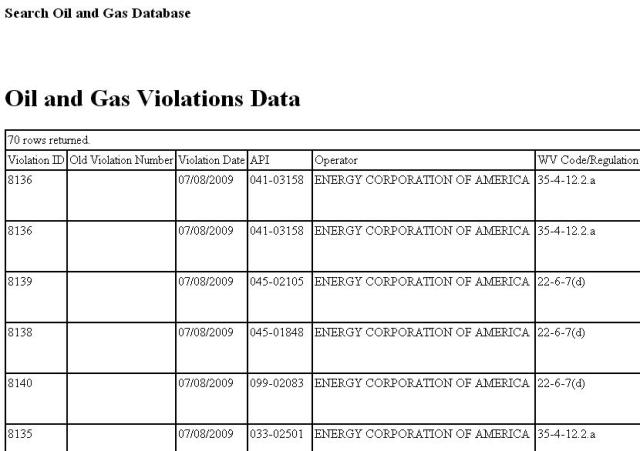
Energy Corporation of America (ECA), which has promised to “bring the Bakken to the Beartooths,” has 70 more violations in West Virginia, according to a search of the West Virginia Department of Environmental Protection website. This is in addition to the 66 inspections with violations, 90 separate violations, and 55 enforcement actions that we recently found in a search of the Pennsylvania Department of Environmental Protection website.

The West Virginia data is harder for a layman to interpret, and I’m convinced that there is more that would be revealed with a more sophisticated search. You can look at a section of the report at the bottom of this post.

The Pennsylvania data was more clear, and here is a more detailed listing of violations there than we have provided before:

  • Pit Failures – impoundment not structurally sound; failure to maintain 2 feet of freeboard; improperly lined pit; tears and rips in synthetic liner.
  • Methane Migration from Failed Seal – failure of cemented casing releasing gas upwards.
  • Unpermitted Discharges to Surface Water – discharge of pollution material to waters; discharges of industrial wastes to the ground; artesian flow of fluids from a well; discharges of muddy water into streams.
  • Improper Waste Management – failure to properly store, transport, process, or dispose of residual waste; failure to adopt pollution prevention measures; residual waste mismanaged; oily substances found on ground.
  • Stream Crossings without a Permit – no stream crossing permits obtained.
  • Erosional Control Deficiencies – failure to minimize accelerated erosion; failure to implement E&S plan; failure to stabilize site; failure to maintain E&S controls; failure to design, implement, and maintain BMPs.
  • Operational Deficiencies – excessive casing seat pressures; failure to plug a well; drilling within 100 feet of surface water or wetland; failure to notify the Department of pollution incident; failure to submit well records; failure to submit well completion reports.
  • Failure to Properly Close Sites – failure to restore site within 9 months; failure to plug a well; failure to remove pits after completion of drilling.

The re-hearing of the Belfry permit of the Montana Board of Oil and Gas Conservation is in Billings tonight. If that body decides to represent the people of Montana instead of the corporations of Colorado, the permit will be denied. We don’t need them ruining Montana the way they have Pennsylvania and West Virginia.

A section of the West Virginia report is below. You can replicate it yourself by going to the website.ECA West Virginia violations

A section of the West Virginia report
Posted in Community Organization, Politics and History, Fracking Information | Tagged , , , , | 10 Comments

How to find out who owns the mineral rights to your land

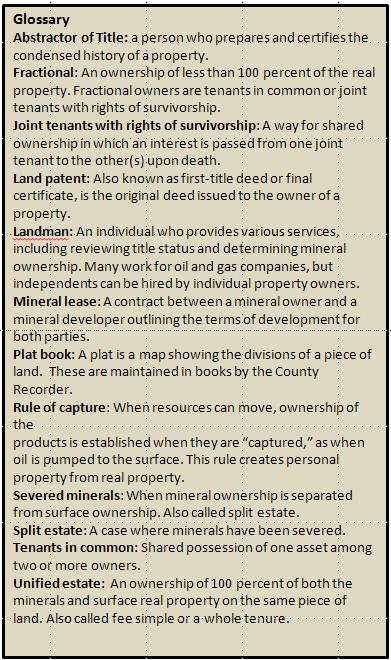
mineral glossaryIf you are a landowner in Carbon or Stillwater County, now is the time to determine whether or not you own the mineral rights under your land.
Unified vs. split estates
If you are lucky, your estate is unified, or fee simple: the mineral and surface rights are held together. More often, minerals have been severed from the land, either because the federal government reserved minerals in its initial homestead claims, or because the owner has sold off the mineral rights to a property.

A landowner can also hold a fractional ownership of the mineral rights. Fractionalization occurs when an owner sells a portion of the mineral rights, or leaves a portion to multiple heirs. Fractional mineral interests are usually referred to as tenants in common.

How do you find out who owns mineral rights to your property?
The following information has been obtained from various sources, including interviews with the Clerk and Recorder in both Stillwater and Carbon counties, and an independent landman. Your property is important to you, and I strongly suggest you determine for yourself the best way to find out the legal status of your estate.

clerk and recorder

  1. You need a legal description of your property. You can find this on your property tax bill. If you don’t have it, staff at both Stillwater and Carbon counties will help you find it.
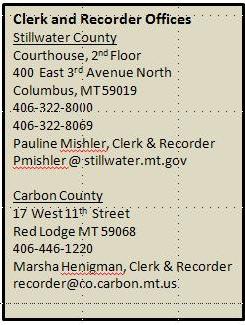
  2. Go to the office of the county clerk and recorder. Addresses are shown at left. The records of land transactions are held in the “public room,” because the public is allowed to go in and look.
  3. Staff in both counties will “help you get started.” This means finding the right plat book and locating your property. Deed numbers will be listed.
  4. Once you have the deed numbers, you look up the individual deeds and determine whether mineral rights have ever been severed or withheld. If they have been severed, a separate mineral deed should be referenced.
  5. You will need to track down the transaction history. Each transaction will have its own deed, so you go back transaction by transaction, ideally until you get to the land patent.

Both counties said a search can take several hours, depending on how many times the rights have been sold and whether the mineral rights have been severed. Based on conversations with the clerk and recorder offices, Carbon County has much more computerized information than Stillwater County. When you go to the Courthouse, staff will show you how to access the digitized information.

If you don’t have the time to do this, you can hire a landman to do it for you. Many landmen work for oil and gas companies, but you can go to the site of the Montana Association of Professional Landmen, which maintains a directory of its members by affiliation, to find an independent to do this for you.

I spoke to a local independent landman based in Columbus, and he told me that his rates are $65/hour, $500/day. The actual cost of a search varies by size and complexity of the historical record.

He told me that searches in Stillwater County are more difficult than in Carbon County because less is online, and the records are organized in a “blind index,” which makes it more difficult to find an individual property. “You have to go through everything,” he told me. He said that he sometimes recommends use of an abstractor, who has the ability to research the history of a title back to the land patent. The reason, he told me, is that “Stillwater County was an ag county, and years ago nobody was thinking about mineral rights. So basically they just didn’t keep very good records.” The rate for an abstractor is about $100/hour.

Assessing the value of the oil under your land
The value of mineral rights is determined by assessment. Since future oil production is uncertain, estimates of value may vary with assessments of the amount of oil that can be produced. An income approach is commonly used to assess value. This means that the amount of recoverable oil is estimated and then multiplied by the expected market price of the product. The costs of production must be taken into account. A discount is applied for the time of production.

To determine what the value of minerals is, an assessment can be made. Licensed appraisers with experience in mineral assessment should be used. Alternatively, many mineral brokers are willing to quote prices for mineral rights. An owner could ask for a bid on minerals from one of these buyers. A search for mineral rights brokers will give you plenty of options.

If your mineral rights are severed, you may want to consider reuniting them to your land ownership. The cost of doing this varies with the expected value of the oil underneath. As the landman I spoke to told me, if this is something you are considering, the time to look at it is now, because no oil has been found in the area and the assessed value will be less. If the Belfry exploratory well is successful, the assessed valuation will likely increase significantly.

An opportunity for community action
The more we understand and share publicly available information, the more we can coordinate our efforts to deal with potential drilling. If we can map existing leases and mineral rights, we can understand where drilling is likely to take place and who will be doing it. A lease map is being developed. You may be asked to share your information about who owns your mineral rights.

Be on the lookout for more information and a request to share your information.

*********

Special thanks to Montana State University Extension for their excellent resources on this topic.

Coming Soon: Dos and don’ts if you are a mineral rights owner; dos and don’ts if you are the surface owner of a split estate.

(Note: you can subscribe to the blog by entering your email address in the box on the upper right of this page and clicking “follow.” You’ll get an email update every time I do a post.)

One more thing: The Stillwater County Clerk and Recorder has posted a “Deed Scam Notice” on their web site. Be aware.

Posted in Community Organization, Politics and History | Tagged , , , , , , , | 21 Comments

Oil industry hypocrisy: it’s different when it’s in your back yard

A lot of friends know I write this blog, and to help me out they send articles, papers and videos they come across on subjects related to oil and gas drilling. I really appreciate this, since it’s a vast topic and no matter how many alerts or subscriptions I have, it’s impossible to keep up. I have to pick and choose what I write about, and I try to do more than just re-post articles. I hope nobody is offended when I don’t get to a topic they think is interesting. But be patient — sometimes posts percolate for weeks before they finally see the light of day.

There’s also a certain democracy to what I write about. If I get the same article repeatedly, I know it’s a topic that really resonates, and I consider it more carefully as having post potential.

Two stories stood out last week
Last week there were two articles that I received over and over. And it wasn’t just my inbox  — they were re-posted all over the Internet. Both concerned corporate insensitivity to how the oil boom affects communities.

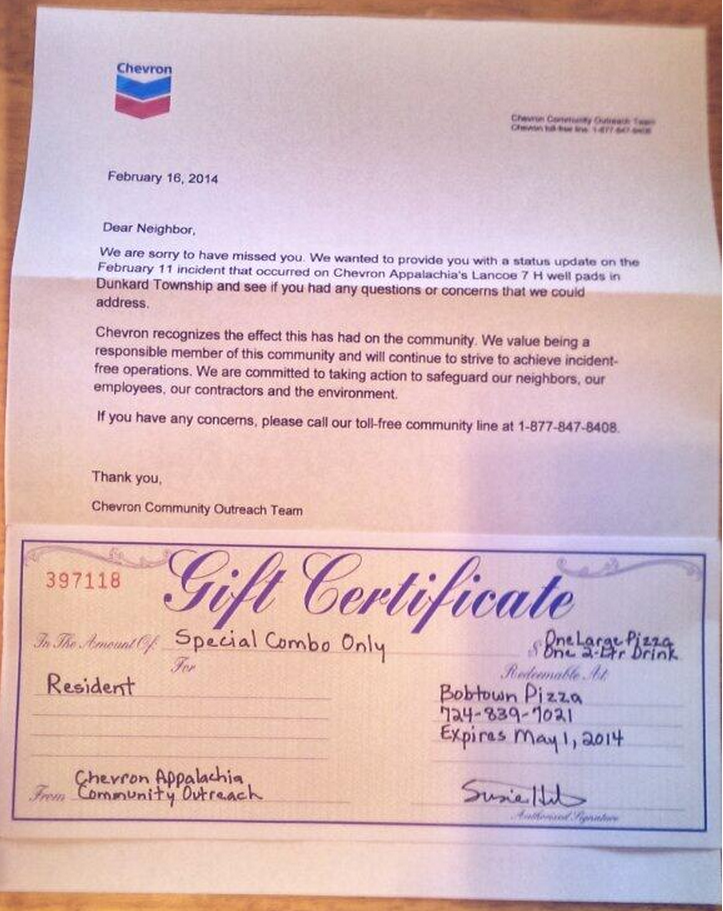
Chevron’s rather remarkable response was to send each resident of the area a coupon entitling them to a free pizza and a two-liter drink at a local pizzeria. The letter said in part that

Chevron recognizes the effect this has had on the community. We value being a responsible member of this community and will continue to strive to achieve incident-free operations….

Rex Tillerson

Rex Tillerson wants to put a stop to fracking near his home, but not near yours

  • Rex Tillerson, the CEO of Exxon Corporation, who has publicly complained that “dysfunctional regulation of hydraulic fracturing is holding back the American economic recovery, growth and global competitiveness,” joined with his neighbors in a lawsuit to block construction of a 160-foot water tower next to his Texas home. The water tower would be used to fuel fracking operations. The lawsuit complains of noise and truck traffic associated with fracking, and  the associated reduction of his property value.

There are nine wells near Tillerson’s ranch that rely on water for hydraulic fracturing, including one managed by Exxon subsidiary XTO. I wonder if Tillerson appreciates the irony in the fact that XTO is currently facing criminal charges for illegally dumping 50,000 gallons of fracking wastewater in Pennsylanvia. The company also spent at least $2 million lobbying the state of New York to allow fracking, despite widespread opposition.

Why these stories resonate
There’s no mystery as to why these two stories caught the attention of so many people. They not only expose the hypocrisy of the oil and gas industry, but they show just how out of touch they are with the impact their operations have on the communities in which they operate.

But I think there’s more to it than that. These incidents point out the most fundamental issue we deal with as communities in trying to protect ourselves from the damage done by hydraulic fracturing operations: the benefits and the costs of hydraulic fracturing don’t match up.

The benefits are clear and specific. They are economic, and it’s easy to determine who comes out ahead. Oil companies, mineral rights holders, people who get jobs in the oilfields all come out ahead.

But most of these benefits occur far from the communities where the drilling takes place. The oil and gas companies and their executives bank their money in other states, not Montana. The oilfield workers come from all over the world; few are local.

The costs fall primarily on the local communities. Despite the short-term boost to the overall economy that may occur, the rural and small town way of life in a place like Red Lodge is lost to rapid population growth and all that goes with it — traffic, crime, inadequate government services, water depletion and contamination. When the boom ends, what’s left is a shell of what existed before. Those who profited have left, as have those who couldn’t afford to stay when the boom hit.

So it’s not surprising that an oil company exec would be wildly pro-drilling professionally, but anti-fracking when it happens in his back yard. Nor is it surprising that a company might think a free pizza might somehow make a community feel better about being awakened by fiery explosions down the street. They’re reaping profits and this is a minor bump in the road for them.

People tend to act in their own self interest. What is required are neutral brokers who can make sure that there is an appropriate balance when outsiders attempt to profit at the expense of local communities. Normally this is a role that government fills, but it appears that in Montana government officials in Red Lodge, in Billings and in Helena have cast their lot with the corporations at the expense of the citizens who elected them.

If the communities along the Beartooth Front are going to be protected, it’s up to citizens to act.

Posted in Community Organization, Politics and History, Fracking Information | Tagged , | 4 Comments

A personal story: Helen Ricker, Poplar, Montana

Telling personal stories
The oil and gas boom has been underway for a number of years in many locations across the country, and there are now a lot of stories about individuals and families whose lives have been personally affected. This post is part of a regular series of those stories on this blog to help you envision what could happen if drilling expands along the Beartooth Front. Look for these once a week.

Previous posts in this series:
Tim and Christine Ruggiero, Wise County, Texas
Laura Amos, Encana, Colorado

The Damage Done
Today’s story comes from the most recent issue of the Missoula Independent. It’s written by Kelly Conde, who originally developed the story as part of her master’s thesis in Journalism, Natural Resources and Environmental Science at Montana State Bozeman. This is an excerpt of a much longer story on how 40 square miles of aquifer in northeastern Montana — “more than enough to provide each person in Montana with adequate drinking water for life” — was contaminated years ago because the oil company dumped millions of gallons of wastewater into unlined impoundments. The water gradually seeped into the aquifer and ruined it.

Even though this method of disposal is discredited and no longer used, there were themes in the the story that are very familiar. Murphy Oil Company, which has grown over the years into an international corporation, stood before the Montana Board of Oil and Gas Conservation, and told them that the 42,000 gallons of wastewater they were dumping into the ground daily “was not hurting anyone.”  The Board of Oil and Gas didn’t blink, and authorized the continuation of the practice.

Even though this is no longer current practice, the blithe assurances from the oil and gas companies that there’s no problem with what they’re doing, despite evidence to the contrary, and the complicit willingness of the Board of Oil and Gas to rubber stamp whatever comes their way is a familiar story.

Nobody was looking after the public interest then, and it’s hard to see that much has changed. One of the constant themes on this blog has been the “unknown unknowns” about this process, and the need to slow down and determine the long-term impacts of what we do before we do it.

Today’s personal story is an excerpt from the Conde’s thesis. I recommend reading the whole story, which looks at the contamination and its effects from many different perspectives. You can read the whole story online at the Missoula Independent, or download Conde’s master’s thesis.

Poplar Montana

Poplar, Montana (click to go to Google Maps)

Helen Ricker, Poplar, Montana
It started with rust. In the toilet. On the shower stall. Helen Ricker saw the orange stains and wondered what was causing them. Her water came from a well, from an aquifer that had always been good. So she drank the water anyway. Beneath the ground, the diluted edges of a large groundwater contamination were seeping by in a slow, gravity-fed progression. Little by little, Ricker’s water got worse.

The water stained her white sheets when she washed them and turned her white socks orange. Every time she filled the sink to do dishes, the water’s surface shimmered with an iridescent sheen. Residual grease covered her plates long after soap washed away the night’s meal. Then the water started to stink. A sulfurous stench rose from the toilet in the bathroom and cascaded out of her faucets. Ricker stopped drinking her water.

Ricker lives on the Fort Peck Indian Reservation three miles north of the town of Poplar, on the desolate BIA Road 75. Her home lies two miles southwest of the East Poplar oilfields, a large expanse crisscrossed with rutted dirt roads and spotted with blue, yellow and black oil pumps bobbing up and down like plastic drinking birds from a novelty store. The oilfield is not as productive as it used to be. But that soon may change.

The Fort Peck Indian Reservation is on the western edge of the Williston Basin. Beneath the reservation and expanding east into North Dakota is the shale-rich Bakken formation. In the past, the oil and gas in this particular rock was untappable. But recent advances in oil and gas drilling technology have provided a way to break the Bakken’s grasp on what is now known as the largest continuous deposit of natural gas and oil in the U.S.

The once humble farming town of Williston, N.D., which is at the center of the Bakken reservoir, is now bursting at the seams with oil workers from all over the U.S.

Though Poplar is only 97 miles west of Williston, things are still very quiet there. Hotels have vacancies, and restaurants have empty tables. But many believe that a new oil boom is on its way.

Fort Peck experienced its first oil and gas boom in the 1950s. Then, like now in Williston, men and huge machines descended upon the rolling land north of Poplar. Oil wells speckled the area. The East Poplar oilfield was tapped first, and regulated later. On the outskirts of Poplar, groups of thin-walled houses popped up—shantytowns nicknamed after their parent oil company.

Today, the skeleton of “Murphyville” remains as one of many reminders of the boom. A more jarring reminder, however, is below the surface. The oil rush of the 1950s led to thick plumes of contaminated groundwater. Fifty years later, the era still haunts people like Ricker who have been living on bottled water for the past three decades. So while many on the reservation prepare for a new oil boom, Ricker and her neighbors are still living with the consequences of the last one.

Ricker, 72, lives with her husband, George, in a house perched above the meandering Poplar River. The view from their house is one of overwhelming sky and rolling hills cut by deep ravines. In the distance are the profiles of numerous oil wells. Ricker has dark shoulder-length hair streaked lightly with gray. When relaxed, her face sags under the weight of the years, of raising her children and grandchildren, of losing one son to cancer, of surviving breast cancer herself. But then she smiles and time and tension slip away.

Ricker is three-quarters Sioux and an enrolled member of the affiliated Fort Peck tribes. She grew up in the vast country off Road 75, on land held in trust by the federal government for the Sioux and Assiniboine people. Her current residence is only a quarter mile away from her childhood home. A lot has changed since she was young.

As a child, Ricker filled buckets with well water from the single pump in her yard to wash clothes or do dishes. Ask anyone who lived in or around Poplar at the time and they will say the same thing: the water off Road 75 had a special quality. It was cold, clean and sweet.

That is rare in northeastern Montana. Spend some time in this open, lonely land and know that rivers and streams run slow and muddy. Aquifers are shallow. The water from the tap tastes of too many minerals and not enough time out of the sun.

But the quality of the water off Road 75 was enough to lure people from Poplar and beyond to several bubbling springs or to the well of a family or friend.

“We had good water,” Ricker says. “People used to come from town with jars and jugs and ask if they could get our water because it was so nice and cold.”

When Ricker and her husband moved back to the country in 1971 after a time in Poplar, the water was still good. But less than two years later, it began to change. The oilfields had been around for 20 years at that point, and their presence was beginning to show.

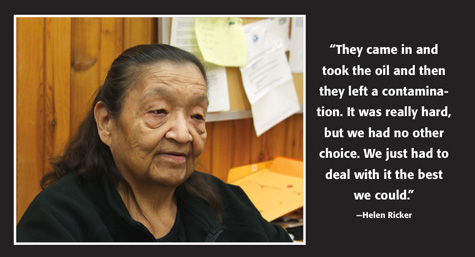
Helen Ricker

Helen Ricker, Poplar Montana -photo by Kelly Conde (Click to enlarge)

The cool, clear water of Ricker’s childhood turned the color of urine. Its sweet taste was replaced with a strong chemical flavor.

“When I poured water to wash dishes you could tell there was oil in it,” she says. “Pretty soon after that it started to have a bad odor like rotten eggs.”

Ricker reported all of this first to the tribe and then to the Indian Health Service with no reaction. So she learned to deal with her water.

She and her family hauled drinking water from town. She learned that Dawn dish soap worked best for cutting through the oily film left on her dishes. She stopped buying white clothing, towels or bedding. When her granddaughter was a toddler and started reacting to the water, Ricker hauled water for bathing as well.

This way of life became the norm. Ricker and her family were resigned to it.

“They came in and took the oil and then they left a contamination,” she says. “It was really hard, but we thad no other choice. We just had to deal with it the best we could.”

It took nearly 20 years after Ricker first saw the rust in her bathroom before anyone decided to do more than just deal with the water.

Posted in Personal stories | Tagged , , , , , , , | 10 Comments

Who booms and who busts when drilling expands along the Beartooth front?

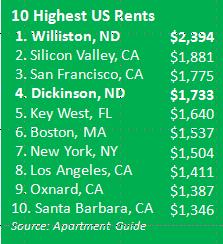
Highest rentsYou may have seen the recent study that showed that rents in the Bakken are higher than anywhere else in the country. It’s amazing to see what a one-bedroom apartment costs, with Williston and Dickinson way ahead of Boston, New York and Los Angeles.

What we’re going to consider today is what these ridiculous numbers would mean for Montanans living along the Beartooth Front. If drilling comes here and creates the kind of demand for housing that causes rents to spiral upward, who will be affected? For whom will it be a boom, and who will be busted? We’ll get to higher level economic theory in later posts, but today I’m offering just back of the envelope estimates about what the impact would be.

The inflationary spiral
Why are these rents so high? It’s the huge pressure on existing housing stock that goes with an oil boom. Williston had 10,700 people in the 2010 census. It’s population is estimated to be between 25,000 and 33,000 today, and should grow to 44,000 by 2017. It’s impossible to build enough housing to accommodate a growth rate of over 400% in seven years, so rents go up. Way up.

But rents don’t rise in isolation. To attract employees to work in the oilfields and drive the trucks, you have to pay salaries that allow them to afford those apartments. Employees in service jobs that support the oilfields — restaurant workers, retail clerks, gas station attendants — need to live there too, and so their wages will need to go up. To pay them higher wages, the prices of the food they serve and the clothing they sell needs to go up too.

Prices of government services will go up, and taxes with them. Because the state of Montana has a gas tax holiday in place, local governments don’t get the additional revenues they need from Helena to accommodate growth. You can expect local taxes will go up to pay for those services, as they have in Sidney.

All of this contributes to an inflationary spiral that causes prices to escalate and escalate. But unfortunately it isn’t a nice even tide that lifts all boats equally. There are winners and losers in the process.

Who are the winners and losers?
So let’s consider who wins and loses, who leaves and who stays. Assume that Energy Corporation of America (ECA) makes good on its promise to “bring the Bakken to the Beartooths” — that they drill 50 wells, that they’re successful in finding shale oil, and that others follow behind them.

For the purposes of this analysis I’m not going to make any assumptions about number of wells and number of jobs. Later on it will make sense to look at actual numbers for housing stock, own vs. rent, location of oil leases vs. housing, number of jobs created per well, and so on. For now let’s just assume that there is enough expansion to pressure the housing stock and create a significant inflationary spiral.

That won’t be hard. The volume of wells and the population influx will be nothing like the Bakken, but the housing stock in Carbon and Stillwater counties is tiny in comparison to Williston and Dickinson. In 2010 Red Lodge had 2,125 people and the entire population of Carbon and Stillwater counties was less than 20,000 people, spread out over about 4,000 square miles.

As inflation occurs, several factors determine who wins and who loses, who stays and who leaves. The most significant include:

  • Are you a landowner or a renter?
  • Do you have a unified estate or a split estate (land and mineral)?
  • Can you work in an oil-related job, or do you work in another industry?

Looking at these and other factors, here is a rough cut at the scorecard:

ranch oil wellRanchers, farmers and homeowners with a significant portion of the mineral rights to their land: This group gets the lottery ticket to big financial returns. If there’s extractable oil on their land (and that’s a big if), they’ll likely become millionaires. But winning comes with a cost, to them and to those around them. It’s unlikely they’ll be able to continue running their existing businesses because their land will be torn up by makeshift roads, easements, pipelines, well pads, and storage units. They’ll endure constant noise, they risk water contamination, and the air on their land will be fouled by hydrogen sulfide and other chemicals. Their water supply may be compromised by the millions of gallons required for fracking. And all of these things will affect their neighbors as well, whether they have mineral rights or not.

Ranchers, farmers, homeowners with split estates. Landowners who do not own their mineral rights (I suspect this is the vast majority. I intend to look at this at some point in the future.) will have few of the benefits of the group above with all of the negatives. If there’s oil on their land, they’ll be compensated for access, but at a much lower level. They also have a poor negotiating position. Montana law requires them to provide access to mineral rights holders, and horizontal drilling technology might enable the oil companies to exploit the minerals beneath their land from a neighboring property if they refuse. So there may be some money coming in from a surface use agreement, but the noise, the shaking, the smell, the water usage and potential contamination, the unsightly structures, the truck traffic and the inconvenience will become a part of their lives. The access fees may allow them to stay and even potentially profit, but they won’t get rich and they’ll lose the things they love about where they live. In addition, property may be devalued by the damage done in drilling.

Both of the above groups assume that oil is found on the property. If it isn’t, the landowner has to deal with the causes of the inflationary spiral with none of the revenue benefits. This will make it hard for many, particularly ranchers and farmers, to survive. The price of cattle or wheat does not fluctuate with the local market, and so inflation will be especially burdensome to this group if there’s no oil on their property. The value of real estate will rise, and debt could be used to offset the rise in costs, but this is a slippery slope — oil booms end, but debt stays.

RanchSecond home, vacation homeowners: This group is likely to pretty much disappear. What attracts them to Carbon and Stillwater counties is the pristine beauty of the land — the mountains, the streams, the wildlife, the skiing. I can’t imagine very many will be interested in staying with the quiet replaced by drilling, flaring and constant truck runs, the air fouled by hydrogen sulfide, and the wildlife scared away by the periodic booms of low level earthquakes. They’ll realize the increase in value of their property and relocate to an area where the frackers can’t go, or they’ll hold and benefit from the high rents. But one thing is clear — nature tourism and heavy industry can’t co-exist. If drilling expansion comes in the Beartooth Front, the ski industry goes out the back.

Renters: There’s only one way for renters to stay. They need to get oilfield jobs or they won’t be able to afford the rent increases. These jobs will not be plentiful for locals because many require specialized skills, and the labor pool for them will be international. Renters who don’t qualify will have to leave.

Candy Emporium

Candy Emporium, Red Lodge

Independent retailers: Very few will survive. The competition for workers will become intense and it will take deep pockets to ride the escalator up — in the Bakken, McDonalds is paying $15/hour and offering a signing bonus of $300 to recruit workers. What has happened in the Bakken is that chain stores and franchises have replaced independents. Good bye Candy Emporium, hello Dunkin’ Donuts.

Seniors on fixed incomes: They have to leave. With no way to increase pension or Social Security, they won’t be able to afford the increase in the cost of living. If they own their home, they may be able to stay long enough to realize some increased home equity. If they rent they’ll be forced out quickly.

Absarokee School

Absarokee School

Government employees: It will be very difficult for them to stay. Government will be on a fixed income, going to Helena hat in hand to beg for what little they can get to pay for the additional services they need to provide. Teachers and county and city employees will not get the benefit of the increased salaries that go to private sector employees. They’ll need to commute or be lucky enough to be among the lottery winners who can stay because they own mineral rights.

Non-oil industry employees: One of the reasons it’s so hard to find employees to work at places like McDonalds is that you can’t live in a $2400 apartment if you’re making $15 an hour. The stock of employees who work service jobs will fluctuate constantly.

So there you have it — very elementary analysis, and a very rough first cut. I’m willing to be wrong, so don’t hesitate to contact me and offer criticism. I’ll be working on this in more detail as time goes forward.

Guideline for action
As with most discussions on this topic, there a lot of “unknown unknowns” here. If these is going to happen, local government and individuals need to be in action.

  • Local government needs to be developing detailed plans for these possibilities. If we’re going to let the drillers in, then we should be planning for housing, schools, healthcare and all the things that will make it possible for workers to come in and as many people as possible to stay. Holding events that where people are told how wonderful drilling will be without comprehensive planning is a dereliction of duty for public officials.
  • Landowners should be determining NOW whether they hold mineral rights to their land or whether they have a split estate. You can get this information at the county courthouse in Columbus or Red Lodge. I’ll be doing a post in the near future that provides step-by-step instruction on how to do this.
  • Landowners shouldn’t panic or rush into any agreements without talking to others.
  • Landowners should be doing baseline testing on your water.
  • Everyone should be looking at his personal situation to determine whether he’ll be able to stay if a drilling-driven inflationary spiral takes place.

More to come on this subject…

Posted in Bakken, Community Organization, Politics and History | Tagged , , , , , , , , , , | 3 Comments