Comparing the 2016 US presidential candidates on climate change

It won’t surprise you to know that there are stark differences between the 2016 Democratic and Republican presidential candidates with regard to their positions on climate change. Democrats accept the science on climate change and, for the most part, hold strong positions on what to do to combat it. Republicans have divergent views on the science, and what, if anything, government should do about it.

Since we are concerned on this site about policy related to oil and gas drilling, it’s worth shining a light on the positions of the candidates as an indication of the willingness of each to regulate drilling.

I’ll try to update this over time as candidates refine their positions.

Update 11/22/2015: The Associated Press asked eight climate and biological scientists to grade the scijentific accuracy of what each candidate has said about climate change in debates, interviews and tweets, using a 0 to 100 scale. I’ve listed the score for each candidate after the summary of his/her views.

Democrats

Hillary ClintonHillary Clinton: She clearly understands climate change. Last December she told the League of Conservation Voters, “The science of climate change is unforgiving, no matter what the deniers may say. Sea levels are rising; ice caps are melting; storms, droughts and wildfires are wreaking havoc. … If we act decisively now we can still head off the most catastrophic consequences.”

That said, it’s unlikely she will deviate much from the policies of the Obama Administration. She has said she supports the Clean Power Plan: “The unprecedented action that President Obama has taken must be protected at all cost.”

On the other hand, she has also been aggressive in her support for fracking overseas. According to a Mother Jones article, “Under her leadership, the State Department worked closely with energy companies to spread fracking around the globe — part of a broader push to fight climate change, boost global energy supply, and undercut the power of adversaries such as Russia that use their energy resources as a cudgel.” She also “helped US firms clinch potentially lucrative shale concessions overseas, raising troubling questions about whose interests the program actually serves.”

Her environmental bona fides are shaky in other areas. As a Senator she supported offshore oil drilling, the Clinton Foundation takes in loads of oil money, and she avoids saying anything about the Keystone XL.

Like Obama, Clinton will likely be a mixed bag on climate change if elected.

Update, July 27, 2015: Clinton unveiled a broad plan to promote renewables to address climate change, without addressing the Keystone XL and fracking. The plan focuses on increasing solar panels and promoting wind and other alternatives. Here is the campaign video:

Update September 23, 2015: Clinton has come out against the Keystone XL Pipeline, and announced plans for what she would do if elected President. These include:

  • Begin negotiations for a North American Climate Compact between the United States, Canada, and Mexico, intended to create strong national targets and accountability mechanisms for emissions reductions in each country. A climate pact between the three countries, Clinton said, would “[create] certainty for investors and confidence in the future of our climate, so we can all marshal resources equal to the challenges we face.”
  • Develop common infrastructure standards across the continent, expand existing regional emissions trading markets, invest in low-carbon transportation, and work to set continent-wide reduction standards for methane.
  • Focus on ensuring that fuels are transported across the country safely — whether by rail or pipeline — and unlocking new investment resources.
  • Strengthen national pipeline safety regulations and partner with local operators and regulators to fix and replace aging pipelines. To tackle the recent spike in oil that is now transported by rail, Clinton said she would speed up both the retirement of outdated tank cars and the repairing of track defects.
  • Create a new national infrastructure bank, which would be used for investments in new infrastructure projects.
  • Expand access to clean energy by making the federal permitting process more streamlined and efficient.

Update 3/7/2016: At a debate in Flint, Michigan, Clinton defined a list of conditions under which fracking should not occur, including when local government bans it, where water becomes contaminated, where methane is released, and where fracking isn’t being sufficiently regulated. She summed up by saying, “by the time we get through all of my conditions, I do not think there will be many places in America where fracking will continue to take place. And I think that’s the best approach, because right now, there places where fracking is going on that are not sufficiently regulated.”

AP score for scientific accuracy: 94/100

Sanders-021507-18335- 0004Bernie Sanders: Mother Jones reports that he has one of the strongest climate change records in the Senate. According to rankings released by Climate Hawks Vote, a new super PAC, Sanders was the No. 1 climate leader in the Senate for the 113th Congress that ended in January.

“Sanders is very much among the top leaders,” says R.L. Miller, founder of Climate Hawks Vote. “He has a record of really strong advocacy for solar in particular.”

Among bills that Sanders has introduced are the Climate Protection Act, which would tax carbon and methane emissions and rebate three-fifths of the revenue to citizens, then invest the remainder in energy efficiency, clean energy, and climate resiliency; and the Residential Energy Savings Act to fund financing programs that would help residents retrofit their homes for energy efficiency.

Update 2/5/16: Sanders wants to ban fracking, according to the Energy Policy page on his web site.

Update 3/7/16: At the same debate in Flint, Michigan referenced under Hillary Clinton above, Sanders stated, “No, I do not support fracking.”

Moderator Anderson Cooper then asked Sanders, “To Secretary Clinton’s point, there are a number of Democratic governors in many states who say that fracking can be done safely, and that it’s helping their economies. Are they wrong?”

“Yes,” replied Sanders.

AP score for scientific accuracy: 87/100

Sanders was defeated for the nomination at the Democratic Convention in July, 2016.

Martin O'MalleyMartin O’Malley: The former governor of Maryland, a state that has been among the most aggressive in limiting fracking, O’Malley in June published a remarkable position paper on climate change that clearly establishes him as the most aggressive candidate. In the paper he says that “Clean energy represents the biggest business and job creation opportunity we’ve seen in a hundred years. Reliance on local, renewable energy sources also means a more secure nation and a more stable world.

“Given the grave threat that climate change poses to human life on our planet, we have not only a business imperative but a moral obligation to future generations to act immediately and aggressively.”

In the paper he calls for absolute opposition to fracking, to offshore and Arctic drilling, and the Keystone XL Pipeline.

AP score for scientific accuracy: 91/100

O’Malley dropped out of the race after the Iowa caucuses.
Jim WebbJim Webb: Webb deviates from typical Democratic positions on energy and warming. As Grist, a liberal environmental web site puts it, “Jim Webb sucks on climate change.”

He does not believe that reducing emissions should be a priority: “We need to be able to address a national energy strategy and then try to work on environmental efficiencies as part of that plan. We can’t just start with things like emission standards at a time when we’re at a crisis with the entire national energy policy.”

His view of an energy future: “I believe the way to go with coal is to get the technology to address the issues, rather than to put coal out of business. And I’m a strong believer, from the time that I was 18 years old, in the advantages of nuclear power.”

Webb dropped out of the race on October 20, 2015.

Republicans

The Republicans fall into several camps. Only two candidates have clearly stated that they believe that humans are responsible for climate change, four have stated categorically that they don’t believe in climate change, and the rest are casting about, trying to find a position that will be acceptable to primary voters without moving them too far out of the mainstream to survive in November.

We’ll group them by their views.

Climate science believers

Graham-080106-18270- 0005Lindsey Graham: Graham has been clear that he is a believer in climate change. In an interview last month he said, “If I’m president of the United States, we’re going to address climate change, CO2 emissions in a business-friendly way. I do believe that climate change is real.”

This week he told Late Night host Seth Meyers, “I’m not a scientist, but here’s the problem I’ve got with some people in my party: when you ask the scientists what’s going on, why don’t you believe them? If I went to 10 doctors and nine said, ‘Hey, you’re gonna die,’ and one says ‘You’re fine,’ why would I believe the one guy?”

However, his plan for what to do about it is short on specifics: “We must adopt economically sound principles for reducing negative impacts on the environment and becoming better stewards of God’s creation.  This can be achieved through greater efficiency, less waste, better use of technology, and more cost-effective measures.  All of these efforts will contribute both to a cleaner environment and greater energy resources.”

Lindsay Graham dropped out of the race on December 21, 2015.

AP score for scientific accuracy: Not rated

Chris ChristieChris Christie: In May, Chris Christie told MSNBC, “I think global warming is real. I don’t think that’s deniable, and I do think human activity contributes to it.”

“The question,” says Christie, “is what we do to deal with it.” The US “can’t be acting unilaterally…when folks in China are doing things to the environment that would never be done in our country.”

From his record in New Jersey it’s not clear what if anything he would do about it. Christie closed his state’s Office of Climate Change and Energy and withdrew New Jersey from RGGI, a regional carbon reduction program

AP score for scientific accuracy: 54/100

Christie suspended his campaign after the New Hampshire primary.

John_KasichJohn Kasich: The Ohio governor told a Vermont crowd, “I know that human beings affect the climate. I know it’s an apostasy in the Republican Party to say that. I guess that’s what I’ve always been—being able to challenge some of the status quo.”

But like Christie, he hasn’t said what, if anything, he would do about it. While he feels renewable energy should be a large part of our future energy mix and encourages research into new technologies, he supports an all-of-the-above energy policy, which includes approval of the Keystone XL pipeline and oil drilling on federal lands. Kasich has joined a suit against the EPA’s Clean Power Plan and would undo all federal regulation of fracking.

AP score for scientific accuracy: 47/100

Kasich dropped out of the race in June, 2016.

The flat out deniers

Ben CarsonBen Carson: “There’s always going to be either cooling or warming going on,” he said in Iowa. “As far as I’m concerned, that’s irrelevant. What is relevant is that we have an obligation and a responsibility to protect our environment.” When asked about the scientific consensus on global warming, he said, “You can ask it several different ways, but my answer is going to be the same. We may be warming. We may be cooling.”

With regard to the Keystone Pipeline, he has said, “It’s perfectly safe, so I can’t really see a good reason not to do it.”

AP score for scientific accuracy: 13/100

Carson dropped out of the race on 3/2/2016.

Mike HuckabeeMike Huckabee: On Meet the Press in June, Huckabee said, “I know that when I was in college I was being taught that if we didn’t act very quickly, that we were going to be entering a global freezing. Go back and look at the covers of Time and Newsweek from the early ’70s. And we were told that if we didn’t do something by 1980, we’d be popsicles. Now we’re told that we’re all burning up. Science is not as settled on that as it is on some things.”

This is Huckabee’s third run for the Oval Office, so it’s worth noting that in 2007, his position was “climate change is here, it’s real.”

AP score for scientific accuracy: Not rated

Huckabee dropped out of the race after the Iowa caucuses.

Ted CruzTed Cruz: Last March, Cruz told The Texas Tribune, “On the global warming alarmists, anyone who actually points to the evidence that disproves their apocalyptical claims, they don’t engage in reasoned debate. What do they do? They scream, ‘You’re a denier.’ They brand you a heretic. Today, the global warming alarmists are the equivalent of the flat-Earthers. It used to be [that] it is accepted scientific wisdom the Earth is flat, and this heretic named Galileo was branded a denier.

“I’m a big believer that we should follow the science, and follow the evidence. If you look at global warming alarmists, they don’t like to look at the actual facts and the data. The satellite data demonstrate that there has been no significant warming whatsoever for 17 years. Now that’s a real problem for the global warming alarmists. Because all those computer models on which this whole issue is based predicted significant warming, and yet the satellite data show it ain’t happening.”

Update 11/1/15: Here is Cruz telling Glenn Beck that “climate change is not science, it’s religion:”

AP score for scientific accuracy: 6/100

Cruz dropped out of the race in July, 2016.
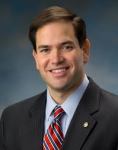
Marco RubioMarco Rubio: As reported by Politifact, in a 2014 interview with ABC News, Rubio stated,  “‘Our climate is always evolving and natural disasters have always existed.’ He doesn’t believe that ‘human activity’ is causing the extreme changes to climate change ‘the way these scientists are portraying it.’ He does not support legislation to ameliorate what has been laid out as industrial causes, seeing them as ‘destroy[ing]” the economy.”

Like Huckabee, his position has “evolved” over time. In 2007 he almost echoed Martin O’Malley when he said, “Global warming, dependence on foreign sources of fuel, and capitalism have come together to create opportunities for us that were unimaginable just a few short years ago,” he said. “Today, Florida has the opportunity to pursue bold energy policies, not just because they’re good for our environment, but because people can actually make money doing it. This nation and ultimately the world is headed toward emission caps and energy diversification.”

Update September 17, 2015: At the most recent Republican debate, Rubio staked out a position that the United States needs to focus on economic growth because countries like China would undercut any progress we might make on climate change:

“We’re not going to destroy our economy the way the left-wing government we’re under wants to do. Every proposal they put forward are proposals that will make it harder to do business in America, that will make it harder to create jobs in America….America is not a planet. And we are not even the largest carbon producer anymore: China is. And they’re drilling a hole and digging anywhere in the world that they can get a hold of.”

AP score for scientific accuracy: 21/100

Rubio dropped out of the race in April, 2016.

Texas Governor Rick Perry speaks to National Right to Life ConventionRick Perry: Talking to the Christian Science Monitor in June about oil and gas exploration and the Keystone XL, Perry said, “I don’t believe that we have the settled science by any sense of the imagination to stop that kind of economic opportunity.”

He even rejected the concept of carbon emissions contributing to warming, opining, “Calling CO2 a pollutant is doing a disservice the country, and I believe a disservice to the world.”

This is the same guy who couldn’t remember he wanted to cut the Department of Energy in his last go-round in 2012.

Rick Perry dropped out of the race in September 2015.

Sitting somewhere in the middle, but it’s hard to tell exactly where

Jeb BushJeb Bush: Bush seems to be following the Mitt Romney strategy of saying whatever you need to say to get the nomination, then coming up with a viable strategy for the general election:

  • In April, he said the US needs “to work with the rest of the world to negotiate a way to reduce carbon emissions.”
  • In May, he backtracked, commenting, “For the people to say the science is decided on this is really arrogant, to be honest with you.”
  • In June, Bush, a Catholic, disagreed with Pope Francis’ encyclical on climate change, saying “”I don’t get economic policy from my bishops or my cardinals or my pope.”
  • A few days later, he issued a vague call for action: “I live in Miami, a place where this will have an impact over the long haul. And I think we need to develop a consensus about how to approach this without hollowing out our industrial core, without taking jobs away from people, without creating more hardship for the middle class of this country,” he said. “I believe there are technological solutions for just about everything, and I’m sure there’s one for this as well.”

Expect that if he gets the nomination, he’ll find a middle position of paying lip service to climate change without a plan to do anything about it.

Update August 3, 2015: From The Hill, Bush is already seeking a middle position:

GOP presidential hopeful Jeb Bush says human activity is contributing to climate change and the country has an obligation to work to stop it.

“I think it’s appropriate to recognize this and invest in the proper research to find solutions over the long haul but not be alarmists about it,” Bush said in an interview published Thursday with Bloomberg BNA.

“We should not say the end is near, not deindustrialize the country, not create barriers for higher growth, not just totally obliterate family budgets, which some on the left advocate by saying we should raise the price of energy so high that renewables then become viable,” he added.

Update October 2015: Jeb released a four point energy plan that would increase growth of the sector by:

  • Lifting restrictions on exports of oil and natural gas;
  • Reduce “overregulation,” such as on fracking or coal power plants;
  • Allow states and tribes more say over their energy mix;
  • Approve the Keystone XL pipeline, which has been “badly politicized.”

That’s it. Reduce federal regulation. Approve a fossil fuel infrastructure project. No mention of renewables. No concern about climate change.

AP score for scientific accuracy: 64 (Highest of Republican candidates)

Bush dropped out of the race on February 20, 2016.
Rick SantorumRick Santorum: Last January, Santorum appeared on MSNBC’s State of the Union, and said, “Is the climate warming? Clearly over the past, you know, 15 or 20 years the question is yes. The question is, is man having a significant impact on that, number one. And number two, and this is even more important than the first, is there anything we can do about it? And the answer is,…clearly, no. Even folks who accept all of the science by the alarmists on the other side, recognize that everything that’s being considered by the United States will have almost – well, not almost, will have zero impact on it given what’s going on in the rest of the world.”

In June, he weighed in on the Pope’s enclyclical: “The church has gotten it wrong a few times on science, and I think that we probably are better off leaving science to the scientists and focusing on what we’re really good at, which is theology and morality. When we get involved with political and controversial scientific theories, I think the church is not as forceful and credible.”

AP score for scientific accuracy: Not rated

Santorum dropped out on February 3, 2016.

Bobby JindalBobby Jindal: Jindal believes that “human activity is having an impact on the climate,” but he told the Heritage Foundation last fall that global warming is being used by the Obama Administration as a “Trojan horse…to come in and make changes to our economy that they would otherwise want to make….It’s an excuse for the government to come in and try to tell us what kind of homes we live in, what kind of cars we drive, what kind of lifestyles we can enjoy. It’s an excuse for some who never liked free-market economies, who never liked rapid economic growth.”

Jindal’s energy plan, Organizing Around Abundance: Making America an Energy Superpower , makes the case for rolling back energy regulations and environmental protections, approving the Keystone XL pipeline, repealing the renewable fuel standard, allowing oil and gas exports and opening federal land to drilling.

Not really a recipe for warming reduction.

Bobby Jindal dropped out of the race on November 17, 2015.

CarlyFiorinaCarly Fiorina: Fiorina’s position is close to Christie’s, but she stops short of saying unequivocally that global warming is caused by humans. She agrees with Christie in saying that we should not act unilaterally when other countries are not cutting back on carbon emissions. In an October, 2014 op ed in the Washington Post she said,

“When discussing climate, scientists may agree that some policy change is warranted, but they also agree that action by a single state or nation will make little difference. China and India are the biggest and third-biggest producers, respectively, of carbon dioxide emissions, and their leaders were absent from the recent U.N. Climate Summit. At a time when American families are still recovering from joblessness and the recession, should the United States commit to an energy policy that puts U.S. jobs, and the economy, at risk?”

AP score for scientific accuracy: 28/100

Fiorina suspended her campaign after the New Hampshire primary.

Rand PaulRand Paul: Despite being one of only 15 Republican Senators to vote for a resolution last January that said global warming is real and humans contribute to it, two months later he voted against an amendment saying that climate change is real and caused by human activity and that Congress must cut carbon pollution.

In terms of policy, Paul has consistently been against action to reduce our carbon footprint.

Last year he told David Axelrod that the earth goes through periods of time when the climate changes, but he’s “not sure anybody exactly knows why. He said the science behind climate change is “not conclusive,” and that people who tie extreme weather to climate change are ignorant.

AP score for scientific accuracy: 38/100

Paul dropped out of the race after the Iowa caucuses.

In a class by himself

Donald TrumpDonald Trump: Appearing on Hannity in June, Trump said, well, something. “I’m not a believer in manmade — look, this planet is so massive. And when I hear Obama saying that climate change is the number one problem it is just madness. And by the way it started this global cooling, I mean we went through global warming…they don’t even know. Now they just call it — no, they call it extreme weather.”

AP score for scientific accuracy: 15/100

Here is Trump in a recent interview on climate change with the Miami Herald.
Posted in Community Organization | Tagged , , , , , , , , , , , , , , | 6 Comments

BREAKING. Decision in Silvertip Zone case (video)

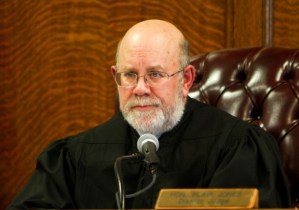
Judge Blair Jones. Billings Gazette photo.

Judge Blair Jones’ narrow ruling left other issues undecided. Billings Gazette photo.

In a narrow ruling that demonstrates how government at all levels conspires to deprive small landowners of their rights, Judge Blair Jones ruled last week that:

  • The Silvertip Zone petition did not meet Carbon County standards that had been established by the Commissioners in 2009, and
  • The Carbon County Commissioners actions in waiving their own requirements were illegal.

The practical result of these rulings is that all actions with regard to this petition are void, the suit is dismissed, and the petitioners need to either appeal the decision or start over once again and file new petitions that meet the County standards.

In addition, the legal aspects of the Commissioners’ original ruling that the petitioners hoped to clarify, particularly the Commissioners’ rejection of the zone because of what the petitioners believe was an illegal protest, were not part of Judge Jones’ ruling and will need to be decided in another courtroom on another day.

Resolution 2009-16
To understand why it is practically impossible for landowners to establish a citizen initiated zone, let’s take a look at Carbon County Resolution 2009-16, signed by current Commissioner John Prinkki on November 30, 2009. The resolution establishes “the approved process for the certification of “Part One” zoning petitions submitted in Carbon County, Montana, pursuant to §76-2-101, Mont. Code Ann.”

John Prinkki. Photo credit: James Woodcock, Billings Gazette

John Prinkki signed the resolution, then neglected to follow it. Photo credit: James Woodcock, Billings Gazette

Here are the major requirements for citizen initiated zoning petitions detailed in the resolution:

  • a map prepared by a certified land surveyor indicating the boundaries of the areas of land to be included in the district, and marking the names of the landowners
  • signature pages that included a legal description of the signator’s real property
  • an ownership report from a title company, setting forth the status of a title to a parcel of real property
  • an affidavit by all persons circulating petition signature pages attesting they collected those signatures, or each signature must be notarized

So what did the petitioners do wrong?
Now let’s go back and look at the entire history of this zoning petition, and see why the petitioners are in this position.

The items below have all been documented on this site, so you can click on the links below to go through all the gory details for verification.

1. On August 18, 2014, Silvertip landowners submitted petitions to the Carbon County Commissioners to establish a citizen initiated zone in the Belfry area. The petitions were verified and accepted by the Commissioners. It is important to note that both the Commissioners and the petitioners were aware of Carbon County Resolution 2009-16, and the petitioners were specifically told that the petitions were acceptable to the County. The petitions were certified by the County.

2. There were several public meetings and opportunities for everyone involved to have a chance to present a case regarding the proposed zone. You can read about these meetings and watch video here, here, here and here.

A well attended public meeting at Belfry School

A well attended public meeting at Belfry School

3. On September 18, 2014, Carbon County Attorney Alex Nixon provided feedback to the Commissioners. He advised them not to take action on the petition for one primary reason: the law requires that the land in a citizen-initiated zone be contiguous, and the Silvertip Zone defined in the petition was not a single contiguous parcel.

4. Undeterred, the petitioners went back and redefined the boundaries of the zone to answer Nixon’s objection, and resubmitted the petitions on November 20. The petitions were signed by all but one of the original landowners within the boundaries of the zone. Again, the petitioners were told by Carbon County that the petitions met County standards, and they were certified.

5. On December 15, at a meeting in Red Lodge, Carbon County Commissioners voted to move forward to create the Silvertip Zone in Belfry. The Commissioners agreed that the zone was “in the public interest and convenience for public health, safety and welfare, and for the public infrastructure.”

6. On January 15, 2015, in a stunning reversal that ignored the will of the majority for the opinion of a small minority, the Commissioners withdrew their motion to accept the petitions to form the Silvertip Zone.  Commissioner John Prinkki explained the move by saying, “The petition fails. As you know, under Section 5, because of the protest, we couldn’t move forward with this if we wanted to. It fails for that fact alone.” The rejection is clearly illegal, based on a recent Montana Supreme Court ruling. It is important to note that the County did not hold the protestors to any of the standards of 2009-16. Protests were allowed by email, with no certification required.

7. Stymied at every step, on February 13 Silvertip landowners filed a legal challenge to the Commissioners’ ruling in state district court in Red Lodge.

8. A hearing was held on June 4 in Red Lodge before Judge Blair Jones in the case of Martinell, et al,  v. Board of County Commissioners of Carbon County, et al.

9. On July 8, Judge Jones issued his decision, essentially saying that the County Commissioners failure to adhere to their own standards for accepting citizen initiated zoning petitions rendered the whole process, with all the work done by the petitioners to assert their rights on their own properties, meaningless.

In summary: here’s what happened and here’s what’s next
If you don’t want to wade through the details, here’s what happened in a nutshell: The Silvertip landowners submitted petitions that were approved and certified. The Carbon County Commissioners were rewarded by Judge Jones for their failure to follow their own rules and policies. Their reward was the dismissal of the suit against them.

The Silvertip landowners, after nearly a year of attempting to follow all the provisions of law, still cannot take advantage of the provisions of Montana law that enable them to protect their land, the water they need for their livelihoods and their health.

The landowners now have two options:

1. They can regroup, recollect petitions, and resubmit to the County Commissioners. Restarting the process would leave them open to the same sort of Commissioner misbehavior they have experienced the last time they submitted.

2. They can appeal Judge Jones’ decision, and go to the Montana Supreme Court to make sure that the legal protections against a small group of protesting landowners that are afforded in other types of zoning, are applied to citizen initiated zoning as well.

Regardless of which path they choose, you can expect that there’s no quit in this group of dedicated people. Nobody promised this would be easy.

We all owe them a debt of gratitude for their willingness to fight for our rights.

Here’s video of the hearing last month before Judge Jones that led to the ruling. Thanks to an extremely dedicated local volunteer for investing the time to shoot the videotape and transfer it to disk.

Related:
Judge Blair Jones’ ruling
Carbon County Resolution 2009-16, establishing requirements for citizen initiated zoning petitions
Timeline of events leading to legal action by Silvertip landowners, with videos of all related public meetings
FAQ: What the petitioners want

Posted in Community Organization, Politics and History | Tagged , , , , | 7 Comments

Learning opportunity: Webinar on challenges of life in the Bakken, July 23

Most of us will never visit the Bakken. We read the news stories, hear the reports of spills and train explosions and lives changed forever, and scratch our heads as oil executives tell us that fracking is essential to a thriving national economy.

register_now_button_blueOn Thursday, July 23 from 10-11 am Mountain, Earthworks will help you understand firsthand what life in the Bakken is like. They’ll be hosting a one-hour webinar on the challenges of living in the Bakken, the national implications of the North Dakota oil boom, and what you can do to help, featuring people who have experienced the boom and bust, with all its attendant issues.  Registration required; click on the register button to sign up.

Panelists
Don Morrison – Executive Director, Dakota Resource Council
Wayde Schafer – Sierra Club, North Dakota
Theodora Bird Bear – Fort Berthold Indian Reservation, North Dakota
Martin Mock – Senior Pastor, First Lutheran Church, Williston, North Dakota

Webinar presentersModerators
Deb Thomas, Earthworks and Shaletest.org
Jennifer Goldman, Earthworks

Short panel presentations will be followed by a Q&A session.

Definitely worth an hour of your time.

Posted in Bakken | Tagged , , , , , | Leave a comment

Don’t miss! Award winning film director Andrew Renzi in Absarokee, July 26

You won’t want to miss out on the Stillwater Protective Association’s remarkable annual summer event, to be held at the Anipro Event Center south of Absarokee on Sunday, July 26.

spa_RSVPDirector Andrew Renzi, whose award-winning film Fishtail was nominated as Best Documentary at the Tribeca Film Festival in New York last year, will be on hand to show clips from the film, tell the story behind his depiction of local ranching life, and answer your questions.

Locally sourced heavy hors d’oeuvres from Wild Flower Kitchen and drinks will be served. There will also be a live and silent auction, and a wine raffle. Doors open at 4:00, and the event begins at 4:30.

Tickets are $30 if reserved by July 19, or $35 at the door. Children under 12 are free.

The event supports the work of the Stillwater Protective Association (SPA), an organization formed in 1975 to protect, preserve, and safeguard the quality of air, water, land, and life in the Stillwater Valley. SPA is leading the fight in Stillwater County to protect the community from unregulated oil and gas activity, and deserves your support.

Fishtail Basin Ranch3About the film
Set on the Fishtail Basin Ranch on Fiddler Creek along the Beartooth Front, Fishtail is the story of a local way of life. Director Andrew Renzi visited this ranch, owned by the Abbott family, numerous times and worked there one summer when he was in high school.

Inspired by the experience, Renzi and childhood friend Tylee Abbott decided to collaborate to produce a documentary on the Montana ranching way of life. Andrew was the storyteller and director, following Tylee and ranch manager Brian Young for four days during calving season with a 50-pound, 16mm camera.

Fishtail Basin Ranch1Here’s how reviewer Joshua Handler describes the 70 minute film:

“The only narration is a beautiful, rough recording of Harry Dean Stanton reading poetry…. I was mesmerized throughout. The 16MM cinematography gives the film the feel of a classic western. Its faded colors and film grain make this an ode to a time gone by.

Fishtail Basin Ranch2“These cowboys are among the last of their kind. They are a group who thrived 150 years ago but have slowly been dying. Renzi’s film captures this sense of melancholy through Stanton’s narration and the cinematography, but it is also a testament to those who live and love this rough way of life. These men rise at sunrise and work through the day caring for these animals.  Their job is their life.

“The sun-drenched, mystical cinematography by Joe Anderson ranks among the best I’ve seen this year.”

(Photos above from Fishtail Basin Ranch tumblr. You can click to enlarge.)

Related: Read my original post on this film by clicking here.

Get directions to the Anipro Center. (Enter your address at the prompt. Note that Google Maps lists the Center as “Rick Young Auctioneer”.)

Fishtail trailer:
https://www.youtube.com/watch?v=uDiKtTPkrBI

Posted in Community Organization | Tagged , , , | 1 Comment

There have been 66 oil-related spills and 8 oil fires in Montana so far this year

Click to read BOGC report. Photo: Montana Board of Oil and Gas

According to data published by the Montana Board of Oil and Gas Conservation (BOGC), in 2015 there have been a total of 74 “undesirable” oil-related incidents in Montana through June 22. Of these, 66 were spills of oil and/or particulate water, and eight were fires. According to the report, about half of the spills were contained on the well pad, but the other half migrated beyond the pad. You can read the report by clicking the graphic at right (Microsoft Excel required).

Nearly all of the incidents occurred in the Bakken in northeast Montana, with a handful occurring in Toole and Blaine counties in the northern part of the state.

According to John Gizicki, BOGC Compliance Specialist, operators are required to report incidents as follows:

  • Spills greater than 50 barrels: Immediate notice to BOGC and written report
  • Spills between 10 and 49 barrels: Written report only
  • Spill of any size not contained at the well pad: Written report only
  • Any fire: Written report only

The complete undesirable incident reporting rules can be found in the Administrative Rules of Montana, Section 36.22.1103.

Cleaning up an oil spill on the Blackfeet Reservation. Photo: Associated Press

Cleaning up an oil spill on the Blackfeet Reservation. Photo: Associated Press

By my count, 16 of the incidents exceeded 50 barrels. The largest spill was 3500 barrels, on April 10 in Fallon County. Some of the spills listed on the report were not required to be reported because they were less than 10 barrels and were contained on the well pad, but Gizicki indicated that “some companies report everything.”

It is unknown how many companies comply with Montana rules, and whether there are any spills that went unreported.

This is why we need to act
By my calculation, 74 incidents in less than six months is about three incidents a week. More than one spill per week is not contained on the well pad, meaning the spill leaks into the soil.

No one who follows oil and gas issues should be surprised by the frequency of these incidents. Oil drilling is a dirty business.

But landowners should be extremely concerned about the failure of the state to protect them from the dangers of drilling. As we have often documented, the state of Montana does a poor job of reigning in the oil companies:

This is why local citizens in Carbon and Stillwater counties are fighting for local regulation of oil and gas activities through a process called citizen initiated zoning. Residents of the Silvertip Zone in Belfry have filed suit against the Carbon County Commissioners to assert their right to form a zone, and residents in Stillwater County will soon be presenting over 300 signatures from local landowners to establish a zone in the Nye area.

For information on what a citizen initiated zone would do, click here.

Posted in Fracking Information | Tagged , , , , , | 5 Comments

Follow up on last week’s setback hearings at the Montana Board of Oil and Gas

Linda Nelson, BOGC Chair, at the hearings last week. Photo: KTVQ.com

Linda Nelson, BOGC Chair, at the hearings last week. Photo: KTVQ.com

A follow up on the June 23 public session at the Montana Board of Oil and Gas Conservation (BOGC) on setbacks of oil and gas wells from occupied buildings and water sources.

After a two-hour special hearing with significant testimony, the BOGC said it would decide whether to pursue a setback rule making process at its meeting in August. That meeting will be held on Thursday, August 13 in Billings.

Click here to read a news report on the hearings with video.

Jessica Sena, representing the Montana Petroleum Association, opposes any setback regulations. Photo: KTVQ.com

Jessica Sena, representing the Montana Petroleum Association, opposed any setback regulations.  Photo: KTVQ.com

If you haven’t familiarized yourself with the issue of setbacks, I recommend you read this post. I expect there will be additional opportunity for public input on the issue later this summer.

The following letter to the editor from Cindy Webber of Big Timber appeared in the June 28 edition of the Billings Gazette:

Oil and gas setback rule needed to protect Montana homeowners
I sincerely hope that the Montana Board of Oil and Gas will decide to begin rule making on setback requirements, as it was asked to do on June 24. Setback requirements restrict oil and gas wells from being placed too close to residences or water sources, in order to strike an equitable balance between development and landowner protections.

Bainsville rancher Pat Wilson testified, "According to current Montana law, it could practically be on their doorstep. I mean we don't have a rule."

Bainsville rancher Pat Wilson testified, “According to current Montana law, a well could practically be on their doorstep. I mean we don’t have a rule.”

Currently, Montana has no setback requirements on private land. In contrast, our neighboring states of Wyoming, North Dakota and Colorado require a setback of 500 feet between an oil and gas well and residences. On federal land, the Bureau of Land Management prohibits oil and gas development within one-quarter mile (1,320 feet) of an occupied dwelling.

Why are setbacks necessary? First, split estate situations are common throughout the West — one person owns the mineral rights and another owns the surface land. Thus, residents may have no say about oil and gas development on their land. Montanans should not have to hire a lawyer to protect their land.

Secondly, studies have shown that the safest distance between a home and an oil well is one-quarter mile. Negative impacts from oil rigs include noise and light pollution, harmful emissions such as methane or diesel fumes, truck traffic and water contamination.

Only with citizen input can we find a Montana solution that adequately protects landowners.

Cindy Webber
Big Timber

Posted in Fracking Information | Tagged , | 2 Comments

A debate between Pope Francis and Montana Senator Steve Daines on climate change

Pope Francis

Pope Francis

The Vatican has released its long-awaited encyclical on climate change. Entitled “Laudato Si,” or “Be Praised,” it is long and thorough, and goes far beyond a typical papal encyclical.

Instead of addressing only the world’s 1.1 billion Catholics, it speaks to the entire world in a harsh critique of modern life, calling for a complete reassessment of lifestyle, politics and economics as we seek to repair our world and protect it from the dire threat of climate change.

The document puts the blame squarely on humans, and no one is spared — politicians, businesspeople, industrialists and common citizens. Francis calls on all of us to work together to change:

“I urgently appeal, then, for a new dialogue about how we are shaping the future of our planet. We need a conversation which includes everyone, since the environmental challenge we are undergoing, and its human roots, concern and affect us all.”

Senator Steve Daines

Senator Steve Daines

A debate
The Pope’s bold statement puts him squarely in opposition to many leaders in the United States who deny climate change. In the interest of promoting the conversation that Francis seeks, let’s take the published comments of the Pope to create a debate with Senator Steve Daines, whose documented positions are pretty much diametrically opposed.

We’ll take the major themes in the encyclical, and match the Pope’s words against statements on the same topics made and endorsed by Daines. The difference is stark.

It’s likely one of them is right and one is wrong. When our descendants look back in a hundred years, who do you think will be vindicated?

Read and judge for yourself.

We are the cause of the degradation
Pope Francis: “The climate is a common good, belonging to all and meant for all. At the global level, it is a complex system linked to many of the essential conditions for human life. A very solid scientific consensus indicates that we are presently witnessing a disturbing warming of the climatic system.

“These situations have caused sister earth, along with all the abandoned of our world, to cry out, pleading that we take another course. Never have we so hurt and mistreated our common home as we have in the last two hundred years.”

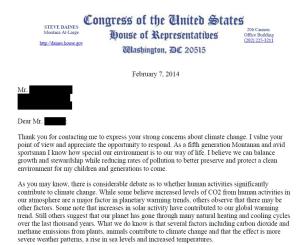
Steve Daines letter

(click to read full letter)

Steve Daines: “As you may know, there is considerable debate as to whether human activities significantly contribute to climate change. While some believe increased levels of CO2 from human activities in our atmosphere are a major factor in planetary warming trends, others observe that there may be other factors. Some note that increases in solar activity have contributed to our global warming trend. Still others suggest that our planet has gone through many natural heating and cooling cycles over the last thousand years.” (from a letter to a constituent. Click at right to read.)

Fossil fuel burning is the climate change culprit
Pope Francis: “There is an urgent need to develop policies so that, in the next few years, the emission of carbon dioxide and other highly polluting gases can be drastically reduced, for example, substituting for fossil fuels and developing sources of renewable energy. Worldwide there is minimal access to clean and renewable energy.”

“We know that technology based on the use of highly polluting fossil fuels – especially coal, but also oil and, to a lesser degree, gas – needs to be progressively replaced without delay.”

Steve Daines: “Montanans understand that “Made in America” energy helps keep prices lower and reduces our dependence on foreign sources…. (O)ur federal government has blocked projects that are part of the solution, like the Keystone XL Pipeline.

“Montana is called the Treasure State for a reason, and has an abundance of natural energy resources including coal, oil, natural gas, hydro, and wind. I will fight for an all-inclusive, and market based energy policy that removes barriers to developing our natural resources in Montana and across America.”

Poverty and inequality need to be addressed
Pope Francis: “The same mindset which stands in the way of making radical decisions to reverse the trend of global warming also stands in the way of achieving the goal of eliminating poverty. A more responsible overall approach is needed to deal with both problems: the reduction of pollution and the development of poorer countries and regions.”

“We have to realize that a true ecological approach always becomes a social approach; it must integrate questions of justice in debates on the environment, so as to hear both the cry of the earth and the cry of the poor.

“As the United States bishops have said, greater attention must be given to ‘the needs of the poor, the weak and the vulnerable, in a debate often dominated by more powerful interests. We need to strengthen the conviction that we are one single human family. There are no frontiers or barriers, political or social, behind which we can hide, still less is there room for the globalization of indifference.”

Steve Daines: “More than 1.3 billion people lack access to electricity— more than half living in developing Asian nations. Coal-powered electricity won’t just meet a rising demand for energy in these regions. It will also help lift countless families out of poverty.

“As the world sees an increased demand for power, it’s clear that traditional energy sources generated from our federal and tribal lands, including Montana’s Powder River Basin and the Bakken oil formation, have the potential to meet this rising global energy demand.”

The urgency to act falls on all humanity
Pope Francis: “The natural environment is a collective good, the patrimony of all humanity and the responsibility of everyone. If we make something our own, it is only to administer it for the good of all. If we do not, we burden our consciences with the weight of having denied the existence of others.”

“Many things have to change course, but it is we human beings above all who need to change. We lack an awareness of our common origin, of our mutual belonging, and of a future to be shared with everyone.”

Steve Daines: (from the constituent letter above) “While I believe we all have a moral responsibility to be good stewards of the environment, the current uncertainty surrounding climate change requires us to consider very carefully any legislation that would cost jobs and hurt families with only the promise of an extremely small impact on the reported problem. I graduated with an engineering degree from MSU. My education trained me to base decisions on sound math and science. I will not support policies that would harm America’s economy while having an insignificant or uncertain benefit to the environment.”

It is a myth that humans can dominate the earth without consequences.
Pope Francis: “We are not God. The earth was here before us and it has been given to us. This allows us to respond to the charge that Judaeo-Christian thinking, on the basis of the Genesis account which grants man “dominion” over the earth (cf. Gen 1:28), has encouraged the unbridled exploitation of nature by painting him as domineering and destructive by nature. This is not a correct interpretation of the Bible as understood by the Church.”

Click to view publication

Click to view publication

Steve Daines: Daines is one of the Congressional sponsors of the Capitol Ministries 2015 publication Coming to Terms with the Religion of Environmentalism, which states, “The Psalmist reinforces the idea that man has been created in the image of God and has been given dominion over all of the earth…. Whereas Scripture clearly teaches that man is the apex of all God’s purposes  and creations, the primary purpose of radical environmentalism is the preservation of the earth.”

The current level of inaction is indefensible
Pope Francis: “It is remarkable how weak international political responses have been. The failure of global summits on the environment make it plain that our politics are subject to technology and finance. There are too many special interests, and economic interests easily end up trumping the common good and manipulating information so that their own plans will not be affected.”

“As often occurs in periods of deep crisis which require bold decisions, we are tempted to think that what is happening is not entirely clear.

“This is the way human beings contrive to feed their self-destructive vices: trying not to see them, trying not to acknowledge them, delaying the important decisions and pretending that nothing will happen.”

Steve Daines: “I pledge to the taxpayers of my state, and to the American people, that I will oppose any legislation relating to climate change that includes a net increase in government revenue.”

There is hope
Pope Francis: “Although the post-industrial period may well be remembered as one of the most irresponsible in history, nonetheless there is reason to hope that humanity at the dawn of the twenty-first century will be remembered for having generously shouldered its grave responsibilities.”

“Human beings, while capable of the worst, are also capable of rising above themselves, choosing again what is good, and making a new start.”

Steve Daines: “Coal, oil and natural gas will continue holding a critical role in powering the world for the foreseeable future.”

Posted in Fracking Information | Tagged , , , | 6 Comments

Action Alert: Your voice is needed to put strong Montana setback rules into place

The Montana Board of Oil and Gas Conservation (BOGC) will hold a special one-hour public session on Wednesday, June 24 to consider whether to regulate oil and gas “setbacks” — the distance between a well and a water source or an occupied dwelling, school, or hospital. This is an opportunity for your voice to be heard, either in person or by email, to help set rules on this critical issue.

The meeting will be at 1:00pm in the Hearing Room at the BOGC office at 2535 St. Johns Avenue in Billings.

BOGC consideration of this issue is long overdue. One of the most critical tensions between the rights of communities and those of oil and gas operators is the distance of the “setback” between a well and occupied dwellings. Most state setback laws are antiquated. They date back to the pre-fracking period when all wells were vertical, and most drilling occurred in rural areas.

But fracking has changed all that. Today over 15 million people live with a mile of a well. The footprint of wells has expanded substantially. There can be eight wells on a pad, and drilling activity brings a constant flow of truck traffic, 24×7 noise, flaring and a stream of workers. Fracking has moved drilling to small towns and urban areas, and progressive states are increasing their setback limits  to take this new reality into account.

Montana’s setback rules are not antiquated — they don’t exist. That’s right. In Montana there is no legal buffer between a wellhead and where people live, where kids go to school, where patients are treated. Operators have legal discretion to place a wellhead pretty much anywhere they choose.

The Montana Legislature had a chance to rectify this in the 2015 session, but they failed to do so. Senate Bill 177, which would have established a 1,000 foot setback from a home, water well or surface water, was tabled in committee and never made it to the floor for a vote.

How you can make a difference
You can make your voice heard in two ways:

  1. Attend the meeting and address the BOGC. If you plan to attend, there will be a prep meeting at 11:30am on Wednesday at Northern Plains Resource Council, 220 S 27th St in Billings.
  2. Submit written comments. Send your comments to ogsetback.comments@northernplains.org, and they will be submitted to the BOGC. Be sure to make the comments personal. State your name, where you’re from, and any special interest you have in the subject. Feel free to use the content in this post as you see fit.

Why setbacks are important
There are many reasons why Montana needs to codify adequate setbacks. Here are four of the most important ones you might consider citing in your oral or written comments:

1. The division in property rights between surface and mineral estates is fundamentally unfair to surface owners. In Montana and much of the West, property rights on a piece of land are split between surface and mineral estates. In some cases these estates are unified — the same owners owns the surface and mineral rights. But in many cases, the estate is split, and the surface rights are severed from the mineral rights.

When an estate is split, mineral rights are dominant. In 1963, the Montana legislature adopted Mont. Code Ann. § 76-2-209 as part of the Montana Zoning and Planning Act (MZPA). This law effectively prohibits governments from

prevent(ing) the complete use, development or recovery of any mineral, forest, or agricultural resource.

In practice, this means that mineral rights are dominant. An operator typically offers a surface rights holder a one-time fee in the neighborhood of $1500 per acre used, and puts up a small bond to pay for damages. Then, depending on the setback limits, they can place a well where they choose and have 24×7 access to the property.

This is fundamentally unfair. At the very least, significant setbacks are required to protect the property and livelihoods of surface owners.

A northern Colorado home with a pump jack in front and a rig behind it. Credit: Stephanie Joyce

A northern Colorado home with a pump jack in front and a rig behind it. Credit: Stephanie Joyce

2. If setbacks from water supplies are inadequate, water used for agriculture, ranching, and drinking can become contaminated. The risk of water contamination has been a continuous theme on this site. There is ample evidence that drilling causes water contamination. A recent EPA report identifies five ways in which fracking makes water supplies vulnerable:

All of these risks are increased with proximity of the well to water supplies. Strong setbacks are required to protect our water.

There are very real reasons to be concerned about this. Energy Corporation of America, which has been active along the Beartooth Front, has been cited multiple times in Pennsylvania for violations related to the risks mentioned in the EPA report.

3. Oil and gas drilling negatively impacts human health and safety. This has been another continuous theme on this site. Study after study has shown that when people are exposed to oil and gas drilling, particularly the chemicals used in fracking, their health is negatively impacted.

Rather than go into detail here, I invite you to look at two summaries, written by credible organizations, that clearly show the risk to health of oil and gas drilling:

Click to download complete study

Click to download complete study

Physicians, Scientists and Engineers Healthy Energy Literature Review
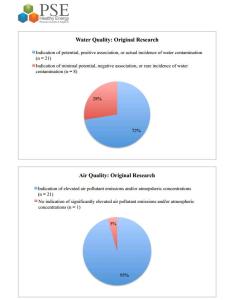
You can click at left to read an analysis of peer-reviewed scientific research on the health impacts of fracking by PSE Healthy Energy, a collaborative of science professionals that provides a multi-disciplinary approach to identifying “reasonable, healthy, and sustainable energy options for everyone.”

Their findings:

  • 96% of all papers published on health impacts indicate potential risks or adverse health outcomes.
  • 87% of original research studies published on health outcomes indicate potential risks or adverse health outcomes.
  • 95% of all original research studies on air quality indicate elevated concentrations of air pollutants.
  • 72% of original research studies on water quality indicate potential, positive association, or actual incidence of water contamination.
  • There is an ongoing expansion in the number of peer-reviewed publications on the impacts of shale and tight gas development: approximately 73% of all available scientific peer-reviewed papers have been published in the past 24 months, with a current average of one paper published each day.
Click to download compendium

Click to download compendium

Concerned Health Professionals of New York Compendium
A second compendium of scientific and medical findings was released last December by an alliance of health professionals called the Concerned Health Professionals of New York. You can download the compendium by clicking on the graphic at right. We reported on the first compendium here.

The compendium provides a list of studies that demonstrate many health issues related to fracking, including

  • Air pollution
  • Water contamination
  • Inherent engineering problems that worsen with time
  • Radioactive releases
  • Occupational health and safety hazards
  • Noise pollution, light pollution, and stress
  • Earthquake and seismic activity
  • Abandoned and active oil and natural gas wells as pathways for gas and fluid
    migration
  • Flood risks
  • Threats to agriculture and soil quality
  • Threats to the climate system
  • Inaccurate jobs claims, increased crime rates, and threats to property value and
    mortgages
  • Inflated estimates of oil and gas reserves and profitability
  • Serious risk to investors

You can go to the compendium and see a list of studies that document each of these issues.

4. Drilling reduces property values for homes close to oil wells. There is now extensive evidence that buyers are reluctant to purchase properties close to drilling sites. I have written often on this topic, but recommend you read this post, which summarizes data from all over the United States showing buyers are reluctant to bid on properties close to drilling sites, and when they do bid they reduce the amount they are willing to pay.

As Denver Realtor Adam Cox put it, “Potential buyers balk at buying homes near a drilling site, even though that’s often where the discounted homes are” because they are so close to oil and gas activity. Similarly, he said, homeowners near drilling sites “often have to sell at significantly lower prices than when originally purchased due to the oil and gas industry neighbors.”

According to another study done at Duke University and the University of Calgary, properties with private wells, such as those along the Beartooth Front, lose 10% more value than those with municipal water supplies.

It is fundamentally unfair for surface owners to be penalized because there are wells close to their properties. Strong setbacks help keep that from happening.

What setback distance should be required?
The map below shows the required setback distances, in feet, for individual states as of June 2013. These are mostly older regulations, set long before fracking brought wells into populated areas. Many states are working toward increasing their setback requirements, and many communities are setting their own setback limits to protect their citizens from unregulated drilling.

As you can clearly see from the map, Montana is one of the few oil and gas states with no setback requirements.

Source: Resources for the Future,
Source: Resources for the Future, “The State of State Shale Gas Regulations,” June 2013

 The literature offers slightly conflicting views of the ideal setback distance, but here are some things you might consider:

  • The Northern Plains Resource Council in Montana and the Powder River Resource Council in Wyoming have called for a quarter mile (1320 feet) setback from occupied buildings.
  • Individual cities and towns in Texas, Colorado and elsewhere are enacting ordinances that tend to establish setbacks of 1000 to 1500 feet. Since it is unlikely Montana will establish different setbacks for populated and unpopulated areas, this is a reasonable guideline to consider.
  • The oil and gas industry will resist the establishment of any setbacks. Therefore the BOGC will feel significant pressure not to set a significant setback. It makes sense to push as hard as possible for significant setbacks that will protect property, water and health.

The quarter-mile recommendation is a reasonable standard to push for.

What’s happened in Wyoming: a point of reference
To consider what is likely to happen in Montana, it is useful to look at what is going on in Wyoming, a neighboring rural oil and gas state with similar political structures to Montana’s. Wyoming is about a year ahead in this process of regulating setbacks, so we can see where this process took that state to anticipate what will happen in Montana . The results are not encouraging.

Wyoming setbacks are defined by rule as follows: “Pits, wellheads, pumping units, tanks, and treaters shall be located no closer than three hundred fifty feet (350′)” from “water supplies, residences, schools, hospitals, or otherstructures where people are known to congregate.” (see Section 22 (b) on page 3-32). This is a decades-old rule.

As drilling has expanded in Wyoming and has come closer to homes in populated areas of Converse, Campbell, Johnson and Laramie Counties, residents have begun to speak out in alarm at the proximity of drilling activities to occupied residences. Governor Matt Mead, who by law is chair of the Wyoming Oil and Gas Commission, indicated a willingness to consider increasing setback laws in the state. He asked for citizen input, and had staff look at the issue and make a recommendation.

Meanwhile the oil and gas industry actively lobbied for a setback limit of 500 feet, an increase from 350 feet. They made this proposal last November, citing “a substantial burden on land and mineral owners without compensation for the loss of mineral reserves and…serious harm to our communities’ ability to provide important public services like schools, roads and public safety” if the limits were increased.

Oil and Gas Commission staff looked at the issue and recommended required setbacks be 750 feet.

Citizen groups, including the Powder River Resource Council, argued that limit be increased to a quarter mile, or 1320 feet.

Guess what happened?

The Commission adopted the oil and gas industry’s 500 foot proposal, with two stipulations:

  1. Companies have to notify landowners living within 1000 feet of a well pad of their drilling plans between 30 and 180 days before drilling starts.
  2. Companies have to submit a mitigation plan to the Oil and Gas Supervisor detailing how they’re going to minimize impacts on neighbors. They wouldn’t be able to start drilling until that plan is approved.

Neither of these has much teeth. A 30-day notification is precious little time for a landowner to take action if a property is to be drilled, and it’s hard to believe the Oil and Gas Supervisor has any incentive to be heavy-handed in imposing restrictions on an operator. As Wyoming landowner Alex Bowler put it, the Wyoming Oil and Gas Conservation Commission “only has two priorities”: preventing the waste of oil and gas resources, and maximization of mineral-related tax revenues. “The health and safety of local residents … and the potential devaluation of property are not really on the (agency’s) radar.”

You can listen to a Wyoming Public Radio piece on this subject by clicking below.

Time for Montana residents to take action
Things in Montana are very similar. The primary mission of the Montana BOGC is threefold:

  1. To prevent waste of oil & gas resources,
  2. To conserve oil & gas by encouraging maximum efficient recovery of the resource, and
  3. To protect the correlative rights of the mineral owners, i.e., the right of each owner to recover its fair share of the oil & gas underlying its lands.

That’s pretty clear. The word “conservation” in the agency’s name is not about conserving natural resources, but about conserving oil and gas, and protecting the rights of mineral holders.

That is why you should take the opportunity to step up and either attend Wednesday’s meeting or submit written comments to ogsetback.comments@northernplains.org. This is important. It appears likely that the BOGC will take up the issue of setbacks, but if they are going to be more than a small amount, you are going to have to make your voice heard.

And you can be sure that the Montana Petroleum Association will make its voice heard, fighting any regulation that will restrict when and where they pull oil out of the ground.

Now is the time to speak.

More: The State of State Shale Gas Regulation: State-by-State Tables
Great Falls Tribune letter to the editor on setbacks. A good model.

Posted in Fracking Information | Tagged , , , , , , | 5 Comments

Off topic: Are Wyoming’s Park County Commissioners about to sell their souls to a New Yorker?

Today we go a little off topic, but a constant theme here is that water is precious. Fracking uses a lot of water, and water contamination is a serious threat when drilling is not carefully regulated. But water is water, and we shouldn’t be destroying the environment along the Beartooth Front to take an important source of water no matter what the purpose.

Philippe Lajaunie

Philippe Lajaunie

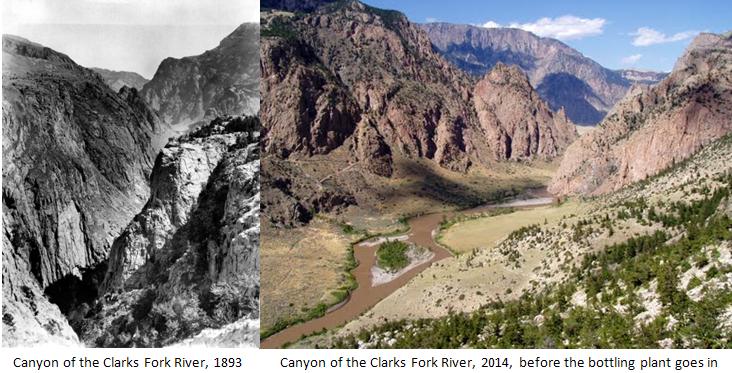
So it caught our attention that Park County, Wyoming, on the Beartooth Front just over the Montana border from Carbon County, is considering a proposal — I can’t believe I’m even writing this — from a New York entrepreneur to build a large water bottling factory near the beautiful Clarks Fork Canyon.

Philippe Lajaunie, who owns property at the foot of the Beartooth Mountains, just outside the Shoshone National Forest, is the New Yorker who wants to build the factory. His business claim to fame is that he owns the Brasserie Les Halles, a restaurant on Park Avenue in Manhattan that specializes in escargot, fois gras and steak tartare.

Problem is, according to the Powell Tribune, “The property lies within a county zoning district intended to promote ‘the retention of open space, agricultural land, wildlife habitat, riparian habitat and scenic areas.’ Major industrial projects — like the proposed water bottling plant — are not allowed. That means Lajaunie needs a variance, or exception to the rules, to move forward with his plans.”

canyon of the clarks fork riverIf he gets the variance, he plans to build a 45,000 square foot facility with a 37-space parking lot. According to his attorney, “Mr. Lajaunie is really going to endeavor to build a facility that is in harmony with nature and with the site.” Right.

The good news is that at least two Park County Commissioners think this is a bad idea.

“That’s probably one of the most pristine, scenic spots in Park County,” said Park County Commissioner Tim French during a May 19 hearing. “I just don’t think that’s the place for a big major industrial use.”

Last month French and fellow Commissioner Lee Livingston prevailed by a 2-1 vote, blocking the variance. Problem is, two Commissioners weren’t in attendance. They’ll be back, and the variance will be back on the agenda.

Commission Chairman Joe Tilden was on board with approving the variance. Tilden said he has strong feelings about private property rights and noted the jobs and business the project could create.

Lajaunie demonstrating harmony with nature

Lajaunie demonstrating harmony with the environment

“I think it can be done in a … very environmentally safe way that will blend in with the environment and won’t affect wildlife,” he said. That’s the same imaginary thinking drilling proponents use to justify ruining a place.

French countered that he, too, believes in private property rights and “the individual purchased the property knowing exactly what the restrictions on it were.”

(Read meeting minutes)

American Summit, the name of Lajaunie’s company, intends to market its water as bottled in the United States, and to compete against non-American brands Perrier, Fiji and San Pellegrino. Being bottled in Wyoming, according to Lajaunie, makes it — wait for it — more “environmentally sustainable.” The water is also (you can’t make this stuff up) “vegan certified.” No glutens or sage-grouse killed to make it.

Folks, water is precious. One of the most important arguments against fracking is that it uses scarce water at a time when much of the West is parched from drought. And anything that happens to waste water on the Clarks Fork in Wyoming will have an impact on Carbon County residents downstream.

This is a terrible idea. I’ll let you know if the Park County Commissioners decide to sell their souls to this New York restaurateur. Might even be worth a trip over the hill to let them know what you think.

If you’d like to contact them directly, here’s how to reach the Park County Commissioners:

Bucky Hall                 307-587-3684
Lee Livingston          307-527-7415
Tim French               307-754-5420
Joe Tilden                 307-587-1352
Loren Grosskopf      307-587-6607

Posted in Uncategorized | Tagged , , , , | 5 Comments

New study finds toxic air pollution in Ohio’s most heavily fracked county

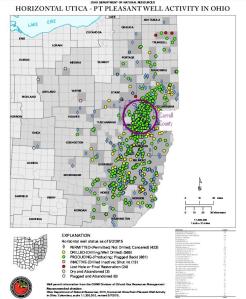
Carroll County: location of study. Click to enlarge.

Carroll County: location of study. Click to enlarge.

(Editor’s note 7/16/2016: This study has been withdrawn.) A peer-reviewed study published by scientists from Oregon State University and the University of Cincinnati in the journal Environmental Science & Technology reveals that emissions generated by fracking operations may be exposing people to toxic pollutants at levels many times higher than the EPA considers safe for lifetime exposure. 

The researchers analyzed air samples from Carroll County, which has more permitted oil and gas wells (480) than any other Ohio county. They found that hydraulic fracturing emits pollutants known as polycyclic aromatic hydrocarbons (PAHs), some of which are linked to increased risk of cancer and repiratory ailments.

Based on their data, the researchers calculated the cancer risk from airborne contaminants. For the worst-case scenario, exposure 24 hours a day over 25 years, they found that people living anywhere in the study area would be exposed to toxic pollutants at levels exceeding the threshold that the EPA considers safe.

Air sampler used in the study

Air sampler used in the study

The study was initiated after local residents contacted Erin Haynes, a public health expert at the University of Cincinnati, wanting to know about the health risks posed by the gas wells near them. The research involved citizen volunteers, who collected the air samples.

The analysis found the highest levels of PAHs nearest to the wells and decreased with distance. However, even at the lowest levels, which were detected at sites more than a mile away from a well, the samples revealed higher levels of PAHs than previous research had found in downtown Chicago or near a Belgian oil refinery. The lowest levels found in the study were about 10 times higher than in a rural Michigan area with no gas wells.

For those seeking a “smoking gun” that links fracking to these air pollution and health risks, keep in mind that this study doesn’t definitely show that fracking is the cause of the toxic air measured in Ohio. But, added to the other compelling evidence of the health risks of oil and gas drilling, it is reason to build regulatory precautions that will protect citizens from harm.

Related:
A database of 47 peer reviewed studies on the impact of oil and gas drilling on air quality
A compilation of studies on the impact of oil and gas drilling on air pollution from the Concerned Health Professionals of New York (see page 11)
A personal story of how drilling impacted the life of a Carroll Country, Ohio resident: A personal story: Kip Gardner, Carroll County, Ohio
Another example of the use of volunteer data collection to determine the health risks of oil and gas drilling: More new evidence of public health risk at drilling sites all over the United States
The precautionary principle and the science behind the New York fracking ban, a look at why studies like the one in Carroll County, Ohio are reason enough to stop or slow down fracking until we can clearly determine the dangers of oil and gas drilling

Posted in Health impacts | Tagged , , , , , | 3 Comments