Congress is currently very busy doing absolutely nothing about regulating oil and gas

Congress is well paid by the oil and gas industry to do absolutely nothing to protect communities from insufficiently regulated oil and gas drilling.

And that’s exactly what they’re busy doing — nothing. Of course, the process of doing nothing means appearing to be very busy,  introducing lots of bills that they know won’t pass to score points with their constituents and funders.

Source: Mother Jones

Source: Mother Jones

It should not be lost on us that their inaction is all about money. With the Supreme Court decision in Citizens United v. FEC, the amount of political giving by the oil and gas industry has exploded, as indicated in the chart at left.

And what the oil companies want in return is to be left alone. They want to be free to pull oil and gas out of the ground without having to worry about poisoning the water supply or worrying about impacts on human health, and they want Congress, as much as possible, to backtrack on environmental legislation that has already been passed.

Sadly, this is exactly what Congress has given them. They have done nothing of significance to protect citizens in fracking regulation since the boom started over the last decade. And over the last 25 years they’ve been doing the bidding of their benefactors by gutting major environmental protections passed by a more bipartisan Congress in the 1970s and 1980s. It’s worth your time to read the detail of how these protections have been stripped away by a Congress more interested in pleasing their funders than protecting their constituents. Click on the graphic below for the terrible details.

oil and gas exemptionsSo Democrats are introducing bills that would restore some of these protections, and Republicans are introducing bills that would further strip away federal stewardship of the environment.

But it’s all posturing. Every member of Congress knows that none of these bills has a ghost of a chance of becoming law.

Democratic bills
The following bills have all been introduced by Democrats in the House of Representatives. As a group, they’re commonly referred to as the “Frack Pack.” If passed, they would provide important protections to communities and landowners, and remove oil and gas exemptions from major federal environmental legislation. On this site, we have advocated for provisions of all these bills, and the protections the bills would offer are what citizens seeking local zoning want.

HR 1482: Fracturing Responsibility and Awareness of Chemicals Act of 2015 (FRAC) (House sponsor: Diana DeGette, CO): This bill would empower the EPA to regulate hydraulic fracturing. Key provisions:

  • Remove the hydraulic fracturing exclusion from the Safe Drinking Water Act (SDWA). You’ll recall that this exemption was passed as part of the Energy Act of 2005 at the behest of Vice President Cheney.
  • Impose increased requirements for disclosure of the chemicals used in the fracking process, although the bill still has a provision that gives companies trade secret protections.

HR 1515: Safe Hydration is an American Right in Energy Development Act of 2015 (SHARED) (House sponsor: Jan Schakowsky, IL). SHARED would add the following provisions to the SDWA:

  • Mandate that oil and gas operators implement groundwater testing before drilling operations begin.
  • Require operators to conduct testing throughout drilling operations.
  • List testing results online.

HR 1460: Focused Reduction of Effluence and Stormwater runoff through Hydrofracking Environmental Regulation Act of 2015 (FRESR) (House sponsor: Matt Cartwright, PA). FRESR addresses oil and gas exemptions in the Clean Water Act (CWA).  The bill would require oil and gas operators to obtain a permit for stormwater run-off through each stage of the fracking process.

HR 1154: Bringing Reductions to Energy’s Airborne Toxic Health Effects (BREATHE) Act of 2015. (House sponsor: Jared Polis, CO). BREATHE is directed at clearing up the oil and gas exemption in the Clean Air Act (CAA) by:

  • Adding hydrogen sulfide as a hazardous air pollutant.
  • Adding oil and gas wells as a major source of hydrogen sulfide.
  • Giving the EPA the ability to establish thresholds for the amount of hydrogen sulfide that is allowed to be emitted from the wells.
  • Repealing the provision of the CAA that allows the aggregation of oil and gas wells and compressor stations when determining whether an activity constitutes a major source.

HR 1902: Protect Our Public Lands Act (POPLA) (House sponsor: Mark Pocan, WI). POPLA would ban fracking on land leased by the federal government. However, drilling in operation when the bill is enacted would be permitted to continue until the lease expired or was adjusted.

Republican bills
On the other side of the aisle, Senate Republicans have introduced two bills in the Senate that would significantly reduce the federal government’s ability to regulate any fracking activity:

S 828: Fracturing Regulations are Effective in State Hands Act of 2015 (FRESH) (Senate sponsor: James Inhofe, OK, co-sponsored by Steve Daines, MT). FRESH would give states  sole authority for regulating fracking, including federal lands located within each state. You might recall our recent discussion on this bill in the case of the Wilks brothers, who are busy buying the loyalty of federal and state legislators in Montana.

S 15: Protecting States Rights to Promote American Energy Security Act of 2015 (PSRPAES). (Senate sponsor: Orrin Hatch, UT). PSRPAES targets the federal Mineral Leasing Act of 1920, which governs the leasing of land for oil development. The bill would bar the Department of Interior from regulating hydraulic fracturing in a state if that state already regulates fracking. Under the bill, this would be true whether or not the regulations are more or less restrictive than federal regulations.

So there you have it. The Democrats want to regulate the oil and gas industry, and the Republicans want to take away regulations. But neither side will get anything done. Congress is, as Macbeth put it,

Kenneth Branagh as Macbeth

Kenneth Branagh as Macbeth

…a poor player,
That struts and frets his hour upon the stage,
And then is heard no more. It is a tale
Told by an idiot, full of sound and fury,
Signifying nothing.”

For those of us whose communities are threatened by oil and gas drilling, it is important to keep in mind that the federal government has no interest in passing legislation to preserve our environment, nor does the state of Montana. Montana legislators had ample chance to show their commitment to protecting its citizens in the 2015 session, but passed no bills that would provide necessary protections.

The failure of our elected representatives in Washington and Helena is exactly why we need local control of oil and gas activities. A group of local citizens in Stillwater and Carbon counties made the point well in this video produced in the summer of 2014. It’s worth watching.



Posted in Community Organization, Politics and History | Tagged , , , , , , , , , , , , | 3 Comments

Great Falls Tribune interview with Jim Halvorson of the Montana Board of Oil and Gas

Jim Halvorson
Jim Halvorson

Peter Johnson of the Great Falls Tribune sat down last week for an interview with Jim Halvorson, Administrator of the Montana Board of Oil and Gas Conservation (BOGC). The conversation speaks to the current state of oil drilling in Montana, and Halvorson’s perspective on the future. It’s interesting to hear directly from the BOGC Administrator, and since public information from the BOGC is hard to come by, worth sharing. It’s also good to see that a Montana daily newspaper  continuing to cover statewide news.

Halvorson has been Administrator for the last 10 months after spending the most recent 25 years of his career as a petroleum engineer for the BOGC. His tenure has been marked by dramatic change, with oil prices plunging to new lows and drilling rig counts dropping correspondingly.

Related: Confirming Halvorson’s comments below, the Billings Gazette reports that Montana has been without a major oil rig since April, down from 14 a year earlier.

The interview:

Answer: Oil prices were relatively high and somewhat stable until the fall of 2014. Since then the rig count for Montana has dropped from around six or eight to the current count of zero. Rig crews, which drill wells, were as high as 30 to 40 in the peak Montana year of 2005 in the Bakken region. Each rig crew has 12 or more workers, plus support personnel.

Q: What’s happened in the Bakken area the last year? Have oil producers shut down a lot of existing wells or reduced exploration and drilling because of lower crude prices?

A: Drilling in the Bakken Formation in Montana has basically ceased at the current oil price, which fell dramatically last fall. There have not been many wells actually shut-in yet but there are some drilled wells that might not be put in production until the oil price improves.

Q: Have the Montana and North Dakota portions of the Bakken seen similar exploration and drilling reductions?

A: Montana’s active rig count has fallen from around six or eight to zero since last fall, while the active rig count dropped from nearly 200 to 80 in North Dakota, which has had a much greater production than Montana. For comparison, during the height of Bakken development in Montana around 2005, there were fewer than 40 active rigs in the state.

Q: How would you characterize the impact on Montana’s oil-industry and related jobs?

A: Service companies, including those responsible for well drilling and completion, have been hard hit. Loss of support companies is also significant, since there could be a shortage of equipment and workers that could hinder new drilling and well completion when oil prices do increase.

Q: The price of West Texas intermediate crude oil has risen from $45 a barrel in February to $60 more recently. Will that help restore oil drilling in the Bakken area?

A: Not yet. The price of crude oil produced in the Bakken is usually discounted about $10 to $20 a barrel from the West Texas price because of quality and transportation issues, and currently remains $35 to $45 a barrel. It’s been widely reported that the local Bakken prices must reach the $65 to $70 per barrel range for drilling operations to resume. When that happens, areas of higher Bakken production rates in North Dakota should see increased production sooner than in Montana, where wells are less productive.

Q: What areas and types of drilling look promising in Montana?

A: Since costs are lower for conventional vertical wells, it is likely we will see more activity of that type first. Historic producing areas such as the Sweetgrass Arch, including Shelby, Cut Bank and Pondera County, always will have some new drilling. We also are seeing interest in conventional exploration in Williston Basin in northeastern Montana and in central Montana near Roundup.

Q: Has there been much exploration or drilling in central Montana, the Rocky Mountain Front and Glacier County?

A: Interest and activity along the Rocky Mountain Front actually decreased prior to the drop in oil price. A number of test wells were drilled in Glacier County and farther south into Teton County, but only dry holes were drilled or uneconomic production rates encountered.

Q: Is there much drilling for natural gas in Montana?

A: Little drilling for natural gas will occur with current gas prices. Not too long ago the recovery rate for natural gas produced in Bakken-area oil wells exceeded 95 percent. But rapid development in North Dakota has temporarily saturated the gas gathering capacity in eastern Montana and western North Dakota.

As a result, Bakken Formation wells that are hooked to a gas pipeline sometimes are forced to flare gas since there is no available capacity. Companies are looking at a variety of solutions such as on-site natural gas liquids recovery systems and new pipelines.

Posted in Fracking Information | Tagged , , , | 2 Comments

You’ve probably never heard of the Wilks brothers. They’re about to take away your property rights.

All about the money
It should come as no surprise that there was big oil money behind the new Texas law that stops local government from regulating oil and gas. What might shock you is that the same money is about to be used for the same purpose in Montana.

Denton fracking banWe’ve written about HB40, the Texas “ban on bans” bill, on several occasions. It was passed in response to a local fracking ban enacted last November in the town of Denton, Texas. The oil and gas industry is so excited about HB40’s passage that they have made it the cornerstone of a national game plan to strip local landowners of their right to regulate what happens on their own properties.

On its surface, Texas doesn’t seem like a natural place for this kind of bill because it runs contrary to the state’s fierce libertarian culture. The Lone Star State, like Montana, is a state that historically treasures personal freedom and local rights.

So how did a bill like this get passed? You know the answer: it’s money, of course.

According to Texans for Public Justice, the energy and natural resources industry was by far the largest funder in Texas in the 2014 election cycle, contributing over 16% of all funds raised. Oil and gas interests gave 31 Texas Senators a total of $1.7 million in the 2014 cycle, an average of more than $56,000 each. They gave $3.8 million to 144 Texas House members, more than $25,000 each.

Dan (l) and Farris Wilks. Photo: Real Estate Daily blog

Dan (l) and Farris Wilks. Photo: Real Estate Daily blog

Introducing the Wilks brothers
A very large portion of this money came from  Dan and Farris Wilks. The two brothers are self-made oil and gas billionaires who founded Frac Tech in 2002 and sold their 70% interest for $3.5 billion in May 2011. They continue to be players in the fracking industry, managing Interstate Explorations, an oil and gas field services company.

According to RH Reality Check, the brothers ponied up more than $800,000 in Texas campaign contributions in 2014, making them the largest single contributors from this sector. Of the contributions made directly to Texas legislators, the brothers and their wives accounted for over $300,000.

Every single legislator who received money from the Wilkses in 2014 voted for HB40. And Gov. Abbott, who signed it into law, received another $30,000. As Texans for Public Justice puts it, they’re “doing their masters’ bidding.”

The largest private landholders in Montana
So how does this relate to Montana? Well get this — according to Montana Cadastral figures, Dan and Farris Wilks own 341,845 acres in Montana, making them the largest private landowners in the state.

The Wilkses started buying land in Montana in 2011 with their purchase of Tom Siebel’s N Bar Ranch in Fergus County, and have been expanding their Montana holdings ever since, fanning out from their first purchase of the N Bar onto adjoining property in Fergus, Musselshell and Golden Valley Counties. They’re practically our neighbors in Stillwater County.

The Wilks Brothers N Bar Ranch, with Big Snowy Mountains in background. Photo: Brett French, Billings Gazette

The Wilks Brothers N Bar Ranch, with Big Snowy Mountains in background. Photo: Brett French, Billings Gazette

Turns out the brothers are also big supporters of Steve Daines, who recently co-sponsored S. 828, which specifies that “states (have) the sole authority to promulgate or enforce any regulation, guidance, or permit requirement regarding hydraulic fracturing on or under any land within their boundaries.” This includes federal lands. The bill was a direct response to new BLM rules requiring oil and gas companies to disclose the chemicals they use to conduct hydraulic fracturing operations on federal lands, as well as regulating the storage of wastewater.

“States like Montana have successfully overseen hydraulic fracturing for years, but once again, the Obama administration seems more set on overregulating our energy industry than promoting the responsible development of our nation’s vast energy resources,” Daines wrote on his Facebook page.

Farris Wilks and his wife JoAnn contributed $25,000 to Daines’ election campaign last year. And the reason the Wilkses are so eager to get state control over BLM land is that they’ve been fighting with hunters and the BLM over their property ever since they purchased it.

According to the Billings Gazette, hunters in the Lewistown area rose up to successfully beat down a proposal by the Wilkses to exchange a ranch they purchased that would provide access to public land north of the Missouri River Breaks for 4,800 acres of BLM land within their central Montana holdings. The majority of that BLM land is a contiguous block known as the Durfee Hills. Some hunters have flown into the landlocked hills to hunt elk that spill over from the Wilkses’ N Bar.

“There was a lot of public outrage,” said Fish and Wildlife Commissioner Matthew Tourtlotte of Billings.

Durfee Hills. Photo: Brett French, Billings Gazette

Durfee Hills. Photo: Brett French, Billings Gazette

Coming for your property rights
But that’s a small piece of what’s coming. Interstate Explorations, the Wilkses’ oil company, is increasing its activity in Montana. It is now the 60th largest producer in the state (see chart on Page 6).

Now let’s put two and two and two together:

  • The Wilkses have made billions in fracking.
  • They’ve spent hundreds of thousands of dollars lavishing contributions on Texas politicians to thwart local regulation of oil and gas in the Lone Star State.
  • They’re now the largest private landowners in Montana
  • Their company is active in oil drilling in Montana
  • They’ve buddied up to Steve Daines and have made contributions that have furthered their interest in protecting their private land holdings.
  • The oil industry has a national strategy of outlawing local regulation in individual states.

Will you be surprised when the Wilkses fund a 2017 legislative effort in Helena to strip local communities of their right to regulate what happens on their own land?

You shouldn’t be. They’re already hard at work getting it done. In 2012, just after they started to purchase Montana land, the Wilks brothers and their wives were the largest individual contributors to Montana state legislators. According to the National Institute on Money in State Politics, they contributed a collective total of $51,040. Each of them gave to more than 70 candidates, all Republicans, and in most instances, they each gave the maximum allowed by law.

Time to wake up folks. They’ve bought and paid to have your rights taken away by the Montana Legislature, just like they did in Texas.

Posted in Fracking informaation | Tagged , , , , , | 21 Comments

Stillwater River rock slide reminds us of the dangers of drilling

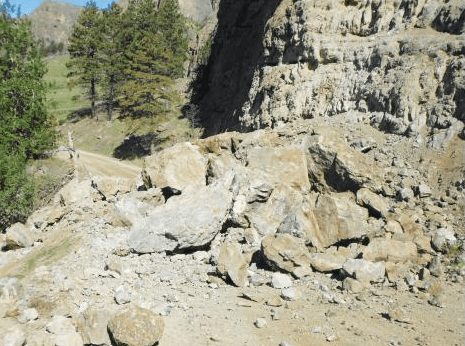
There was a rock slide out our way on the Stillwater River last week. It blocked Stillwater River Road at Midnight Canyon, and probably will for a while, so traffic to Absarokee will have to take the long way around until County crews can figure out how to safely clean up the mess.

Stillwater slide 2You can read more details and subsequent updates at the Stillwater County News.

Hanging rock at Stillwater slide. Photo: Stillwater County News, courtesy Carol Arkell

Hanging rock at Stillwater slide. Photo: Stillwater County News, courtesy Carol Arkell

These things aren’t rare. The powerful geological forces that cut the upper Stillwater River from Sioux Charley Lake past Woodbine Falls and through the narrow Gorge, beyond the Beehive toward Absarokee are constantly subject to reversal by natural forces. Rain, snow and and the constant flow of the River slowly wear away at the hills, causing erosion and slides. When you have rural unpaved roads cutting through the mountains, you’re going to get falling rock. And rural communities are particularly vulnerable, since unexpected slides can shut them off from the rest of the world for long periods of time.

Earthquakes associated with drilling
We also know that oil drilling is associated with earthquakes. It is well documented by peer-reviewed scientific data and tracked by the US Geological Survey that there has been a dramatic increase in the number of quakes due to waste injection wells associated with fracking in many different areas of the United States.

So it seems logical to be concerned about earthquakes in Stillwater County, particularly in the area near Dean and Fishtail, where there are a number of dirt roads that could be impacted by slides, just like Stillwater River Road. You just wouldn’t want to increase the risk of earthquakes that could cause slides that might cripple the local economy and endanger residents.

This is a very specific concern, and one that could be alleviated by local regulation. The solution is to not allow injection wells in the area.

The problem is that there’s no current mechanism to do this. There’s nothing in federal or state law that enables it, and nothing in the permitting regulations or the past history of the Montana Board of Oil and Gas Conservation that makes prohibiting injection wells at all likely.

So you would expect that local residents would want to put rules in place that prohibit injection wells in the area. It’s a reasonable concern, and local regulation is a reasonable solution.

That’s exactly what Stillwater landowners are doing. They’re currently gathering signatures from local landowners to present to the Stillwater County Commissioners to put a citizen initiated zone in place. The zone would establish local rules for oil drilling that would protect local water, the local economy, and landowner rights.

This is just good sense. The way of life that has developed over the years in this part of Stillwater County is unique, and it needs to be preserved. Since federal and state law don’t offer these needed protections, local citizens have every right to take action to protect their own communities.

Posted in Community Organization, Politics and History, Fracking informaation | Tagged , , , , , | 4 Comments

New EPA report links fracking to water contamination. That’s great, but local regulation is still required

The Environmental Protection Agency (EPA) yesterday released a new draft report on the potential impact of hydraulic fracturing for oil and gas on drinking water. The study concludes that there are “potential vulnerabilities in the water lifecycle that could impact drinking water.”

EPA webinar_noonThe report, based on the latest peer reviewed scientific research, directly contradicts a 2004 EPA report, conducted under the Bush Administration, that said that fracking “poses little or no threat” to the drinking water supply, and “does not justify additional study at this time.” (see Section 7.4). That study was used to justify the Energy Act of 2005, which created the infamous Halliburton Loophole that gutted the Safe Drinking Water Act and allowed oil and gas companies to keep secret the chemicals used in fracking.

The 2004 report is also the basis for one of the great lies told by the oil industry: “there is no proven case where the fracking process has affected water.” We’ve clearly documented over and over that this is not true.

According to Dr. Thomas A. Burke, EPA’s Science Advisor and Deputy Assistant Administrator of EPA’s Office of Research and Development. “(The study) is the most complete compilation of scientific data to date, including over 950 sources of information, published papers, numerous technical reports, information from stakeholders and peer-reviewed EPA scientific reports.”

Stages of the hydraulic fracturing water cycle (from the EPA report)

Stages of the hydraulic fracturing water cycle (from the EPA report)

The vulnerabilities cited by the report include:

These are all issues that we have discussed regularly on this site. I’ve provided some links above to posts on the site that provide examples of these issues.

So now what happens?
The next steps in the formal EPA process include:

  • The draft study now goes through a process of review by the EPA Science Advisory Board, which includes a thorough review of the quality and relevance of the scientific and technical information being used by the EPA
  • The draft is opened to public review and comment.
  • The report will be accepted

Once the report is accepted, the EPA can use it adopt appropriate regulations on federal lands.

The oil and gas industry isn’t going to take this lying down
I’m delighted that this report has been released, and that it utilizes scientific data to get at the truth about the dangers to water caused by hydraulic fracturing.

But the formal EPA process isn’t all that’s about to happen. Here’s what else is coming: the study will be attacked relentlessly by the oil and gas industry, and by Senators and Congresssmen who benefit from large contributions from that industry. The report will languish, get watered down, and might not even survive.

If rules are enacted based on the accepted report, those rules will be attacked in court. We’ve seen this happen over and over again with the EPA and other federal agencies. Over the last several years, the EPA has backed away from taking any substantive position that will make a definitive assessment of the dangers of fracking. Here are clear examples of how the EPA has buckled under industry pressure:

  • Closed an investigation into groundwater pollution in Dimock, Pa., saying the level of contamination was below federal safety triggers.
  • Abandoned its claim that a driller in Parker County, Texas, was responsible for methane gas bubbling up in residents’ faucets, even though a geologist hired by the agency confirmed this finding.
  • Sharply revised downward a 2010 estimate showing that leaking gas from wells and pipelines was contributing to climate change, crediting better pollution controls by the drilling industry even as other reports indicate the leaks may be larger than previously thought.
  • Failed to enforce a long-standing statutory ban on using diesel fuel in fracking until last month, after the use of diesel has become obsolete in the industry.

Most recently, in March of this year the Bureau of Land Management (BLM) issued new rules regarding fracking on federal lands. These rules were directed at two of the exact issues identified in today’s assessment: well casing requirements and the management of wastewater.

And what has happened since then? Not only has the oil and gas industry sued to block these rules, but the states of Wyoming, Colorado and North Dakota have joined the suit.

It is questionable whether the BLM rules will ever be implemented.

Criticism of the EPA study
There is already considerable criticism of this study, much of it based on design flaws related to the refusal of the oil and gas industry to participate in “prospective” studies.

A prospective study is one which seeks to assess the association between a hypothesized risk factor and an outcome by sampling both exposed and unexposed subjects (or intervention and non-intervention groups) and then following them for the period of study. In other words, get baseline data for a small number of wells, some in fracking areas and some not, and then test the water before, during and after drilling.

groundwater-e1376937616578Prospective studies were included in the EPA project’s final plan in 2010 and were still described as a possibility in a December 2012 progress report to Congress. The problem is that you can’t do a prospective study without cooperation from the oil and gas companies.

As the political climate changed in their favor, the oil companies become less willing to cooperate. Republicans took control of Congress in 2010 and were more sympathetic to oil interests. And in 2012, President Obama was running for election and touting the economic benefits of fracking. Nobody was going to push the oil and gas industry.

They dug in their heels and not a single company agreed to participate in the EPA study.

“We won’t know anything more in terms of real data than we did five years ago,” said Geoffrey Thyne, a geochemist and a member of the EPA’s 2011 Science Advisory Board.  “This was supposed to be the gold standard. But they went through a long bureaucratic process of trying to develop a study that is not going to produce a meaningful result.”

The oil companies, after refusing to cooperate, will likely jump on flaws in the study design to refute the findings.

Water consumption by county compared to water used by fracking. Click to enlarge.

From the EPA report, water consumption by county compared to water used for fracking. Click to enlarge.

And what about Montana?
Most of the regulation of hydraulic fracturing is done by states rather than the federal government. Over the last 20 years, Congress has gutted the protections of the Clean Water Act, Safe Drinking Water Act, the Comprehensive Environmental Response, Compensation and Liability Act, and the Resource Conservation and Recovery Act.

But ideally, says Dr. Burke, “EPA’s draft assessment will give state regulators, tribes and local communities and industry around the country a critical resource to identify how best to protect public health and their drinking water resources.”

Can we expect that to happen in Montana?

Probably not.

To date Montana has shown no interest in regulation that will protect drinking water. In fact, in its most recent session the Legislature rejected every significant bill that would have regulated oil and gas activity in the state. These included protections for water testing, well setbacks from residences, surety bonds for operators, and the use of closed loop system well design.

It is also well established the Montana Board of Oil and Gas Conservation (BOGC), the agency with primary responsibility for permitting oil and gas wells, is in the business of promoting the drilling of oil and gas wells for profit, and has no interest in regulation that protects landowner rights.

The answer is local regulation
Yesterday’s EPA report is the latest step in the growing scientific evidence that links fracking to water contamination. But for those of us concerned about the dangers imposed by fracking to our properties, our communities and our water, it is small consolation.

Montana provides a legal basis for local communities to regulate oil and gas activities. It is called citizen initiated zoning. Through this process, communities can act to protect themselves against the kinds of risks described in the EPA report. Communities are currently working through this process in several counties throughout Montana. But the process is fragile. It is subject to the whims of County Commissioners and a nationwide movement by the oil and gas industry to wipe out all local control of oil and gas.

Landowners should have a right to protect their properties.

Additional resources
Executive summary of EPA report
EPA final report (600 pages)
Report appendices
Published scientific studies associated with the report
FAQ on the study

Posted in Community Organization | Tagged , , , , | 2 Comments

Hearing on Silvertip Zone case in Red Lodge on Thursday, June 4 at 1:30pm

A hearing will be held on Thursday, June 4 in Red Lodge in the case of Martinell, et al,  v. Board of County Commissioners of Carbon County, et al. This is the suit filed by residents of the proposed Silvertip Zone in Belfry against the Carbon County Commissioners, who denied the zone last January.

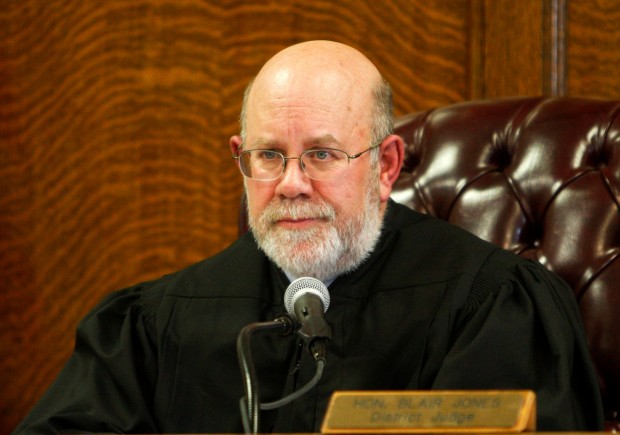
Judge Blair Jones. Billings Gazette photo.

Judge Blair Jones. Billings Gazette photo.

The hearing concerns the Commissioners’ request to dismiss the case. It is expected that each side will have an opportunity to argue its petition, and that the judge will issue a ruling at a later date.

The case will be heard in front of Judge Blair Jones in the Montana 22nd Judicial Court District in Red Lodge at 1:30pm

Background
On February 13, seven landowners filed a legal challenge to the Carbon County Commission’s rejection of their petition for land use regulations to protect their private properties from the harmful effects of oil and gas drilling.

The landowners collectively seek to establish the Silvertip Zoning District to cover nearly 3,000 acres of agricultural land north of Belfry, Montana. Creation of the district is the first step to establish solid protections for land, air and water quality, giving landowners an essential voice in the development of oil and gas on their properties.

Bonnie Martinell testifying before the Board of Oil and Gas. Billings Gazette photo

Bonnie Martinell testifying before the Board of Oil and Gas. Billings Gazette photo

The landowners are opposed by the Carbon County Commissioners and several landowners who protested the formation of the zone. Energy Corporation of America, which had been permitted to drill a well in Belfry, was dismissed from the case at the company’s request.

You can read a detailed timeline of the events leading up to the lawsuit here. Bonnie Martinell, one of the plaintiffs, wrote an explanation of why the zone is necessary here.

Alex Nixon, Carbon County attorney, will be arguing for the County Commissioners. Red Lodge Attorney Raymond Kuntz will be arguing for the protesting land owners, and Katherine O’Brien of Earthjustice will be arguing for the petitioning landowners.

Why this is important
There are several important landowner rights at stake in this case.

  • Montana law clearly provides landowners the right to establish citizen initiated zones. These zones allow them to establish the rules by which certain business is conducted on their own land. Does a Board of County Commissioners have full discretion to deny that right?
  • Can the rights of a majority of landowners be rejected by the protest of a minority of landowners in a district?
  • Can a Board of County Commissioners set unreasonable requirements for landowners who wish to establish a zone in order to block them from exercising their rights?

The final decision in this case will be important in determining the ability of local landowners in Montana to regulate oil and gas drilling on their own property.

This is important. Please come by to provide support if you can.

Posted in Community Organization | Tagged , , , , | 3 Comments

Lee newspapers decide to stop covering state government. Here’s what you can do about it

“Were it left to me to decide whether we should have a government without newspapers, or newspapers without a government, I should not hesitate a moment to prefer the latter.”

-Thomas Jefferson

Lee Enterprises closes Helena bureau
In a shocking move, Lee Enterprises in Montana has dumped two of the state’s leading political reporters and closed the company’s Helena Bureau. The move will affect all Lee newspapers in the state:

Mike Dennison (l) and Chuck Johnson. Photos: Great Falls Tribune

Mike Dennison (l) and Chuck Johnson. Photos: Great Falls Tribune

The two reporters are Chuck Johnson, who has covered the Capitol since the 1970s, and Mike Dennison, a reporter for over 25 years. The two were given the option of re-applying for their jobs at a 40% pay cut or taking a buyout.

The move reflects a change in the way Lee newspapers will cover government. According to Billings Gazette editor Darrell Ehrlick, instead of focusing on state government and politicians, it will look at news on an “issue and regional level.”

Since this site is concerned with local issues regarding oil and gas development, I’m going to look at how Lee’s move impacts residents concerned about protecting their rights and their communities. If you’re interested in the gory details of the cuts, I recommend checking out Ed Kemmick at Last Best News, JimRomenesko.com or the Great Falls Tribune (one of the four dailies in Montana that is not a Lee paper).

The role of newspapers
Newspapers serve several critical functions in a society: they inform, they entertain and they present opinions. Perhaps most importantly, they shine a light on those with power and the institutions they represent. In Helena, Johnson and Dennison were beat reporters who interviewed, fact checked, investigated and reported on public meetings. Without them, these functions will be severely diminished.

“It’s a loss for everyone who cares about informed civic discussion of statewide politics. Their decades of institutional memory and experience are unmatched,” said Dennis Swibold, a University of Montana School of Journalism professor. “It’s a terrible loss.”

fourth estateThere are many reasons to be concerned about how the loss of a public watchdog will impact our awareness of oil and gas issues. Over the years we’ve seen the legislature give a huge and apparently endless tax holiday to the oil industry that robs local governments of the ability to pay for the infrastructure costs of drilling. They have refused to pass laws that adequately protect precious water, to require wells to be set back from homes, and to establish testing programs for water, soil and air quality.

And now, with dark money invading Montana politics and a national movement to strip landowners of their rights to regulate drilling locally, it is more important than ever to make sure that legislators and state agencies operate in the sunshine, not in the darkness.

If Lee Enterprises is going to abdicate its watchdog role, citizens need to take responsibility for keeping themselves informed.

What you can do
If you’re not willing to accept that the newspapers you’ve always depended on are declining in quality and abdicating their watchdog roles, there are things you can do about it. But if you limit yourself to a daily reading of the Billings Gazette and a weekly perusal of the Stillwater County News or the Carbon County News, you’re probably going to have to step up your game.

The development of the Internet has brought many options for information, opinion, and entertainment. Once you find a site you like, you’ll find links to other sites with complementary information. You can subscribe to receive updates from sites you find worthwhile.

I’ve listed some sites below that I read frequently, trying as best I can to list some from different ends of the political spectrum. Check them out, and if you’re interested in more let me know.

General Montana
Flathead Memo
Forward Montana
Intelligent Discontent
Last Best News
Montana Street Fighter
Montana on the Ground (New blog by former Bozeman Chronicle reporter Laura Lundquist, 6/16)

State Government
Big Sky Political Analysis
Montana Budget and Policy Center
Montana Cowgirl
Montana State Government Website
Montana Watchdog

Oil and Gas
Inside Climate News
Montana Environmental Information Center
Northern Plains Resource Council

Peak Oil
Sky Truth

Montana daily newspapers not owned by Lee Enterprises
Bozeman Daily Chronicle
Daily Inter Lake (Kalispell)
Great Falls Tribune
Livingston Enterprise

Update 6/3, 11am: Good follow up and summary of reaction to the Helena Bureau closure this morning at Last Best News.


Posted in Community Organization, Politics and History, Uncategorized | Tagged , , , , , , , , , | 3 Comments

BLM update: Wyoming Beartooth lease cleared for sale

The BLM oil lease along the Beartooth Front in northern Wyoming for which public comment ended on February 23 has been cleared for sale on August 5. The BLM had earlier issued a finding of No Significant Impact against its environmental standards.

Residents and concerned citizens requested deferral of the proposed sale for many reasons:

  • Wildlife concerns: location near an occupied greater sage-grouse lek, and habitat of diverse native animals
  • Adjacent to public lands: The area is an important hunting and fishing area, and brings recreational activities important to the area’s economy.
  • Includes privately held land that has been damaged by oil and gas drilling: The parcel includes property in the Line Creek Wilderness Subdivision that endured a well blowout in 2006 from which it has not recovered nine years later.
Crosby 25-3 blowout as it occurred in Line Creek Subdivision in 2006.

Crosby 25-3 blowout as it occurred in Line Creek Subdivision in 2006.

According to documents posted on the BLM web site, the lease, formerly identified as 1508-237 and now renamed Parcel 72, has been approved for sale

The parcel was screened for greater sage-grouse deferral criteria, and did not meet those standards. It was also screened against a checklist of wilderness characteristics, including, among others,  amount of roadless land, opportunities for primitive recreation, significant natural features, and did not meet any of the deferral criteria according to the BLM.

You can read a summary of the letters filed by local residents, with BLM response to each, by clicking here.

The BLM’s decision is extremely disappointing. This parcel is just upstream from the Silvertip Zone in Belfry, where residents have banded together to require local regulation of oil drilling.

Posted in Community Organization | Tagged , , , , , | 2 Comments

Now a law: Texas measure makes local oil regulation illegal (with NPR audio)

“To these folks I say, ‘Ride your horse to work every day.'”
-Todd Staples, President, Texas Oil and Gas Association

Texas Governor signs bill banning local bans
It’s finally happened. Texas Governor Greg Abbott on Monday signed a law barring Texas cities from regulating oil and gas drilling, effectively ending a voter-approved fracking ban passed last November by the city of Denton.

House Bill 40 prohibits cities from enacting any ordinance “that bans, limits, or otherwise regulates an oil and gas operation within its boundaries or extraterritorial jurisdiction.”

According to bill sponsor Representative Drew Darby, only the Texas Railroad Commission (the Texas equivalent of the Montana Board of Oil and Gas Conservation) can regulate oil and gas drilling in Texas. The law “expressly preempts” cities from doing so.

The reason why this is important to us in Montana is that the Texas law is the first salvo in a nationwide effort by the oil and gas industry to take away the rights of landowners by blocking their rights to regulate what happens in their own communities. According to the Wall Street Journal, “similar efforts are cropping up in New Mexico, Colorado, Ohio and Oklahoma”.

It makes sense for local communities to establish rules like setbacks from residences. Photo: Spencer Platt, Getty Images

It makes sense for local communities to establish rules like setbacks from residences. Photo: Spencer Platt, Getty Images

It is essential for Montanans to act now to protect their rights by enacting local legislation to make sure that any oil drilling is done as safely as possible.

The oil industry’s brazen disregard for landowner rights is summed up in this recent story from NPR, entitled New Texas measure makes local fracking bans illegal. In the story, which you can listen to below, Todd Staples, president of the Texas Oil and Gas Association, comments, “You know, I think we have people in our nation and even in Texas that are really just anti-oil and gas. And they would like to see that production stopped. To those folks, I say, ride your horse to work every day.”

Some industry’s are just disdainful of the rights of communities.

You can listen to the NPR story below.

Previous posts on the fracking ban and Texas politics:
Lessons from Tuesday’s election, November 6, 2014
Denton, Texas lawsuit: Lessons for the Beartooth Front, December 1, 2014
A personal story: Cathy McMullen, Denton, Texas, December 5, 2014
Texas legislature seeks to undermine Denton fracking ban, April 23, 2015
Beware: The oil and gas industry has a national game plan to limit local regulation of drilling, April 29, 2015
Editorial: Fracking bill sets dangerous precedent (with video), May 18, 2015

Posted in Community Organization, Politics and History | Tagged , , , , , | Leave a comment

Salt water spills require local regulation to protect farmers and ranchers

Farmers and ranchers in the Bakken have had an uneasy peace with the oil industry since the fracking boom started. Many receive royalty payments based on their ownership of the minerals under their land, and so they have been relatively tolerant of the problems related to drilling.

But a problem has arisen that has brought farmers and ranchers into direct conflict with the oil industry. It is an issue that we should be aware of along the Beartooth Front, because it speaks directly to the need for local regulation to protect Montana communities.

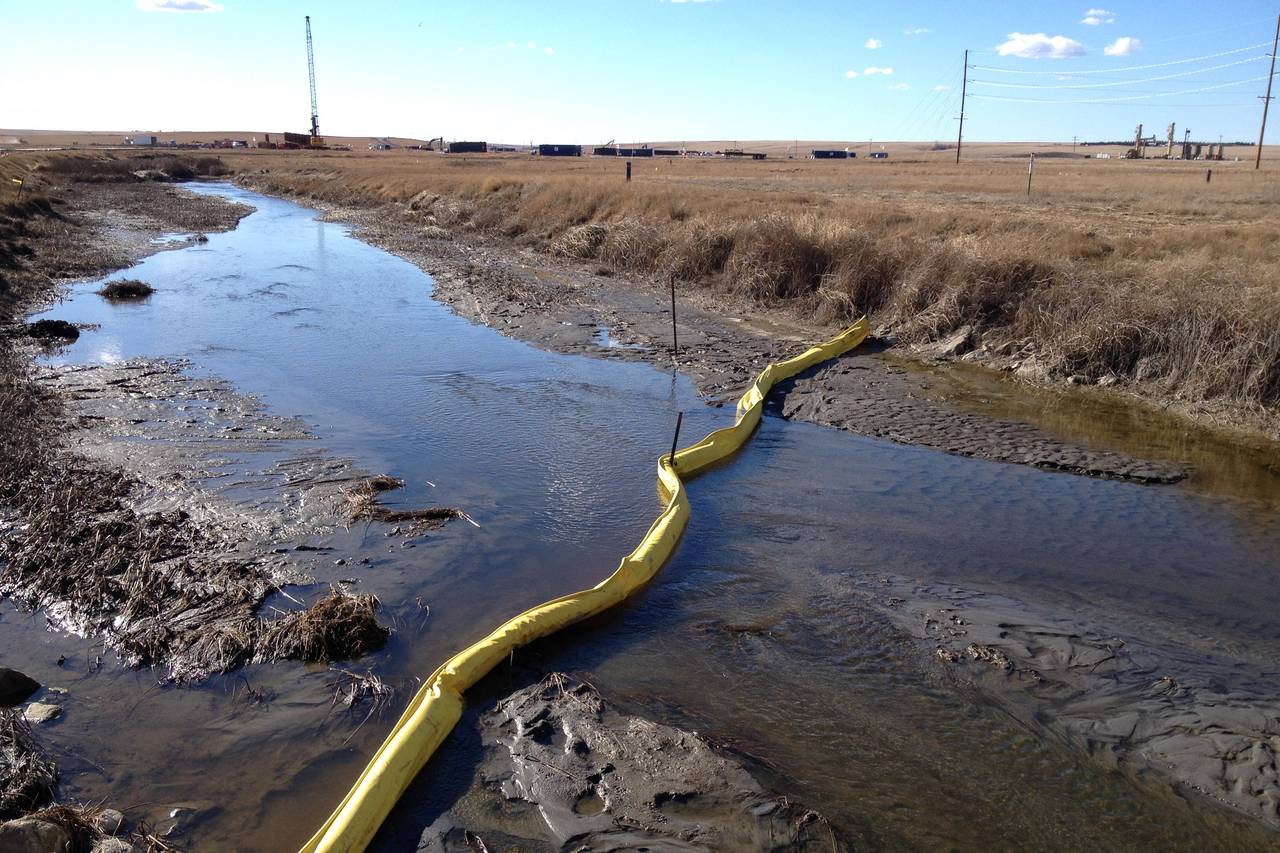
According to the Wall Street Journal (subscription required), the problem is salt water brine leaking from pipelines. There have been at least eleven such spills of this “produced water” on the North Dakota side of the Bakken in 2015 alone, including:

  • A spill in January that allowed nearly three million gallons to spill near Black Tail Creek north of Williston before it was discovered
  • An Oasis Petroleum Inc. pipeline leak earlier this month that state officials say involved some 630,000 gallons of brine spilled on grazing land into a tributary of a lake
  • A spill last week that caused 220,000 gallons of brine to leak onto the Fort Berthold reservation
This spill near Williston released nearly three million gallons of produced water onto surrounding farmland. Photo: Chester Dawson, Wall Street Journal

This spill near Williston released nearly three million gallons of produced water onto surrounding farmland. Photo: Chester Dawson, Wall Street Journal

“There’s probably nothing more toxic to land than salt water,” said Troy Coons, a farmer and chairman of the Northwest Landowners Association, an agriculture group.

Last year on this site we told the personal story of Steve and Jacki Schilke, whose farm near Williston was devastated for years because of a produced water spill.

It’s important to understand that these are not oil pipeline spills like the ones that have occurred under the Yellowstone River. These spills involve the transport of “produced water” from wells. According to the USGS, “20-30 billion barrels of produced water are generated by oil and gas production operations in the US each year. This is 70 times the volume of all liquid hazardous wastes generated in the US.”

What is particularly upsetting to farmers and ranchers is that there are technologies available to monitor these pipelines and identify leaks, but there are few regulations that require this to be done. The network of produced water pipelines is so extensive that oil-producing states just can’t keep up in the face of industry opposition to regulation.

For example, the Wall Street Journal reports that the January leak that released nearly three million gallons before it was discovered was a “six-month-old pipeline that had a monitoring system to detect leaks, but nobody turned it on amid a boom-fueled rush to lay more pipe, according to both state officials and an executive with the company that owns the line, Summit Midstream Partners LLC of the Woodlands, Texas.

“We have laid so much pipe and had turned on so many sites that we just hadn’t gotten to that yet,” said John Millar, a vice president at Summit in charge of developing and managing pipeline.

Montana has minimal monitoring requirements for these pipelines
While North Dakota passed legislation in April that requires plans for leak detection and monitoring, third-party inspections and increased disclosure of engineering plans, these plans will not be broadly enforced, and penalties are limited to $12,500 per day.

But these enforcement measures are much more demanding than the rules that exist in Montana today. Montana’s pipeline safety rules are general and often decades old. You can find them here, but the law specifically regarding inspections and violations will give you a sense of how toothless they are:

38.5.2204    INSPECTIONS, INVESTIGATIONS, AND REPORTING

(1) The commission, its employees, or authorized agents, have the power to investigate all methods and practices of pipeline owners and operators; to require the maintenance and filing of reports, records and other information in the form and detail as the commission may prescribe; to enter upon and to inspect the property, buildings, plants, and offices of pipeline owners and operators; and to inspect books, records, papers and documents relevant to enforcement responsibilities under the NGPSA.

(2) The commission, a staff member thereof, or some person appointed by it, may investigate and make inquiry into every incident occurring in the operation of any intrastate gas pipeline located in this state. The commission, in its discretion, may also investigate any other accident or event involving the operation of a pipeline.

It is worth noting that Governor Schweitzer, in the wake of the Yellowstone pipeline spill involving the Silvertip Pipeline, formed the Montana Oil Pipeline Safety Review Council by executive order, but this body is concerned only with oil pipelines, not produced water pipelines.

What it means for us along the Beartooth Front
If drilling expands along the Beartooth Front, there will need to be pipelines built to transport produced water. Since Montana law does not effectively regulate these pipelines, they will not be appropriately monitored or inspected, and there will not be a requirement to use technology that will make them safer

When these pipelines are built, there will only be one way to regulate them — through local zoning. It is entirely appropriate to do this — there is no reason that operators should not be held to best practices by local communities interested in protecting farm and ranchland from unnecessary contamination.

Oil extraction technology has changed dramatically over the last decade. Montana state law has not caught up, and it is clear that the state legislature has no interest in moving quickly to protect local communities.

This is why landowners along the Beartooth Front are moving lawfully to set up local zones that will protect them.

You should support them.

Posted in Bakken | Tagged , , , , , | 1 Comment