Guest post: Keystone XL supporters making misleading claims

a

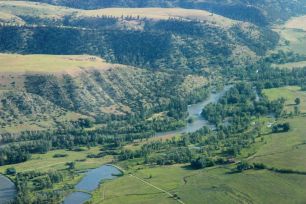
Photo credit: Tarsandssolutions.org

TransCanada is so intent on winning approval for its proposed Keystone XL tar sands pipeline from Canada, it is spending millions on media ads and making donations to communities along the route.

In recent articles, TransCanada has stated that it has obtained 100 percent of the easements in Montana and South Dakota from willing landowners. The operative word here is “willing” — and that word misrepresents what really happened.

We are ranchers in Montana and South Dakota along the route of the proposed Keystone XL pipeline. While attempts have been made to paint the picture that our states are unanimously in favor of this project, this is, of course, not true.

We are here to tell you that just because a landowner signed an easement with TransCanada, it does not mean he or she supports the building of the project.

When the pipeline project was first proposed and we learned that our ranches were in the path, we were concerned about the protection of our drinking water, unsafe roads during construction and liability in the case of spills or other problems. Years later, and with the permit decision imminent, our fears have not gone away — quite the opposite.

As we have become more educated on how the tar sands oil is extracted and what happens to the environment, a whole new set of concerns has arisen. We now know that the tar sands oil is not like conventional crude — it needs to be thinned down before it will flow, using carcinogenic chemicals that can’t be removed by any water-treatment plant.

We now know that if a spill occurs, the oil will separate from the additives and will not float in water like regular crude but sink to the bottom of a stream and will be much harder to clean up.

We have visited with our indigenous friends from Alberta and have learned about the destruction to the environment that is caused by the mining of tar sands crude and of all the cancer cases that are now showing up in their communities.

To have more of a voice, we joined with Northern Plains Resource Council in Montana and the Dakota Rural Action in South Dakota — statewide, grassroots organizations — as did many of the landowners along the Keystone XL route.

We negotiated the best easement agreement we could with TransCanada. But most of our affected members most assuredly did not sign willingly. We signed under duress, knowing that we did not have many other options.

Because of lax state eminent domain laws, TransCanada was able to obtain the power of eminent domain — condemnation — in Montana and South Dakota. Eminent domain laws are such that a judge can only award damages based on the value of the land. The judge, or jury, cannot allow for punitive damages.

A landowner can receive no protection from noxious weeds, shoddy reclamation, spill clean-up or other concerns via the eminent domain process. It is very seldom that a property owner prevails in a condemnation proceeding. The landowners in Montana and South Dakota knew this, and so they settled before going to court, hoping to obtain a safer pipeline (on their property) by the negotiation process.

Related: Montana farmers, ranchers continue fight against pipeline
U.S. Sen. Daines casts 1st Senate vote for Keystone XL Pipeline

Posted in Fracking Information | Tagged , , , | Leave a comment

Congratulations! You’ve just lived through the hottest year in the history of human civilization

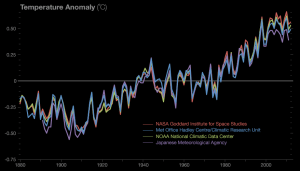
The four major reporting agencies are in agreement regarding the amount of global temperature increase. Click to enlarge.

The four major reporting agencies are in agreement regarding the amount of global temperature increase. Click to enlarge.

According to the four reporting agencies that monitor earth’s temperature, 2014 was the hottest year ever recorded by thermometers, and quite likely the hottest year in the history of human civilization.

As you can see if you click on the chart at right, global temperatures have risen by more than 0.5° Celsius since 1980, an increase of nearly one degree Fahrenheit. Temperature increases are already causing significant changes to fish, forests, birds and wildflowers.

This short video by Climate Central, an independent organization of scientists and journalists, puts global warming in perspective.

What we need to do to limit the impact of climate change
The United Nations Framework Convention on Climate Change, the only international climate policy venue with broad legitimacy, has declared that we need to limit global warming to 2° Celsius to avoid the catastrophic implications of climate change. At our current pace, that would happen before the end of the century.

Greenhouse gas emissions. Click to enlarge.

Greenhouse gas emissions. Click to enlarge.

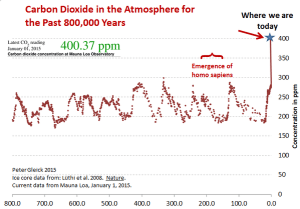
Controlling warming would require massive cooperation among the nations of the world. To limit warming to 2°, the 15 leading economies would need to reduce emissions by 45% by 2050. As you can see from the data at left, we are headed in exactly the wrong direction. Carbon dioxide emissions have increased dramatically in the last few years.


What it means for the Beartooth Front
I don’t spend a lot of time on this blog talking about climate change, because what we do along the Beartooth Front won’t affect it much one way or the other. I focus mostly on specific issues related to oil and gas drilling. But one thing I have discussed often is that the lens for viewing expanding oil and gas activity should be the long-term viability of our communities.

One of two things is likely to happen over the next several decades:

  1. The nations of the world will collaborate to make huge reductions in carbon emissions in order to control global warming. This will mean a massive transition from oil and gas to non-carbon fuels, and render the discussion about drilling in this area moot.
  2. Politics will trump responsible action, and the long-term viability of our communities will be adversely impacted by the catastrophic effects of climate change: ever increasing heat waves and massive drought, the spread of disease, agricultural calamity, floods, wildfires, huge storms, disrupted biodiversity and animal extinction, and more. If these things occur, the impact of oil and gas drilling will be the last thing we have to worry about.

Climate change is the big picture. On the local front, we need to keep working to make sure that if oil and gas drilling expands, it is done in the most responsible way possible.

Posted in Fracking informaation, Health impacts | Tagged , , , | 4 Comments

Why a car’s engine has more integrity than a shale well

One of the reasons water contamination caused by oil and gas drilling is poorly understood is that well design and construction is extremely complex. Oil and gas well engineering is intricate, and the function is different from the machinery most of us are familiar with. This is why the oil and gas industry gets away with the great lie, “There is no known case of fracking causing water contamination.”

There are several ways oil and gas drilling causes water contamination. The most common causes are spills and improper disposal at the surface, and leakage caused by faulty cement casings at the wellbore.

Dr. Anthony Ingraffea

Dr. Anthony Ingraffea

Dr. Anthony Ingraffea, a professor of civil and environmental engineering at Cornell University, is one of the foremost experts on the fracking process. He has formed the Cornell Fracture Group, which creates, verifies and validates computational simulation systems for fracture control in engineered systems.

He is also a great teacher. He explains complex engineering processes like fracking in a way that is accessible to anyone. I’ll post videos of some of his lectures in the near future.

A clear comparison
He recently posted what I think is a very clear explanation of why oil and gas wells leak, and why this is inherent in their design. You don’t have to be an engineer to read the article. It is clear, concise and informative.

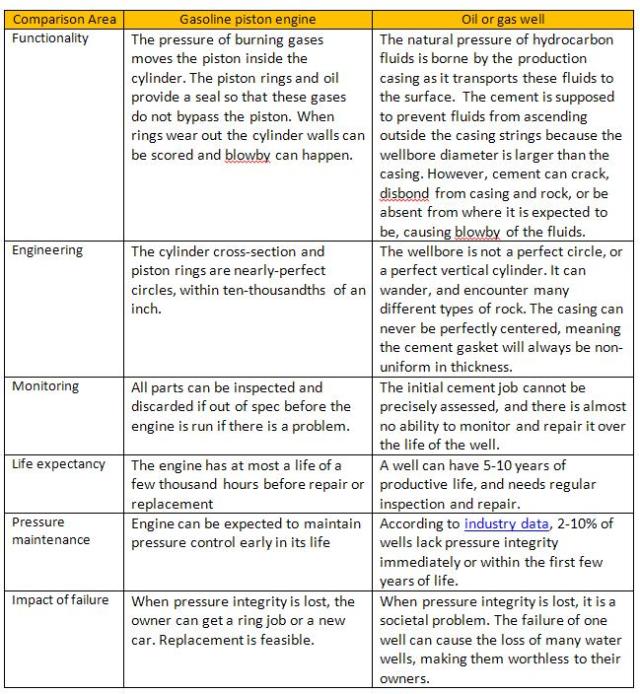
He accomplishes this by comparing the functioning of a wellbore (the hole drilled through the rock layers), casing (steel pipe), and cement (supposedly used as a gasket between all casing layers and the wellbore) to something that most of us are much more familiar with: the cylinder, piston, and piston rings of a car engine.

I recommend you read the article, but I’ve adapted the comparison to the chart below:

Adapted from Adapted from Anthony Ingraffea, Why a car’s engine has more integrity than a shale gas well

Ingraffea’s summary makes the differences clear:

Car engine manufacturers are able to create engines with an outstanding record of integrity, whereas the manufacturers of shale gas wells, due to their casement integrity design and execution failures, should be issuing recall notices.

Posted in Fracking informaation | Tagged , , | 3 Comments

Oil and gas: 10 lessons for 2015

2014 was a tumultuous year along the Beartooth Front. It began with our communities reeling from an announcement by Energy Corporation of America that the company planned to bring “a little bit of the Bakken” here, a quick drilling permit granted in Belfry with no public input and a lawsuit against the Board of Oil and Gas Conservation.

The year ended with a crash in oil prices and an uncertain future for the American oil and gas industry, a small step forward for Silvertip landowners, and a growing effort by landowners in Stillwater County to put zoning rules in place.

Along the way residents of Carbon and Stillwater counties have educated themselves, joined together, and made significant progress in assuring that if oil and gas drilling occurs along the Beartooth Front, it will be done in a way that protects the long-term viability of our community.

Writing this blog has been a tremendous learning experience for me, and I have gained some insight about local action and the oil and gas industry. The beginning of a new year is a good time for reflection on lessons learned, so I’ll offer these ten lessons for 2015, in reverse order of importance, based on my experience.

Carol French displays her contaminated drinking water.

Carol French displays her contaminated drinking water. Click to read her story.

10. For all we read about the effects of oil and gas exploration — economic, political, environmental — the stories that have the most impact are personal.
Over the course of the last year I’ve told many personal stories on this blog. They get the biggest readership because people can identify with the experiences of regular people, often in rural communities, whose lives are changed forever when a drilling rig shows up in their back yard. You can read these personal stories by clicking here. (Note that there are several pages of these — click on “older posts” to page back to the older ones.)

9. There is much that can be done locally if people put their hearts and minds to it.
A year ago, the most frequent comment I heard went something like, “The oil and gas industry is too powerful, and the laws are all in their favor. We’re powerless to do anything.”

That’s just not true.

What’s true is that the oil and gas industry is very adept at coming into a community, getting people to sign agreements, and expanding rapidly before locals can get organized. They have been incredibly successful with this strategy in eastern Montana, Texas, Pennsylvania, Wyoming, Utah and other states.

But in 2014 we saw the power of local activism on display in New York, which has now banned high volume hydraulic fracturing; in Denton, Texas, where a public health nurse led a ballot initiative to stop fracking; and in Vernal, Utah, where a midwife shined a light on a large number of stillbirths in a town where drilling has been the norm for 50 years.

Along the Beartooth Front, 2014 was a very successful year for local action. The Silvertip Zone is a great example of the power of dedicated activism. Before that zone was put in place, local vigilance kept oil and gas drillers from taking water without a right. Local input helped to prevent the lease of BLM land in Dean last May. And the Northern Plains/ Carbon County Resource Council lawsuit forced the Montana Board of Oil and Gas to grant a public hearing on the Belfry well.
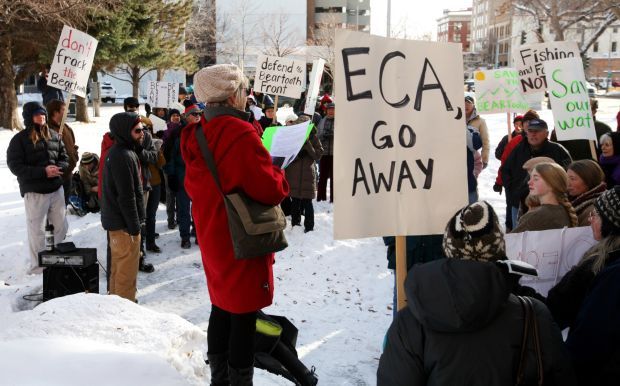
Protest in front of the Montana Board of Oil and Gas Conservation. Billings Gazette photo

Protest in front of the Montana Board of Oil and Gas Conservation. Billings Gazette photo

In the future, more is possible. In 2015, Stillwater residents will be bringing a larger zone to the County Commissioners, and local residents are looking at working with the water conservation board to enact a county-wide ordinance to set standards for water use in oil and gas drilling.

Local action is not only possible, it can be very effective. And it’s happening along the Beartooth Front. Just watch this video put together by local citizens, who raised over $8,000 for the effort:

8. When people know the facts, they support local efforts to regulate oil and gas exploration. Effective communication is critical to successful management of oil and gas activity in a community.
In 2014 there have been two substantial local efforts to establish citizen initiated zoning along the Beartooth Front. In Carbon County, a small group of landowners has petitioned to form a citizen-initiated zone, the Silvertip Zone, in Belfry. Because of their great persistence they achieved a first approval in December to go forward from the County Commissioners.  In Stillwater County, the Stillwater Protective Association has launched a more expansive effort to establish a zone in the Nye-Dean area, and expect to bring a petition signed by several hundred landowners to the County Commissioners in early 2015.
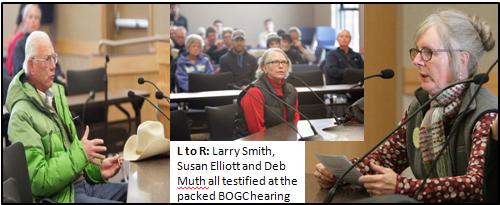
testifyWhat has been remarkable about both these efforts is how few people, when presented with the facts, are opposed to plans to regulate drilling. Montanans don’t necessarily love regulation, they certainly don’t love zoning, and they don’t love signing their name to public documents, but when they understand that this is a viable path to protect their rights, their water, and their way of life, they are supportive.

The clear lesson here is the need to communicate, communicate, communicate locally. There is a great deal of FUD — fear, uncertainty and doubt — about oil and gas drilling. But when people are presented with factual information, they are responsive.

7. The management of oil and gas drilling iis not a blue – red issue. We should focus on the long-term health of our communities.
The media loves a narrative that portrays oil and gas drilling along the lines of traditional American political divisions. If you want to regulate oil and gas drilling, the narrative goes, you’re an environmental whacko who hates jobs and economic growth. If you’re for expanding mineral extraction you’re a climate change denier who doesn’t care if your daughter gets cancer.
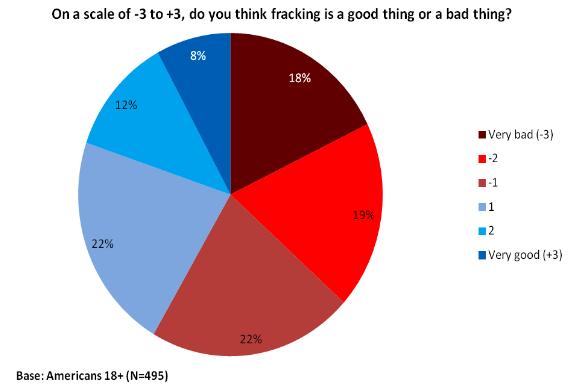
Divided attitudes on fracking

(click to enlarge)

If we allow that narrative to predominate, we all lose. The real discussion we need to be having in American communities should center on how we can foster economic growth in a way that protects the long-term sustainability of the way of life in a community.

That’s the purpose of the citizen-initiated zoning efforts taking place in Carbon and Stillwater counties. I encourage local citizens to join those discussions. Responsible oil and gas drilling is something environmental whackos and climate change deniers should both support.

6. Scientific research now offers compelling evidence that oil and gas drilling is dangerous to human and animal health. It’s time for elected officials to take their heads out of the sand and pay attention.
The oil and gas boom began just a few years ago and expanded like wildfire. Fracking and horizontal drilling technology brought wells close to where people live like never before.

Scientific research is taking time to catch up, but it is getting there. Every week new studies are being released that show that people who live close to wells have more adverse health impacts than those who don’t. Babies who are born near wells have more health issues than those who aren’t.

The oil and gas industry argues that there’s no smoking gun, and they’re right in a very limited way. We can’t yet prove why these things happen, we just know that they do.
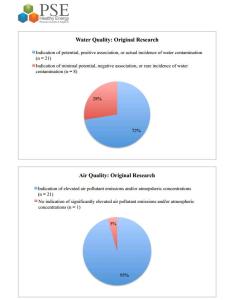
Click to download complete study

Click to download complete study

You can read this report that reviews the science and read the peer reviewed scientific studies yourself. There is simply no denying the health impacts of drilling.

The state of New York chose to invoke the “precautionary principle” and ban fracking. That’s not likely to happen in Montana, but our elected officials need to recognize that they can’t play Russian roulette with the  citizens they represent.

Oil and gas drilling needs to be be regulated to protect us from permanent damage to public health.

5. It is not fair for local communities to pay for the mess the oil and gas industry creates. Infrastructure maintenance is a cost of doing business and should be paid for by industry, not local citizens.
Over the course of 2014 I have written often about the impact of oil and gas drilling on infrastructure. As drilling expands in an area, roads are chewed up, the costs of sewage and garbage collection increase, police and court costs rise dramatically, schools need to expand and more healthcare services are required.

Rural Road comparisonThe way this works in most places is that the oil and gas companies come in, mineral owners profit from their work, and local citizens are left holding the bag for the increased infrastructure costs.

In Montana we have an oil and gas tax holiday that grants drillers of horizontal wells an 18 month grace period in which they do not pay an oil tax. We’ve seen how that plays out in towns like Sidney, where the shortfall for increased costs is huge.

The Montana legislature should remedy this, but until they do, efforts like the Silvertip Zone are necessary to make sure local residents don’t get stuck paying for costs that the oil industry ought to be responsible for.

4. Under current law, oil and gas drilling is fundamentally unfair in its impacts. Local communities need to enact rules to make sure the rights of landowners are protected.
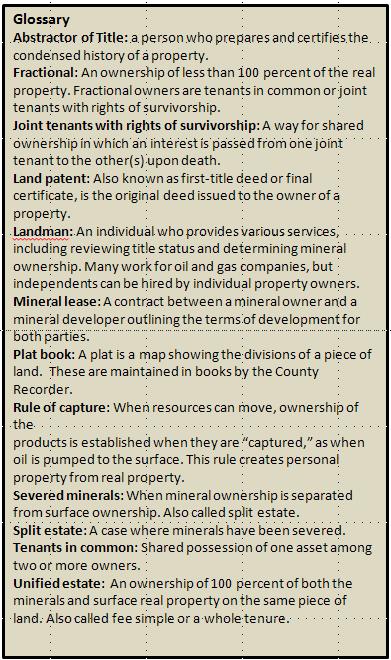
In Montana, as in many states, each property is divided into two parts: the surface estate and the mineral estate. Some properties are fee simple, or unified, meaning the surface owner is also the mineral owner. But others have split estates — the surface owner is not the mineral rights holder.
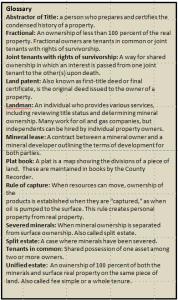
Click to read glossary of terms

Click to read glossary of terms

Montana law favors the mineral rights holder. The split surface owner has little ability to keep the mineral owner from extracting minerals, and receives little compensation for providing access. If drilling results in water contamination, excessive air pollution or infertile soil, there is little to be done.

What’s more, research shows that, for surface owners, drilling reduces property value, and makes it more difficult to get mortgages and compensation for damages that occur during drilling.

A fundamental reason for forming zones in Carbon and Stillwater counties is to restore fairness to the equation. Surface owners should not have to pay for water, air and soil testing and remediation. They should be protected from the 24 x 7 light and noise impact that drilling brings. They should not pay for the increased infrastructure burden caused by drilling that does not benefit them.

We need to do what is fair for everyone, not just the lucky few who hold mineral rights.

3. We can’t pretend we’re not concerned about the long-term viability of our planet. We need to feel urgency to change our energy ways.
If you’ve gotten this far, you won’t be shocked by this statement: Science tells us that our planet is warming, and that human activities are a contributing factor. Our dependence on fossil fuels is one huge reason, and we need to move as quickly as possible to shift to alternative fuels.
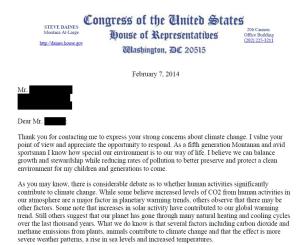
Steve Daines letter

Letter from Congressman Steve Daines inventing his own science (click to read full letter)

We can no longer afford to engage in the pointless debate politicians like Steve Daines, a proud climate change denier, want us to. It is convenient for those who receive huge contributions from the oil and gas industry to pretend that they just don’t know whether humans are causing this, so we can’t do anything that might impact job growth (click to read letter at right). That’s irresponsible.

In the short-term we need to stop engaging in activities such as flaring, which introduces massive amounts of methane into our atmosphere. In the long-term we need to embrace non-carbon fuels that reduce our carbon footprint.
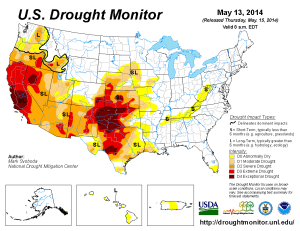
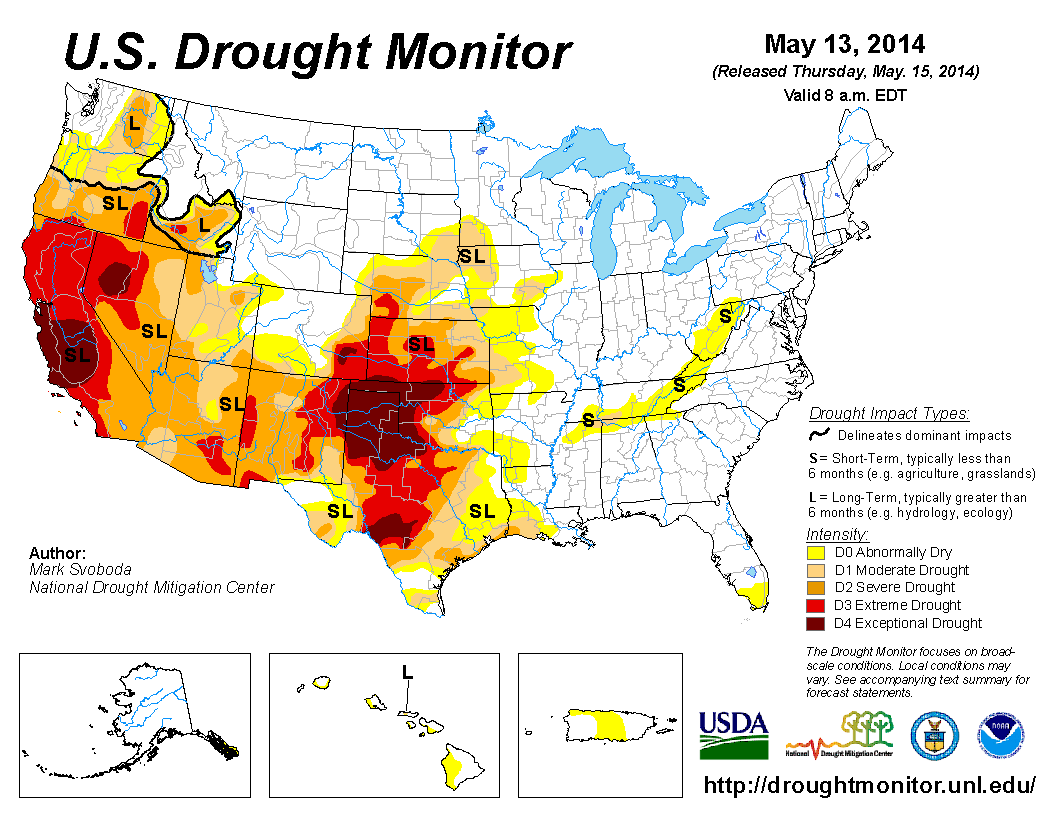
Drought conditions 2014. Click to enlarge

Drought conditions 2014. Click to enlarge

2. Water is our most precious resource. Preserving it should be our primary goal.
As our planet warms and our need for water expands, drought is a perennial condition for much of the West. In areas where there is no municipal water system, each resident depends on the health of an aquifer and a well for their crops, livestock and personal use.

Fracking and horizontal drilling are threats to water for two reasons:

  • A single well can require a large water supply, potentially several million gallons. In areas impacted by drought, this means that the source of water becomes a critical issue, and states can face choices between fracking and other essential uses.
  • If an aquifer or well becomes contaminated, a landowner’s livelihood can be ruined.

In Montana, there are few regulations governing water testing and use. The oil and gas industry would love to have you believe that there is no relationship between fracking and water contamination, but it’s just not true.

Any local community faced with an expansion of oil and gas drilling should put regulations in place to protect water from contamination. Rules requiring water testing paid for by oil and gas operators, remediation of contamination, and water usage should be at the top of the list.

Water protection is a key element of zoning petitions in Carbon and Stillwater counties.

1. The fight for the long-term sustainability of our communities against unregulated oil and gas drilling never ends. We need to be constantly vigilant.
We should take pride in what we have accomplished so far, and will accomplish in 2015.

But in Montana, as in most states, protecting communities from unregulated oil and gas drilling has many facets. In addition to the kind of action we’re seeing at the local level, we need to be active on many fronts:

  • The Montana Supreme Court.

    The Montana Supreme Court.

    The Board of Oil and Gas Conservation (BOGC), which has primary responsibility for permitting wells, is in need of substantial reform. As currently constituted, the BOGC’s mission is to encourage the development of wells for profit.

  • The Montana Supreme Court, which should be an apolitical steward of the environment, is an elective body, and, as we saw in the most recent election, outside corporate interests, including energy companies, have poured money into Montana to try to elect anti-environmental ideolgoues. We need to stay vigilant to protect the neutrality of this important body.
  • The Legislature can enact laws that overturn existing rights to act locally. To the extent that our local efforts to establish citizen initiated zones are successful, it is possible to imagine the Legislature overturning that right. We need to make sure that our legislators understand the importance of these rights.
  • The Governor, who appoints members to the BOGC, needs to understand the importance of reform, and of upholding local rights to protect our communities.

We can never win protection from the oil and gas industry. We can win battles, but the oil and gas industry is relentless. Protecting our land, our rights, and our way of life is an endless struggle.

Keep at it. It’s a righteous fight. Here’s to a great 2015.

Posted in Community Organization, Fracking informaation, Health impacts | Tagged , , , , , , , , | 7 Comments

Comparing legal points of view on the Silvertip Zone; why the petitioners prevailed

At the beginning of the Carbon County Commissioners meeting on December 15, several communications are read into the public record. Two of these provide a rare opportunity for citizens to hear, side by side, clear statements of opposing legal points of view on an important subject.

In this case the subject is the formation of the Silvertip Zone in the Belfry area. The letters read into record include one from Mike Dockery of Crowley Fleck in Billings, attorney for Energy Corporation of America, and a direct response from Susan Swimley, attorney for the Silvertip Zone petitioners.

In the end, the County Commissioners considered the two points of view and agreed that the zone is “in the public interest and convenience for public health, safety and welfare, and for the public infrastructure,” and voted to move forward.

I’ve posted the letters below for your review, and you can listen to the discussion in the video below. The Dockery letter is read by Chairman John Grewell and begins at 4:10; Susan Swimley reads her own letter beginning at 27:55.

Let’s look at the two letters in turn.

Mike Dockery letter. Click to download full letter.

Mike Dockery letter. Click to download full letter.

Mike Dockery letter
Dockery’s letter, which you can read in full by clicking on the graphic at right, treads familiar ground. We heard him present similar arguments at the Belfry School meeting on September 15, and published his earlier letter in a post on September 23.

Here are Dockery’s arguments:

  1. The Petitioners cannot demonstrate that the requisite number of affected real property owners have signed the Petition in accordance with the applicable zoning statutes. This is his argument that the petitioners need to account for the mineral rights owners as well as the surface owners. Carbon County Commissioner Alex Nixon has stated in an earlier meeting that there is no legal precedent for this (see video here).
  2. The Montana Board of Oil and Gas Conservation (BOGC) has been granted sole authority in the State of Montana to regulate oil and gas drilling and development activities. This is the core of Dockery’s argument. It says that the BOGC was set up by the legislature as a “quasi judicial body” with the exclusive power to regulate oil and gas activities. Because this is an exclusive right, if the County sets up a zone to regulate oil and gas it will “usurp that right.”
  3. There is no required public interest or convenience for the proposed district. This is directly related to the point above. He is saying that, by definition, the public interest cannot be served by a zone, since the BOGC has exclusive power to regulate oil and gas activities.
  4. Mike Dockery

    Mike Dockery

    The proposed zone would constitute illegal “spot zoning.” This is a curious point, given that the initial zoning petition was not acted upon by the Commissioners because Dockery had pointed out that the zone was not contiguous, as required by Montana law. The Silvertip landowners reworked the zone to make it not only contiguous, but larger than the minimum size required by MCA 76-2-101(3). Dockery’s argument that the zone is illegal because it is “rather small” does not seem to be supportable.

  5. Any attempt to regulate ECA’s right in the permit for its well or its mineral interests would constitute an unlawful taking. This is related to the arguments above regarding the exclusivity of the BOGC. The argument says that the rights granted by the BOGC permit cannot be taken.
  6. The creation of the proposed district is an unlawful attempt to interfere with the mineral interests located within such district. Dockery references the Montana Zoning District Act, which prohibits regulation that “prevent(s) the complete use, development, or recovery of any mineral, forest, or agricultural resources by the owner of any mineral, forest, or agricultural resource. Interestingly, Susan Swimley mentions the same law in her letter (see below). Dockery fails to mention that this same law, in a later section, say that “Zoning regulations adopted under this chapter may reasonably condition, but not prohibit, the complete use, development, or recovery of a mineral…”
  7. The failure to work with government agencies specifically charged with authority over the development of natural resources is inconsistent with the Carbon County Growth Policy. This one is a real stretch. Dockery points to a provision in the 2009 Growth Plan, which commits Carbon County to “actively engaging with state and federal agencies for large-scale mineral development.” What Dockery fails to mention is that Silvertip landowners, working closely with the Carbon County Resource Council, have been actively engaged in a new County Growth Plan, scheduled to be adopted in January. That Growth Plan calls for use of Part 1 zoning by local landowners to regulate oil and gas activity. ECA and Dockery have been uninvolved in this process.
Susan Swimley letter. Click to download complete letter.

Susan Swimley letter. Click to download complete letter.

Susan Swimley letter
Swimley meets head on Dockery’s argument that the BOGC has exlusive right to regulate oil and gas. Her core argument is that Montana counties not only have the authority to regulate oil and gas activities, but the responsibility to do so in order to protect the health, safety and welfare of its residents, as long as these regulations do not directly conflict with specific authority given to the BOGC by the State.

According to the letter, this authority is provided to counties:

  • Expressly by statute, in MCA 76-2-101: (Part 1 zoning). Further, when a question of authority arises between the BOGC and a county, the law should be read in favor of county authority because the Constitution in Article XI, Section 4, provides that county authority should be “liberally pursued.”
  • Implicitly, because the legislature has not prohibited it. The legislature has explicitly excluded grazing, timber, horticulture, and agricultural activities from regulation by Part 1 zoning, but has placed no restrictions on applying Part 1 zoning to oil and gas.
Susan Swimley

Susan Swimley

The second part of Swimley’s argument has to do with resolving potential overlapping areas of authority between the BOGC and a county. When authority is overlapping, she says, State law requires that local governments coordinate with State agencies.

There is one area where the legislature has specifically preempted local jurisdiction with regard to oil and gas activities: MCA 82-11-111 says that the BOGC has “exclusive jurisdiction over all class II injection wells and all pits and ponds in relation to those injection wells.” Clearly, according to Swimley, counties may not regulate this type of well. For all other types of well, there is clearly “concurrent authority,” and the county may regulate.

Swimley even points to the BOGC Permit to Drill form, which requires applicants to identify whether there are any local zoning permits required for an oil activity.

An open process
The Carbon County Commissioners are to be commended for the open process they have employed in giving citizens access to videos and documents as part of this process. Whenever there is a contentious public issue, it is best to give the public access to the documents the Commissioners use.

I encourage you to read these documents yourself. The truth is not the sole province of lawyers. The arguments on each side could not be more clear. Read them and see for yourself why the Commissioners sided with the petitioners.

Other communications
There were two other communications read into the record at the meeting:

  • A letter from ECA to the Carbon County Commissioners indicating the company has no plans to develop the Belfry well “at this time.” More here.
  • Milovan Bakich EstateAn email from a landowner in Belfry indicating opposition to the Silvertip Zone (click on graphic at right to read).

Thanks…to Commissioner John Grewell and Angela Newell for providing me with these documents.

Posted in Community Organization | Tagged , , , , , , | 8 Comments

Guest post: The truth about the Silvertip Zone

by Bonnie Martinell

I am a produce farmer and one of the landowners who are working with the County Commissioners to establish the Silvertip Zone in Belfry.  Our goal is to protect our health, safety, water, property rights and livelihoods.

The zone is the result of a year’s worth of work by a lot of people. I want to particularly thank the Carbon County Commissioners, who have put in endless hours listening to constituents and learning about new oil and gas technology. They are in a very tough position, trying to support citizens who are within their rights to create a zone, while trying not to put an additional burden on neighbors or industry.

There has been a lot of talk in the community about what the Silvertip Zone is and what it isn’t. I’d like to set the record straight.

Bonnie Martinell testifying before the Board of Oil and Gas. Billings Gazette photo

Bonnie Martinell testifying before the Board of Oil and Gas. Billings Gazette photo

The Silvertip Zone will protect the rights of landowners, not take them away. The laws of Montana are weighted in favor of the oil and gas companies. When drillers get a permit, they can place a wellhead right next to your kitchen window if they want to. There are insufficient requirements for testing water to see if it is contaminated, or for testing air quality to see if the levels of pollutants are high. The zoning regulations will put these protections in place without taking the rights of mineral holders.

Regulations in the Zone will affect only oil and gas development, not agriculture or ranching. I have heard people say that a zone affects anything you do on your property – grazing, fencing, water well placement. This is just not true. The Silvertip Zone is clearly set up to deal ONLY with oil and gas development. Other activities are not affected.

The zoning rules will affect only landowners inside the zone. Only landowners inside the zone will get the benefits of whatever zoning rules are created. They will get the benefits of setback limits, water testing, soil and air quality monitoring. Landowners who are outside the zone will not be affected.

The Zone will not require new taxes or other costs paid by Belfry residents. The costs of administering the zone will be paid by fees on oil and gas companies. This is appropriate, because these costs are a legitimate part of doing business. But if we don’t put the zone in place, the increased costs of oil and gas drilling – road repairs, increased police and court costs, sewage, garbage collection – will have to be paid for by increased taxes on County residents. In Eastern Montana, taxes to local residents have increased significantly because they didn’t have time to make sure the costs were distributed fairly before the boom started.

It’s important to put these rules in place NOW, before drilling takes place, not after. We want to be proactive to prevent damages and losses. I’m sure Eastern Montana wishes they had the opportunity that we have. We have a break right now, with oil prices low. That’s why it’s important to put the zone in place, so when the next boom hits we’ll be ready.

The Silvertip Zone will not stop anyone from extracting their minerals. The zoning rules will just make sure drilling is done right. They will protect landowners, and allow mineral holders to get what is rightfully theirs.

The Silvertip Zone is fair for everyone, and protects the long-term future of our community.

Posted in Community Organization | Tagged , , | 9 Comments

The precautionary principle and the science behind the New York hydraulic fracturing ban

Last week’s decision by New York Governor Andrew Cuomo to ban high volume hydraulic fracturing for shale gas development has sent shock waves throughout the country. It is the first time a state government has issued a ban on fracking based on the recognition that there is no proof that fracking is safe for its residents.

Governor Andrew Cuomo

Governor Andrew Cuomo

The implications are substantial, ranging from the economic impact on the oil and gas industry and on individuals to the public health impacts of fracking to public attitudes regarding the safety of fracking.

Substantial scientific work underlies Governor Cuomo’s decision. Last week three important studies were released on the public health impacts fracking. I’ve posted them here and recommend that you read them if you’re really interested in understanding the state of scientific evidence on fracking and health.

A political decision based on the precautionary principle
But it’s very important to understand that there is still no “smoking gun” linking fracking to negative health impacts. Governor Cuomo’s decision was less a scientific decision than a political one.

You might recall that a couple of months ago I wrote about the “precautionary principle,” which says that if an action is suspected of causing harm to the environment or human health, then, in the absence of scientific consensus, the burden of proof falls on the individual or organization taking the action.

The precautionary principle underlies the conflict between the oil and gas industry and local citizens in every community where fracking exists or is planned. Citizens believe there is ample evidence that suggests fracking causes health problems and should be banned or strictly regulated. The oil and gas industry rejects the principle, demanding proof beyond a shadow of a doubt that fracking is harmful before regulation should take place. They fight tooth and nail against any regulation of their industry, and have succeeded in creating significant exemptions in most federal environmental legislation.

Dr. Howard Zucker

Dr. Howard Zucker

So what Governor Cuomo did in New York, supported by a thorough review of scientific evidence, was act on the precautionary principle. As Dr. Howard Zucker, New York’s Acting Commissioner of the Department of Health, put it:

“I have considered all of the data and find significant questions and risks to public health which as of yet are unanswered. I think it would be reckless to proceed in New York until more authoritative research is done. I asked myself, ‘would I let my family live in a community with fracking?’ The answer is no. I therefore cannot recommend anyone else’s family to live in such a community either.”

What the scientific evidence says
But the fact that there is no smoking gun does not mean the scientific evidence isn’t compelling. It is. We have been reporting on this evidence on this site for a year, and the implications of the research are powerful.

Last week three reviews of scientific research on the health impacts of fracking were released in New York.

Click to read the full study

Click to read the full study

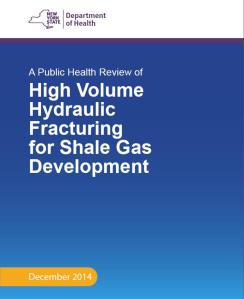
New York Department of Health review
The first was a public health review of the public health impacts of high volume hydraulic fracturing (HVHF) conducted by the New York Department of Public Health. This document was informed by the other two reviews, which are discussed below.

You can read the Department of Helath review by clicking on the graphic at right.

The study itself invokes the precautionary principle:

“As with most complex human activities in modern societies, absolute scientific certainty regarding the relative contributions of positive and negative impacts of HVHF on public health is unlikely to ever be attained. In this instance, however, the overall weight of the evidence from the cumulative body of information contained in this Public Health Review demonstrates that there are significant uncertainties about the kinds of adverse health outcomes that may be associated with HVHF, the likelihood of the occurrence of adverse health outcomes, and the effectiveness of some of the mitigation measures in reducing or preventing environmental impacts which could adversely affect public health. Until the science provides sufficient information to determine the level of risk to
public health from HVHF to all New Yorkers and whether the risks can be adequately managed, DOH recommends that HVHF should not proceed in New York State.”

The review found enough evidence to say that all of the following are “potentially associated” with HVHF:

  • Air impacts that could affect respiratory health due to increased levels of
    particulate matter, diesel exhaust, or volatile organic chemicals.
  • Climate change impacts due to methane and other volatile organic chemical
    releases to the atmosphere.
  • Drinking water impacts from underground migration of methane and/or fracking
    chemicals associated with faulty well construction.
  • Surface spills potentially resulting in soil and water contamination.
  • Surface-water contamination resulting from inadequate wastewater treatment.
  • Earthquakes induced during fracturing.
  • Community impacts associated with boom-town economic effects such as
    increased vehicle traffic, road damage, noise, odor complaints, increased demand for housing, and medical care, and stress

You can search on all these topics on this blog and find extensive evidence that documents their relationship to oil and gas drilling.

Click to download complete study

Click to download complete study

Physicians, Scientists and Engineers Healthy Energy Literature Review
The second literature review published last week was an analysis of peer-reviewed scientific research on the health impacts of fracking by PSE Healthy Energy, a collaborative of science professionals that provides a multi-disciplinary approach to identifying “reasonable, healthy, and sustainable energy options for everyone.”

  • 96% of all papers published on health impacts indicate potential risks or adverse health outcomes.
  • 87% of original research studies published on health outcomes indicate potential risks or adverse health outcomes.
  • 95% of all original research studies on air quality indicate elevated concentrations of air pollutants.
  • 72% of original research studies on water quality indicate potential, positive association, or actual incidence of water contamination.
  • There is an ongoing expansion in the number of peer-reviewed publications on the impacts of shale and tight gas development: approximately 73% of all available scientific peer-reviewed papers have been published in the past 24 months, with a current average of one paper published each day.

Now go back and look at these percentages. There may be no smoking gun, but the evidence is extremely compelling.

Click to download compendium

Click to download compendium

Concerned Health Professionals of New York Compendium
The third study released last week is the second compendium of scientific and medical findings by an alliance of health professionals called the Concerned Health Professionals of New York.

You can download the compendium by clicking on the graphic at right. We reported on the first compendium here.

The compendium provides a list of studies that demonstrate many health issues related to fracking, including

  • Air pollution
  • Water contamination
  • Inherent engineering problems that worsen with time
  • Radioactive releases
  • Occupational health and safety hazards
  • Noise pollution, light pollution, and stress
  • Earthquake and seismic activity
  • Abandoned and active oil and natural gas wells as pathways for gas and fluid
    migration
  • Flood risks
  • Threats to agriculture and soil quality
  • Threats to the climate system
  • Inaccurate jobs claims, increased crime rates, and threats to property value and
    mortgages
  • Inflated estimates of oil and gas reserves and profitability
  • Serious risk to investors

You can go to the compendium and see a list of studies that document each of these issues.

*****

The oil and gas industry loves to portray those of us who have concerns about fracking as wide-eyed idealists who have no understanding of how their industry work. The science tells you otherwise.

MORE:
PSE Database of scientific studies, grouped by topic
First compendium of Alliance of New York Health Professionals
Posts on this blog about the health impacts of oil and gas drilling

Posted in Fracking Information, Health impacts, Uncategorized | Tagged , , , , , | 6 Comments

Breaking: Governor Cuomo to ban high volume fracking of shale for methane in New York

This came over the wire as a news alert a few minutes ago:

The Cuomo administration announced Wednesday that it would ban hydraulic fracturing in New York State, ending years of uncertainty by concluding that the controversial method of extracting oil from deep underground could contaminate the state’s air and water and pose inestimable public-health risks.
“I cannot support high volume hydraulic fracturing in the great state of New York,” said Howard Zucker, the acting commissioner of health.
That conclusion was delivered publicly during a year-end cabinet meeting called by Gov. Andrew M. Cuomo in Albany. It came amid increased calls by environmentalists to ban fracking, which uses water and chemicals to release natural gas trapped in deeply buried shale deposits.
The state has had a de facto ban on the procedure for more than five years, predating Mr. Cuomo’s first term. The decision also came as oil and gas prices continued to fall in many places around the country, in part because of surging American oil production, as fracking boosted output.

Correction, 12/17, 2014: It has been pointed out to me that this is not a complete ban on hydraulic fracturing, but a ban on “high-volume,” or “massive” hydraulic fracturing of shale for methane. The definition of high-volume hydraulic fracturing varies somewhat, but it is generally defined as “treatments injecting greater than about 150 short tons, or approximately 300,000 pounds (136 metric tonnes), of proppant.

I have changed the headline to make it more accurate.

Posted in Uncategorized | Tagged , | 2 Comments

Video from Carbon County Commissioners meeting, December 15, 2014

Here is the video from yesterday’s Carbon County Commissioners meeting. I’ll have some comments later, but here it is for those eager to see it.

Posted in Community Organization | Tagged , , | Leave a comment

Exciting news from Carbon County: Commissioners move forward on Silvertip Zone; ECA vacates Belfry well (for now)

At a well-attended meeting in Red Lodge this morning, the Carbon County Commissioners voted to move forward to create Silvertip Zone in Belfry. The Commissioners agreed that the zone is “in the public interest and convenience for public health, safety and welfare, and for the public infrastructure.”

This big step forward marks a significant benchmark in the process of creating the zone, which has been in the works for months, and has been discussed in many public forums. Here are the steps in creating a citizen-initiated zone, as set forth in Montana law in MCA 76-2-101:

  • Any interested group of citizens in a county can create a zone. It is a democratic process. If 60% of the residents in an area want to create the zone, it can be brought forward to the County Commission.
  • The rules of the zone must be drafted to be consistent with the county growth plan.
  • A zone map must be created to reflect the properties to be included in the zone and define the perimeter of the zone
  • Each landowner who supports the district needs to sign a petition. The signature must match exactly the name on the title of the land.
  • When more than 60% of the landowners in the district have signed the petition, it can be brought to the County Commission.
  • After the County Commission receives the petitions, it holds a public meeting to determine whether the zone is in the “public interest and convenience.” If so, the district is established.
  • If the zone is established it is referred to a county planning and zoning commission. This is a seven member oversight board that reviews the zoning petition and recommends how it should be implemented.
  • After opportunities for public input, the planning and zoning commission puts in place the regulations for the district.
  • The planning and zoning commission is responsible for the ongoing administration of the district.

There is still much work to be done before the Silvertip Zone becomes a reality. The County will publish an “intent to create the district,” which gives any landowners within the Silvertip Zone 30 days to protest to the Commissioners. Several residents appeared at the meeting and indicated a desire to protest.

However, according to attorneys representing the Silvertip Zone, such protests are not allowed by Montana law. 68% of the landowners within the Silvertip Zone signed the petition to create the Zone.

Click to read full letter.

ECA pulls out of Belfry well
Energy Corporation of America sent a letter to the Carbon County Commissioners last week indicating they have “determine(d) that this well is not a good candidate for further development for ECA. Therefore, we do not have plans to further develop this well, or pursue additional wells in the area at this time.”

While the letter is welcome news in the short term, Silvertip resident Bonnie Martinell was quick to point out, “The letter is irrelevant to our concerns. What the Silvertip landowners want to do in establishing this zone is protect our property and livelihoods for the long term. All ECA says is they’ve stopped operations “at this time.” Unless we set up this zone, ECA or another operator might be back at some point in the future.”

More to come on this. I’ll post the video of the meeting, which went on for about two and a half hours, as soon as it is uploaded.

Posted in Community Organization | Tagged , , , | 13 Comments