Belfry well: new developments

Some interesting events have been taking place at the Hunt’s Creek 1-H well in Belfry over the last few days. Energy Corporation of America (ECA) has taken down the well structure at the site. They began dismantling the structure last week and hauled off the structure over the next few days.

For more information click here

The most likely reason they’ve done this is that they’ve removed samples and will perform analysis on them, a process that can take anywhere from a few weeks to a year. Once they’ve done the analysis they will make a decision about how to proceed. It’s also possible that legal sources of water are not readily available and they have shut down, or that they have decided for another reason not to proceed.

I’d be curious if any readers have insight into what is going on. Respond in comments or contact me directly if you do. And if you see activity at the site, please report it.

A history of events regarding this well:
October, 2013: John Mork, the CEO of Energy Corporation of America, announced the opening of an office in Billings and plans to hydraulically fracture 50 wells along the Beartooth Front in a move that would bring the “Bakken to the Beartooths.” At about this time, ECA approaches a local landowner and offers a one-time payment of $4,500 for access to three acres of land to drill the well. The landowner was told they had no choice but to sign.

Protest in front of the Montana Board of Oil and Gas Conservation.

Protest in front of the Montana Board of Oil and Gas Conservation.

December, 2013: The Montana Board of Oil and Gas Conservation (BOGC) refuses to hear the arguments of concerned citizens and grants ECA a permit for the Belfry well.

January 8, 2014: Northern Plains Resource Council and its affiliate Carbon County Resource Council file suit against the BOGC, demanding a hearing on the well permit and reforms in the process by which the BOGC permits wells.

February 7, 2014: Analysis reveals that ECA has an abysmal safety record in Pennsylvania and West Virginia, with 66 inspections with violations, 90 separate violations, 55 enforcement actions, and fines totaling over $80,000 in Pennsylvania alone.

February, 2014: BOGC accepts the demand in the lawsuit and grants a hearing on the well.

Well structure. Click to enlarge

Well structure. Click to enlarge

February 27, 2014: BOGC ignores public input and expert testimony, granting the permit as requested by a 6-1 vote.

March, 2014: Neighbors begin to discuss options to protect their land, water and way of life. Given the lack of protect from the BOGC and other state entities, they look specifically at options for local action.

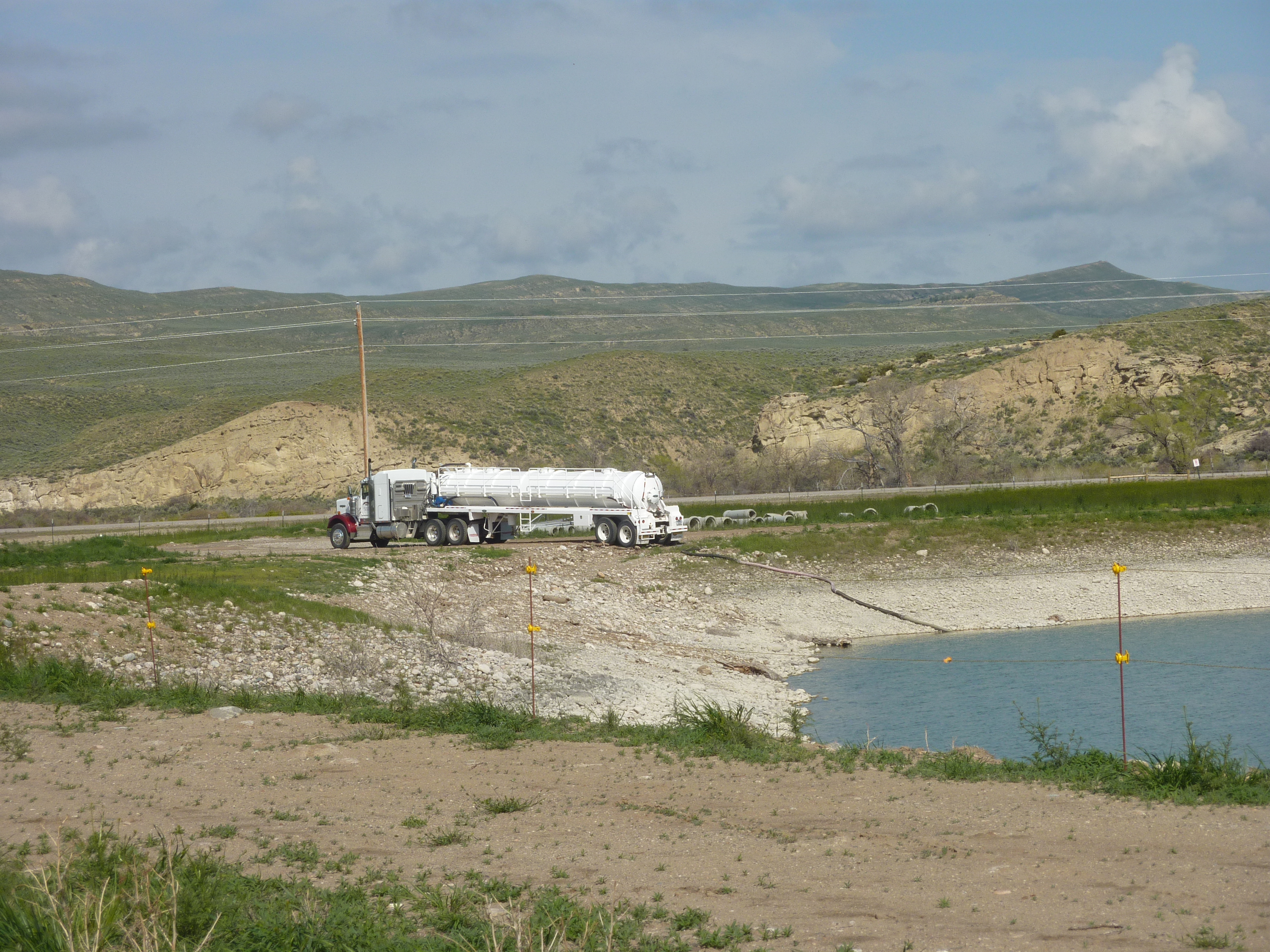
May 14, 2014: ECA begins work on the well. Residents immediately become concerned that the company’s contractors are illegally drawing water out of a gravel pit near the site. Even though the pit is on private property, the water in the pit belongs to a common ditch association and is jointly controlled by a board of local property owners. The board would have to give permission before the water could be legally used.

Tanker truck illegally removing water from well. Click to enlarge.

Tanker truck illegally removing water from well. Click to enlarge.

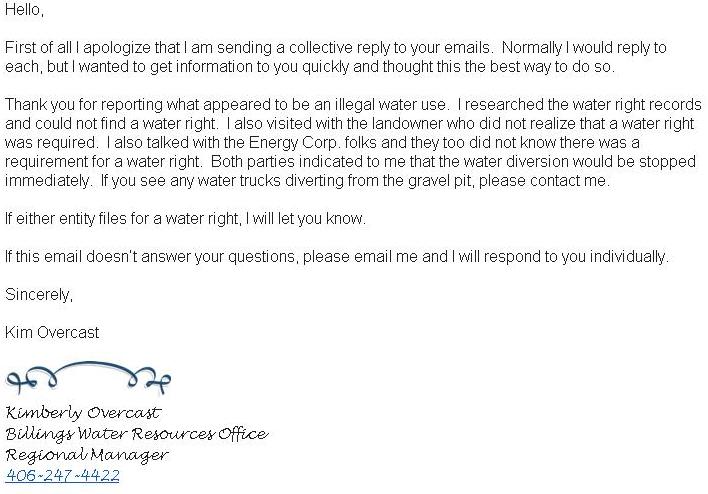
DNRC email. Click to enlarge.

email update from Kim Overcast, Regional Director of Montana DNRC. Click to enlarge

May 21, 2014: After receiving a citizen complaint and dozens of calls and emails from local citizens, the Montana Department of Natural Resources shuts down the illegal appropriation of water from a local gravel pit without a water right.

May 23, 2014: The contractor makes a deal with the town of Bridger to get one truckload of water per day until June 10. The deal was made without a public hearing, but administration says that any extension of the contract beyond June 10 will require a public hearing.

June, 13, 2014: ECA begins dismantling the well structure.

June 16, 2014: The well is dismantled. Only a small pond and a pile of dirt remain. The current state of the site is pictured below. As of yesterday afternoon, ECA had not filed the 48 hours advance notice to the BOGC required to begin fracking.

Belfry well dismantled


Posted in Community Organization, Politics and History | Tagged , , , , , , , , , , | 8 Comments

Action Alert: Time is running out. Please help.

This is my last fundraising post on this project. Please help put us over the top. This video is important, and as a community we need to make it happen.

To review: A critical part of our campaign is making sure the community understands how expanded oil drilling along the Beartooth Front will change our way of life. It will trample on individual rights, endanger our water, and fundamentally change our community. Contribute_ButtonThe purpose of the video is to explain this through the words of people who have experienced drilling elsewhere, who live in this community and understand what makes it special, and who understand the law and the business of oil and gas drilling.

The purpose is not to stop drilling. It is to make sure it is done right. We cannot expect help from outside; local action is the only option open to us to make sure our rights and community are preserved.

We plan to make the video this month, and have it ready in July. We have professional videographers, a pilot, and the volunteer time of many people blocked to get it done. The entire budget for this project, because of the volunteer work of our community, is $8,000, a fraction of the cost of what it would cost to do this with outside labor.

We’ve raised $5,415 to date from 56 donors. We’d like to raise the rest this week so we can devote ourselves entirely to making the video next week. Please help, and pass this along to anyone you think might like to contribute.

Why you should contribute:

  1. You are a member of this community and you feel a shared responsibility to keep it the special place it is.
  2. You live elsewhere but you recognize that Montana is a special place and want to support our efforts.
  3. You would really like an awesome T-shirt. Take a look! These are very high quality sublimated shirts (click to enlarge).

beartooth t-shirt1

beartooth t-shirt2


Posted in Community Organization, Politics and History | Tagged , , , | 2 Comments

Who pays for infrastructure? You do. The case of Sidney, Montana

Yesterday’s post was about infrastructure, roads and taxes. The basic argument was:

  • Infrastructure costs go up as oil and gas drilling expands.
  • Because the benefits or drilling — corporate profits, jobs, increase in the supply of oil — are distributed and the infrastructure costs are local, it is rational for the State to help local communities pay for the infrastructure cost increase.
  • The State of Montana is not rational. Despite having a 9% oil tax on the books, it gives almost all of it away in a tax “holiday.” As a result, local communities are stuck paying the infrastructure cost increase.
  • The local community means you. Your taxes are going to go up to pay for it.
Click her for more information
Click here for more information

There’s a way to determine if these arguments are true. We can head up to Sidney, which is at the center of the Montana portion of the Bakken, to see what has taken place there since the oil boom started.

I found a Montana Public Radio piece from late last year that included an interview with Bret Smelser, the Mayor of Sidney at the time. At that point there had been expanding oil development for about five years.

You can listen to the interview yourself by clicking the audio player at the bottom of the page, but here’s what I learned from it:

  • Traffic is up as much as 50 percent in the last five or six years, “pounding local roads into gravel.”
  • New hotels and housing are straining the city’s sewer system to its limit.
  • The town brings in about $10 million dollars a year in taxes, but it has $55 million dollars in infrastructure needs.

According to the report, Smelser wanted help from Helena, but it didn’t come. He was particularly upset because Governor Bullock vetoed a bill that would have provided $35 million to eastern Montana to pay for increased infrastructure costs. Bullock said he vetoed it because he had to cut $150 million of “spending or tax cuts to balance the budget.” (By “tax cuts” he could mean the Oil and Gas Tax Holiday. Wouldn’t want the corporations to suffer. Just the people of Sidney.)

Central Avenue in Sidney. Click to enlarge.

Central Avenue in Sidney. Click to enlarge.

So how has Smelser balanced the budget? Listen for yourself:

            • raised water rates
            • raised sewer rates
            • raised sewer hookup fees
            • initiated impact fees

So, looking back to yesterday’s post, when oil drilling expands:

  • Infrastructure costs go up. Check.
  • The State of Montana does not provide adequate resources to local government to meet its infrastructure needs. Check.
  • Local citizens pay the cost while big oil and gas companies get a free gift of a tax break that should pay for the mess they’ve created. Check.

Is this how you want to be represented in Helena? You and your elected county commissioner should work together to get this changed. It’s just not fair.

It’s interesting to note in the audio segment that “Smelser isn’t looking to the oil companies for more help. He believes the taxes they pay make sense and the companies give to the community in other ways–like to the local Boys and Girls Club.” (I am not making this up.)

Bret Smelser. Click to enlarge.

Bret Smelser. Click to enlarge.

Of course he doesn’t want to reinstate the Oil and Gas Tax. This is the same Bret Smelser who was appointed by the Governor to sit on the Montana Board of Oil and Gas Conservation (BOGC). The one who showed open disdain for members of our community who spoke before the BOGC asking for protection in the Belfry well permit. Yes, the one who felt compelled to lecture our neighbors that they just need to make some sacrifices in the name of American energy independence. The same one who’s been able to expand Border Steel and Recycling, his family business, to Plentywood, Sidney and Williston, thanks to the Bakken oil boom. And then is responsible for regulating the oil corporations.  Could he have designs on a Red Lodge location next?

Listen to the Montana Public Radio report here:

Next week we’ll look at a proposal to restructure the Oil and Gas Tax in a way that provides a real incentive to corporations in tough times and requires them to pay when their profits are high.

Posted in Bakken, Community Organization, Politics and History | Tagged , , , , , , | 9 Comments

Infrastructure, roads and taxes: you pay when the cost goes up

From time to time we’ve talked about the impact of expanded oil and gas drilling on regional infrastructure — the basic facilities and structures needed for a community to operate. These include road maintenance, schools, health care, law enforcement, sewage treatment, and so on.

For more information click here

When oil and gas drilling expands, infrastructure needs increase. More traffic means more road maintenance. More workers means more kids in school. A higher population means a greater need for health care.

If government is operating rationally, it provides support to local areas to help them pay the increased infrastructure cost as drilling expands. After all, there’s a mismatch between the costs and benefits of drilling. The economic benefits of oil and gas drilling spread out over a large area — jobs, increased energy supply, and so on. However, the infrastructure costs are local.

The Oil and Gas Production Tax Holiday
Montana government, quite simply, doesn’t function rationally. There is an Oil and Gas Production Tax, set at 9% of production revenue. As oil and gas revenues increase, this should produce an increasing stream of revenue for local governments to pay for the increasing costs of infrastructure. That seems rational.

But…

In 1999 the Legislature passed SB530, an Oil and Gas Tax Holiday. The holiday provision reduced the tax from 9% of revenues to 0.5% of revenues for the first 18 months of operation of a horizontal well. At the time, oil was selling for $20 a barrel and the rationale was that this incentive was necessary to encourage oil and gas companies to drill in the State.

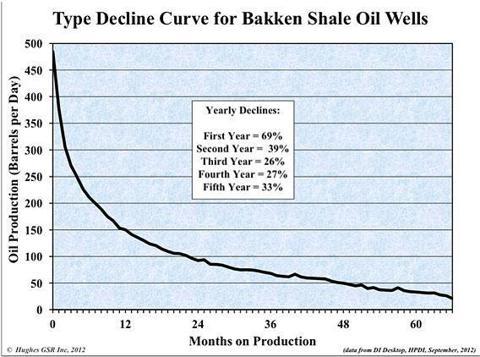
Oil well production over time

Oil well production over time

The reason the holiday is set for 18 months is  that, for a horizontal oil well, the vast majority of the production occurs in the first 18 months. As you can see from this graph, production declines by 69% in the first year alone, and by about 80% after 18 months.

In a nutshell, the 18 month holiday is pretty close to a free pass on any significant taxes on a horizontal oil well.

I’ve seen no evidence to indicate that this incentive was necessary in 1999, but it is impossible to justify a need for it today, when the price of oil is over $100 per barrel (as of this writing) and there is a race to exploit oil fields all over the country.

By comparison to other states, Montana is one of only two oil-producing states with an oil tax holiday (Oklahoma is the other).

So, in this irrational world, Montana lets local governments foot the majority of the bill for the increased cost of infrastructure while the rest of the world benefits.

How horizontal wells increase the cost of road maintenance
Let’s take a look at just one fairly straightforward example of the infrastructure impact of increased oil production: roads. I’ve written about this before, and I recommend you take a look to see how the volume of truck traffic increases with every horizontal well.

Rural Road comparisonThere is a recent study from the Journal of Infrastructure Systems that quantifies the local cost of road construction and maintenance due to horizontal drilling. Two key findings of the study:

  1. The heavier trucks used in horizontal drilling operations cause exponentially more damage than smaller trucks. You can get into the analysis of load factor equivalencies in the study yourself, but the bottom line is that an 18,000-pound and 30,000-pound single-axle truck will do about 900 times and 7,500 times more damage than a 3,000-pound single axle pass, respectively.
  2. A conservative estimate of the infrastructure cost of road maintenance per well is $5-$10,000.

Using this estimate, and taking John Mork’s announcement that he plans to drill 50 wells (it will be much more if he finds oil), we can expect, by this conservative estimate, a road maintenance cost of around $500,000, give or take a buck or two.

And how much is Carbon County’s current budget for road maintenance? As I read their budget, it looks like it is about $130,000 for the entire County (see page 21).

Who’s going to pay?
Now where is that $370,000 shortfall coming from? Well, if not the State, then…

probably you. By my calculation, taxes for a family of four would need to go up by about $180 a year to pay for this. Not much different from what the oil baron who’s drilling the well across the road pays in taxes for the first 18 months of production.

And that’s just the cost of the roads. You’re going to have to pay more for cops and judges, waste disposal, schools and other things too.

Tomorrow we’ll look at what’s happened to infrastructure and taxes in Sidney, the capital of Montana’s portion of the Bakken. You’ll also hear from Bret Smelser, one of this blog’s favorite gasbags.

Posted in Fracking Information | Tagged , , , | 4 Comments

Study complete; Wyoming officials to meet with Pavillion residents on Thursday, June 12

The train wreck of an investigation into water contamination in Pavillion, Wyoming will take another lurch forward on Thursday when State officials meet with Pavillion residents to discuss the results of a long-awaited study on the cause of the contamination. Officials say that one study is complete, and another is nearing completion.

For more information on this project click here

It looks like this is going to be messy. From the Casper Star-Tribune report:

State officials intend to allow independent experts to review and comment on the state reports, followed by the EPA and gas field owner Encana.

A Wyoming Oil and Gas Conservation Commission consultant will make any necessary changes before the reports are released to the public, said Jeremiah Rieman, energy policy adviser to Gov. Matt Mead.

“We don’t want to be in the position of providing draft conclusions that ultimately may change entirely based on other reviews that need to take place,” (a state official) said Wednesday.

Sounds like everybody’s going to be entitled to his own set of facts. It won’t be the first time. Science, which holds the true answers  to how those wells got contaminated, will likely be shouted down.

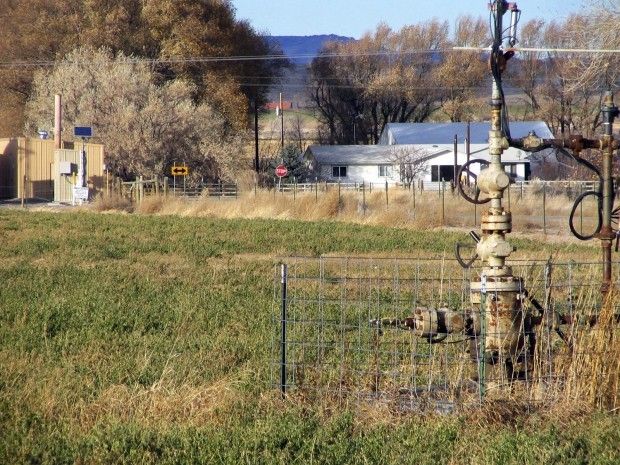
A wellhead left behind in Paviilion. Casper Star-Tribune photo A wellhead left behind in Paviilion. Casper Star-Tribune photo

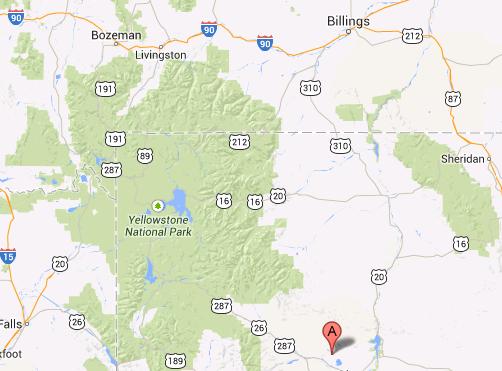
 We’ve written about Pavillion on a number of occasions. It’s the small Wyoming town about 200 miles due south of Red Lodge where residents are now drinking their water out of cisterns because their underground water source is permanently ruined.

For years Pavillion has been the center of the universe for the battle over whether fracking can contaminate underground aquifers. There’s a lot at stake, and so the issue has become a battleground over what has happened among major industry players — the Environmental Protection Agency, the State of Wyoming, Encana Corporation, the US Congress, and pretty much everyone with an ax to grind.

Meanwhile the residents of Pavillion are drinking water out of plastic jugs.

I’m not optimistic they will get any answers on June 12 when the State shows up to tell them the latest. We should have information on Thursday. I fear it will come in the form of a howl of pain from local residents.

I’ll let you know when I hear it.

Update, June 13. The meeting was held and, as expected, the Pavillion community is exceedingly unhappy.

“I have real reservations about the process that Encana can make corrections,” said landowner John Fenton following a meeting of the Pavillion Working Group Thursday afternoon at the Wind River District 6 Recreation Center. “Especially since Encana granted the state the funds for these studies. I feel like a mushroom here, we’re being kept in the dark. This process isn’t very transparent.”

To refresh your memory, here’s a timeline of events in Pavillion:

1960: First natural gas drilling in the Pavillion area

1990s: Extensive natural gas drilling began in the area. Starting at about the same time, residents began to complain of physical ailments and said their drinking water was black and tasted of chemicals.

Pavilion-Wyoming

Pavillion, Wyoming
Click to enlarge

2008: EPA begins to study drinking water in Pavillion with the aim of determining whether the water is safe to drink.

August 2009: EPA conducts initial testing of groundwater in Pavillion, and concludes there is a presence of groundwater comtamination

January 2010: The EPA conducted four rounds of sampling, first testing the water from more than 40 homes and later drilling two deep wells to test water from layers of earth that chemicals from farming and old oil and gas waste pits were unlikely to reach.

November 2011: EPA releases the latest data from its monitoring wells in Pavillion at a public meeting. Officials say they will prepare a report on their findings.

December 2011: EPA releases a draft report with analysis of its ground water investigation in Pavillion, Wyoming. According to the report:

EPA’s analysis of samples taken from the Agency’s deep monitoring wells in the aquifer indicates detection of synthetic chemicals, like glycols and alcohols consistent with gas production and hydraulic fracturing fluids, benzene concentrations well above Safe Drinking Water Act standards and high methane levels. Given the area’s complex geology and the proximity of drinking water wells to ground water contamination, EPA is concerned about the movement of contaminants within the aquifer and the safety of drinking water wells over time.

December, 2011: Wyoming Governor Matt Mead sends a letter to the EPA, calling on the agency to conduct more testing to determine if there is a link between natural gas development and groundwater contamination.  In doing so, he called for cooperative approach between state and federal government investigators but also criticizes the EPA for releasing findings before the peer review process is completed.

March 2012: EPA and the state of Wyoming agree to conduct further tests in Pavillion in an effort to end disputes between over the findings in the December report. The two entities announce that two more rounds of testing will be conducted at monitoring wells that were installed in 2010. The peer-review process for the initial report is also put on hold.

December 2011 – June 2013: EPA comes under attack for their testing methods at Pavillion and becomes concerned that their results would not hold up under peer review.  Following public hearings and analysis by other government agencies, the EPA is accused of making some of the same drilling mistakes that they were trying to prevent in industry.

For example, according to the Wyoming Department of Environmental Quality (DEQ), the EPA did not case their monitoring wells correctly.  According to the DEQ, EPA drillers, in a contradiction of their own regulatory requirements, did not line their two deep test wells with stainless steel casing Because the casing was carbon steel rather than stainless steel, it was susceptible to corrosion and thereby to affecting the chemical content of groundwater and fluids in the well.

June 2013: The EPA announces it will not make a final report on their findings in Pavillion and says it will turn responsibility for the report over to the state of Wyoming. Wyoming announces that it will accept a $1.5 million grant from Encana Corporation to fund the study. Encana has taken a clear position that the EPA study is invalid.

September 2013: Idaho Dept. of Lands Oil and Gas Program Manager Bobby Johnson, who formerly worked for the groundwater division of the Wyoming State Engineer’s Office, which has taken the lead role in the Pavillion contamination investigation, says in a public meeting that the hydraulic fracturing industry is responsible for the contamination in Pavillion, He pointed to a faulty cement casing in a natural gas well as a key factor in the case, describing EPA data showing pollution was caused “by a bad cement job on an Encana well that was drilled in 1985.”

Listen: Bobby Johnson attributes Pavillion contamination to hydraulic fracturing

February 2014: Johnson recants his comments after a conversation with Grant Black, Wyoming Oil and Gas Conservation Commission supervisor, convinced him he was “dead incorrect” to attribute pollution to industry.  As John Fenton of Pavillion put it, “It appears that the state has already reached conclusions about the investigation of Pavillion area groundwater contamination before they’ve released findings or even hired experts to review their analysis.”

June 2014: Wyoming officials announce they’ve completed work on one study and plan to meet with Pavillion residents on Thursday, June 12.

Posted in Community Organization, Politics and History, Fracking Information | Tagged , , , , | 1 Comment

A personal story: Dustin Bergsing, Edgar, Montana (with audio)

Telling personal stories
The oil and gas boom has been underway for a number of years in many locations across North America, and many stories have come to light about individuals and families whose lives have been personally affected. This post is part of a regular weekly series of those stories on this blog to help you envision what could happen if drilling expands along the Beartooth Front, and what is possible to keep that from happening.

Today’s story is a tragic tale of neglect by a large oil and gas company that led to the unnecessary death of a young Montana oil worker.

You can see other personal stories in this series by clicking here. Note that you can find more by clicking “Older Posts” at the bottom of the page. 

For more information about the project click here.

Dustin Bergsing, Edgar, Montana
Part of this post aired on Prairie Public Radio on September 12, 2013. It’s part of a four-part series on injuries and death in North Dakota’s oil fields. Todd Melby was the reporter. The audio of Mr. Melby’s report appears at the end of the post.

“As oil field jobs go, Dustin Bergsing seemed to have a  pretty safe one. He wasn’t swinging pipes on a drilling rig or working with big moving trucks. He was a well watcher, monitoring tank levels in the Bakken near Mandaree, North Dakota.

“He worked alone, often at nights, for a Marathon Oil contractor called Across Big Sky Flow Testing. Once every two hours he climbed a ladder, walked across a metal catwalk, opened hatches and peeked inside a series of giant brown storage tanks that were filled with a mixture of crude oil, gases, and frac water. If one of the tanks was nearing capacity, he changed the flow so another tank would start filling.

“One of the few dangers Bergsing faced was possible exposure to hydrogen sulfide gas, also known as H2S gas. It’s an odorless, colorless gas that some wells naturally produce. It can kill a person, so Bergsing wore a yellow H2S monitor on his helmet to warn him of high levels of the deadly gas.

“But something went wrong on the night of January 7, 2012. Just after midnight, Bergsing failed to respond to an alarm indicating that a tank was almost full, so a co-worker came to check on him. That co-worker found Bergsing’s lifeless body on the catwalk.”

What followed was a classic case of industry denial in the face of facts. The initial investigation by OSHA showed that the likely cause of death was hydrocarbon poisoning. No other abnormal chemicals or drugs were found in his body. But Bergsing’s monitor was working, and the medical examiner concluded that the hydrocarbon poisoning was not work related.

Dustin Bergsing
Dustin Bergsing

A surprise witness
This explanation might have prevailed, except Dustin’s mother filed suit against Marathon Oil. During the course of discovery for the trial, a surprise witness came forward. The witness is an environmental engineer with a chemistry degree.

His real name is not revealed in the radio report below because he had been fired from Marathon Oil and he fears that he will lose his present job if his identity becomes known.

What he revealed is that hydrocarbons come from natural gas, a byproduct of crude oil. If that gas isn’t captured or flared properly, it can fill the air and suffocate a person.

The witness was hired by Marathon Oil in October 2011, about three months before Bergsing died. Shortly thereafter the witness noticed that large amounts of hydrocarbon vapors were leaking from oil storage tanks. In the past, Marathon routinely used two flare stacks per tank, but at this point, according to the witness, the company was just using one.

As a result, that natural gas flowed into storage tanks like the ones where Bergsing worked. In a statement under oath, the witness described how he documented the problem with co-workers. He recorded the leaks with an infrared camera. He created a spreadsheet estimating the amount of the leaks. He measured some of the gas levels, and said that, to his belief, the levels were not only toxic, but lethal.

Whistleblower stifled
So he began writing emails to his superiors. He asked why they had reduced the number of flares from two to one. He asked why the piping was undersized during the flowback. The company’s reaction was to punish the witness because he wrote these emails saying that there were compliance issues that needed to be addressed. He says he was told not to write any more emails, but to call instead, because emails could be discovered in a legal proceeding. Marathon actually brought a corporate lawyer up to North Dakota from Texas to tell him how to write emails that would not expose the company.

Then, after a second worker became dizzy in May, 2012, four months after Bergsing died, the witness and two co-workers went out to the well, took measurements and concluded that the oxygen content was less than breathable. It was only after this second incident that Marathon finally took action and began supplying its contractors and employees with air respirators. In June, 2012, less than one year after he started working at Marathon, the witness was fired for “performance reasons.”

Lawsuit settlement. Marathon admits liability
Ultimately this witness’ testimony was decisive. In February 2013 the two sides reached a settlement in the lawsuit. While the details of the settlement were not released, the two sides issued a statement that said in part,

(Marathon Oil) knew or should have known that the oil well and tank facility where Dustin Bergsing worked was unreasonably dangerous due to the presence of a large amount of toxic hydrocarbon gases under pressure in the oil….

(Marathon) was actually warned by an employee that the accumulation of gases at these wells was ultrahazardous, and could result in a death.”

With regard to damages, the statement said that a total had not been calculated “other than to value the case in the seven-figure range.”

About Dustin
The story of Dustin’s unnecessary death is particularly painful because it hits so close to home. Born in Livingston, he lived in Edgar, an unincorporated area in northern Carbon County, with his fiancee Lacey Breding and their daughter McKinley, born less than two months before Dustin’s death.

Dustin, Lacey

Dustin, Lacey and McKinley

A competitive bull rider, Dustin touched many people because of the joy he brought to those around him. “That kid had probably the biggest heart I’ve ever seen on anybody. Big as this world,” said his good friend Jason Bold.

Poster for last year's event. Click to enlarge.

Poster for last year’s event. Click to enlarge.

“Ahhh, he was beautiful,” Breding says. “He was a beautiful man. He had brown hair. And it was always kinda shaggy, curly like my daughter’s. She has his curls. He had the cutest grin. You could not be mad at him if he had a smile on his face. And his face would turn beat red when he would laugh. I could just see it.”

Dustin and Lacey had met a year earlier at the Northern Rodeo Association finals, the same way Lacey’s parents met. The friends who he touched have memorialized him with an annual bull riding event, now in its third year.

Photo of Dustin Bergsing’s H2S monitor (below) courtesy of OSHA.
Posted in Personal stories | Tagged , , , , , | 8 Comments

Betting on 21-85-16. Playing lotto with our future

There’s a project being developed down in Louisiana that you probably don’t know about. It’s being put together by a company you’ve probably never heard of. Time to sit up and take notice, because the State of Louisiana is playing lotto with the State’s future, and they’re betting big on numbers 21, 85 and 16. What they’re doing provides a lesson for us in Montana on how state officials are motivated to gamble the future for short-term economic success.

To read more about the project, click here.
To read more, click here.

The Sasol Project
A small item on the web site of Sasol, the Johannesburg-based multinational energy and chemical corporation (and former state oil company of South Africa), describes a project in development:

In December 2012, Sasol announced completion of two feasibility studies and a decision to move forward with the front-end engineering & design (FEED) phase for a world-scale ethane cracker and gas-to-liquids (GTL) facility at its Westlake site in Southwest Louisiana.

With an estimated total cost of between $16-$21 billion, these projects mark the largest single manufacturing investment in the history of Louisiana and also represent one of the largest foreign direct investment manufacturing projects in the history of the United States.

The two projects combined will create more than 1,200 permanent jobs, 5,000 construction jobs at peak construction and more than 50,000 indirect jobs across the U.S., with approximately half in Louisiana.

Yes, 21 is the first number Louisiana is betting on, up to $21 billion that Sasol is willing to invest. You read that right. It is a massive project that could transform the state’s economy. Sasol plans to build a 3000-acre energy complex that would reduce, or “crack,”cheap fracked gas into ethylene, a raw chemical used in plastics, paints and food packaging. It also plans to convert the gas into high-quality diesel and other fuels, using a process once advanced by Nazi scientists to power Panzer tanks.

The project would take advantage  of existing shipping and pipeline infrastructure along the Gulf Coast.

To accomplish this, Sasol is constructing a complex so massive that the Wall Street Journal says,

…let’s put it this way: We are building a Qatar on the Bayou. From whole cloth, companies are laying new cities of fertilizer plants, boron manufacturers, methanol terminals, polymer plants, ammonia factories and paper-finishing facilities. In computer renderings, the Sasol site looks like a fearsome, steel-fitted Angkor Wat.

In all, some 66 industrial projects—worth some $90 billion—will be breaking ground over the next five years in Louisiana, according to the Greater Baton Rouge Industry Alliance. Tens of billions of other new investments could be coming, says Louisiana’s economic development secretary, Stephen Moret. How many projects will actually get built remains to be seen.

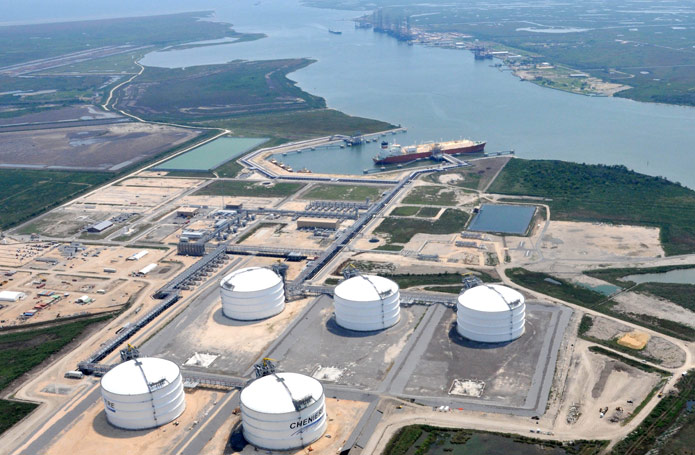
A view of the Cheniere Energy site in Cameron Parish, La., where the company now plans to add a liquefaction-for-export complex in addition to its current LNG receiving terminal.
A view of the Louisiana site 

That’s a pretty incredible set of economic benefits to the project. So much that Governor Bobby Jindal, who seems likely to join Montana’s Brian Schweitzer on the path from a state governorship to the 2016 Presidential election, has offered $2 billion in State funds as an incentive to support the project.

And that’s as far as most state politicians are willing to look into a project like this.

The environmental cost
But there are costs. And risks Big ones.

According to the Wall Street Journal, the Sasol plant alone is expected to emit 85 times the state’s “threshold” rate of benzene each year. You read that right. 85 times.It will also produce massive streams of carbon dioxide and treated water. And it is just one new facility of many.

So 85 is the second number Louisiana is betting on in this game of lotto on the State’s future. They’re betting that nobody is going to notice the level of poison that will be going into the atmosphere.

A benzene molecule

A benzene molecule

If you’re not familiar with benzene, it’s a colorless or light yellow liquid chemical with a sweet odor. It evaporates into air quickly, and dissolves only slightly in water and floats on the top. It is highly flammable.

It is also highly toxic over long periods of exposure. According to the Center for Disease Control, long-term effects of exposure include:

  • a decrease in red blood cells, leading to anemia. Benzene can cause excessive bleeding and can affect the immune system, increasing the chance for infection.
  • Some women who breathed high levels of benzene for many months had irregular menstrual periods and a decrease in the size of their ovaries.
  • Animal studies have shown low birth weights, delayed bone formation, and bone marrow damage when pregnant animals breathed benzene.
  • The United States Department of Health and Human Services has determined that benzene causes cancer in humans. Long-term exposure to high levels of benzene in the air can cause leukemia.

And there’s more. Tim Murphy writes in Mother Jones that

an analysis conducted by the Louisiana Department of Environmental Quality (DEQ) in February determined that the new project “will result in significant net emissions increases” of greenhouse gases, promethium, sulfur oxide, nitric oxide, and carbon monoxide. By its calculations, the plant will spew out more than 10 million cubic tons of greenhouse gases per year.

Amazingly, that same agency “determined that the facility would have no impact on the soil or air quality, and wouldn’t significantly affect the water supply, although “some change in existing water quality may occur.”

The financial risk
And then there’s the financial risk. According ot the Wall Street Journal,

the history of gas-to-liquid plants is mixed, prone to cost overruns and technology snafus. Should gas prices rise, or oil prices fall, they can quickly become huge money losers. Right now, the arbitrage is in Sasol’s favor. Oil trades at around 24 times the price of natural gas. In 2007, by comparison, it was around seven times. Sasol needs the ratio to be at least 16 to make money.
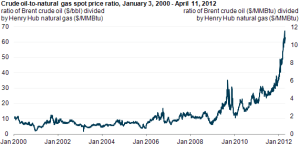
The ratio of oil to gas prices has spiked recently. Will it continue to stay high? That's what Louisiana officials are betting on. Click to englarge.

The ratio of oil to gas prices has spiked recently. Will it continue to stay high? That’s what Louisiana officials are betting on. Click to enlarge.

So, their eyes blinded by visions of an economic boom, the State of Louisiana is willing to bet on 16, a ratio much higher than has been the historical norm. Market fluctuations could take it lower and drive the Sasol project out of business. There’s just no way to tell with such a long-term project of this scale.

Louisiana officials see visions of a state flush with mineral wealth, with jobs for all, and an economic engine that will fuel prosperity throughout the United States. They’re willing to play lotto in the hopes that they’ll get political gains before the State has to pay off their gambling debts.

But should they be playing lotto with the State’s future? It’s easy to construct an alternative scenario where those numbers come up losers as the environment is irretrievably damaged, and market fluctuations leave the state with hollowed out cities, joblessness and economic stagnation. The bust would come, of course, after Bobby Jindal and many current legislators would have moved on, available to be blamed in absentia by the politicians left holding the bag.

A lesson for us in Montana
This is a cautionary tale for us in Montana. The lesson plays out in state after state, country after country: elected officials can’t resist the siren call of double digit economic growth, no matter what the cost, no matter what the risk.

We’re seeing it now in eastern Montana, but anyone who thinks the state will be willing to look beyond their visions of wealth to provide support if the drillers come to the Beartooths can think again. The litany of the ways the state turns its back on local property owners is long. To name just a few:

  • A Board of Oil and Gas Conservation that does the bidding of the industry because its voting members have a financial stake in its growth,
  • A tax structure that gives tax breaks to the industry and puts the burden of increased costs on local landowners,
  • A legal code that places mineral rights above surface rights, and allows property to be devalued without any input from landowners,
  • A willingness to allow precious water resources to be put in jeopardy without legal protections for those who use the water.

State governments want growth, and they don’t care if the rights of local landowners get trampled in the process. In Stillwater and Carbon counties, we need to act locally to make sure our rights are protected.

Posted in Fracking Information | Tagged , , , , , | Leave a comment

Video funding update. $1,875 raised on first day.

Beartooth T-shirtI’m not going to flog you with fundraising appeals, but I do want to let you know that we’re pretty excited that we raised $1,875 yesterday through our Indiegogo page. You can track our progress there as we reach our fundraising goal of $8,000.

If you missed yesterday’s post, you can find out about our fundraising efforts and the details and importance of the video here.

We’d really appreciate it if you can make a contribution and let your friends know about what we’re doing through your social media network, or just by email.

Make a contribution.

There are few places like this. Please help preserve it.
Posted in Community Organization, Politics and History | Tagged , | 2 Comments

Action Alert: We need your help

Those of you who follow this blog know that a group of local citizens has been working closely with the Carbon County Resource Council and the Stillwater Protective Association to preserve our environment, economy and way of life from the damage we expect will be caused by unrestricted oil drilling in the area. Our efforts, which include this blog, have been largely volunteer, with contributions raised to provide some professional support.

As readers of the blog you also know that we cannot expect much help from federal or State regulatory agencies. Protecting our community will require collaborative local action, with broad acceptance among our citizens.

This is where we need your help.

video pullout 1In a rural community like ours, building community consensus requires person to person communication. There are 17,000 people in our two counties spread out over nearly 4,000 square miles, so getting the word out is not easy.

We need to make a video that describes the impact of oil and gas drilling on local communities, creates urgency for community action, and shows how local communities can protect their water, their property values and their rights to self determination. This video will be shown at public meetings, posted online and handed out from neighbor to neighbor to make sure everyone gets the message.

It will feature interviews with experts and local residents.We believe it is a key tool to inform our community and our elected officials about what energized citizens can do.

Video pullout 2The video will be a major part of our efforts to make sure our neighbors understand how expanded drilling will affect and potentially harm our region.

To make the video affordable, our neighbors have donated their time, professional editing facilities and even use of an airplane to shoot video of the Beartooth watershed. Video projects like this usually cost tens of thousands of dollars, but we have been able to get the cost down to $8000 for a professional multipurpose video.

We are raising funds through a social media network called Indiegogo, which encourages small donations magnified through social media. To reach our goal, we need the help of our supporters. As a reader of this blog and a supporter of our efforts, you can make this happen.

Here’s how you can help:

  1. Make a contribution if you can. Any amount would help. You can contribute by going to our Indiegogo project page. As you can see, donations at certain levels will get you cool stuff.
  2. Use your social network to let others know about the project and encourage them to help out. This is one of the key features of our fundraising plan — you help by encouraging your social media contacts to join you in funding a project you believe in. Post on Facebook or Twitter, or just send out a note to your email contacts. You can let your Facebook network know about this by sharing the announcement on the Facebook page No Fracking the Beartooth Front.
  3. Encourage others to contribute, and to share on their social networks.
  4. Encourage people to come to this blog and our sister Facebook page for more information. We’ll keep you updated on the progress of the video.
  5. Like our Facebook page to make sure you get updates.

We plan to shoot the video during the week of June 23 and have a finished copy ready in July, so we need to move quickly. Please make your contribution right away, and get the word out that we need contributions to be in by June 26.

)

Questions? Here are some answers:
Q. Can we only give the amounts shown?
A. No, you can give any amount you choose.

Beartooth T-shirtQ. What do the T-shirts look like?
A. They’re pretty nice looking. They’ll be adorned with this original art that we think reflects the beauty of our region.

Q. We just want to give. Do we need to take the prizes?
A. No, when you make a donation you’ll have the option of accepting the prize or not.

Q. The project page is on Indiegogo. What is that?
A. Indiegogo is one of the leaders in “crowdfunding,” a type of fundraising that enables community-based nonprofit organizations utilize social networks to fund their projects.

Q. What happens if you don’t raise the money? What if you raise more than you need?
A. We will raise as much as possible toward our goal of $8,000 using Indiegogo. We’ll advertise using social media such as Facebook, encouraging our supporters to advertise on their social network. We’re confident we’ll make it, but if necessary we’ll raise any shortfall through more traditional fundraising sources. If extra funds are raised they will go to the Beartooth Front Defense Fund, run by Northern Plains Resource Council, to pay other expenses of the whole campaign.

Q. How will I know when the video is complete?
A. We will shoot the video during the week of June 23, and will have a finished product sometime in July. It will be posted on the web sites of Northern Plains Resource Council, Carbon County Resource Council, and Stillwater Protective Association. We’ll post it on this site and on our sister Facebook page as soon as it’s ready.

If you have other questions, feel free to leave them in the comments section below or on Facebook.

Thanks for being a part of this. Now let’s get going!

Posted in Community Organization, Politics and History | Tagged , , , , | 9 Comments

A personal story: Carol French, Bradford County, Pennsylvania (with video)

Telling personal stories
The oil and gas boom has been underway for a number of years in many locations across North America, and many stories have come to light about individuals and families whose lives have been personally affected. This post is part of a regular weekly series of those stories on this blog to help you envision what could happen if drilling expands along the Beartooth Front, and what is possible to keep that from happening.
Today’s story is a very personal tale of regret, of loss and activism. Carol French is very open about her mistakes, and she is actively working to support others who might find themselves in the same situation.

You can see other personal stories in this series by clicking here. Note that you can find more by clicking “Older Posts” at the bottom of the page. 

Carol French, Bradford County, Pennsylvania
Carol French is a dairy farmer in Bradford County, Pennsylvania. She got $13,000 from Chesapeake Oil to drill on her property. It wasn’t worth it. The cost to her land, her water, her livelihood, her animals, and her family’s health was devastating.

Carol French displays her drinking water

Carol French displays her drinking water

Carol’s personal story, which she wrote for Public Herald,  was originally published in October, 2012.

In 2006 Carol was approached by a landman who offered her a fixed-price lease and a chance to make a lot of money if a well was drilled on her property. Unlike most of us in Carbon and Stillwater Counties, Carol owns the mineral rights under her property.

She later found out that the $85 per acre she received was far less than the $2500 per acre the owners of smaller properties had been offered.

Carol with tomoatoes from her garden

Carol with tomoatoes from her garden

After a long period of inactivity, three wells were drilled near her farm at the end of 2010. She remembers that she and her neighbors immediately regretted their decision to lease:

“Farmers were seeking out lawyers for advice, because of the gas company’s exploitation of the lease agreement. Many were beginning to question, what have we done? Farm land was getting ripped up like old material for a patch work quilt. In the middle of 2011, five more gas wells were drilled around our farm. Two of the gas wells were less than 4,000 feet away.By the spring of 2009, there was uneasiness among some of the farmers who had a gas well drilled on their property. The local newspaper was reporting contamination found in water wells, death occurring on a gas pad and the farmer was facing the fact that he could lose his farm due to a lawsuit based on the gas companies operation. For myself, I was thinking that our lucky neighbor was going to become the next Millionaire, because they had the gas well drilled on them. Soon my mind changed. Those farmers were facing penalties lodged against them, due to their land becoming industrial use instead of agricultural use.”

In March of 2011 the composition of her water changed. As she describes it, “It now turns white, with a green moss settling on top of sand. Then the water becomes gelatin like.”

A litany of problems
The litany of problems she describes is heartbreaking:

  • Her neighbor, whose water also turned, suffered a burst spleen and had to be hospitalized.
  • Carol’s daughter became very ill and was admitted to the hospital, where she was diagnosed with an enlarged liver, spleen and ovary.
  • By late 2012, 22 months after the first wells were drilled, many of her neighbors who had left their jobs to work for the drilling companies were unemployed as the boom subsided.
  • When the company she signed the lease with had financial problems, she became legally responsible for a portion of their debt because of a mechanic’s lien.
  • When the water was contaminated, they became dependent on the drilling company for bottled water and/or filtration systems.
  • Carol’s health and the health of her animals suffered. She moved her daughter out of state to protect her.
  • A contaminated farm near Carol’s is for sale at a sales price reduced by over 80%.
Carol tends to her cows

Carol tends to her cows

As Carol tells the story she is filled with regret. She worries about the quality of milk her cows produce, but the state agency doesn’t test it. Her water is ruined. She knows she had stars in her eyes when she signed the lease, that she was hoping to get lucky and become rich, and she wishes she had gotten legal representation before she ever signed. As she thinks back on what has happened she reflects, “There have been a few that have prospered from the gas activity in our area. Some people are living in denial, and for others it has become a nightmare. Now we are finding ourselves asking the question, ‘what have we done?'”

This video is nearly 10 minutes long, but it’s very sobering to listen to. Carol doesn’t sugar coat her story, and she takes her share of personal blame for what has happened. She has become an activist who speaks out to help others who will face the same issues she has. Definitely worth watching:


Lessons to be learned
There are many lessons to be learned from Carol’s story. If she could go back in time, I believe she would say that, above all, you shouldn’t be naive when the landman comes. Get legal advice, and don’t believe the promises. Specifically,


Posted in Personal stories | Tagged , , , , , | 2 Comments