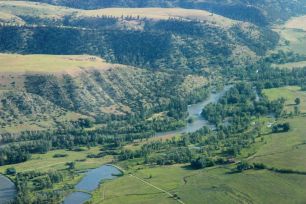
Two videos illustrate the conflict between fracking and a rural way of life

Today we have two videos that provide sobering food for thought. The two together run 37 minutes, and watching them will provide important perspective on how oil and gas drilling transforms the lives of rural communities.

The first video is one I posted a few months ago when the readership on this blog was much smaller, and it deserves a wider audience. It was created by The Dakota Resource Council (DRC) , and it describes the Bakken oil fields from the point of view of people whose lives have been affected.

The overwhelming mood of the video is sadness at loss of a way of life in western North Dakota. People look at the traffic, the crime, the loss of personal connection to their neighbors, and the environmental ruin of the place, and they recognize a fundamental truth: the lives they’ve built for themselves are gone forever. “You either work in the oil fields,’ says one lifelong resident, “or you leave.”

The second video, The Future of Shale, comes from Ireland’s award winning film-maker Dearbhla Glynn.  This is the “before’ video — residents of rural Leitrim contemplate what the future will be if fracking comes to them. They see what is coming, they fear it, and they recognize what the impact will be. As one resident says lyrically, “It’s not to get rich that you come to this part of the country. It’s a different way of life. It’s peaceful and it’s quiet. And if this goes ahead, it’ll be finished forever.”

Residents of Carbon and Stillwater counties would do well to look at what has happened to their Dakota neighbors and what is to come for their rural Irish compatriots? Which story do you want to tell?

This is the time to stand up not only for your property, but for your community and your rural way of life.

Posted in Bakken, Fracking Information, Personal stories | Tagged , , , , , , | Leave a comment

The deck is stacked against property owners who seek compensation for damages done by oil and gas drilling

Today is the last in a three-part series that’s looked at how increased oil and gas drilling will take away property rights in Stillwater and Carbon counties. On Wednesday we looked at the negative impact drilling has on property values, and how surface owners have few rights to protect themselves against the loss. Yesterday we examined how mortgage companies have begun to shy away from lending on properties on or near drilling sites.

In this post we’re going to consider the factors that make it difficult for property owners to receive compensation for damages to their property, either through their homeowners insurance, or from drilling companies. We’re also going to look at data that shows the long-term impacts of increased oil and gas drilling on communities.

Recovering damages caused by oil and gas drilling
Think your homeowners insurance covers damage to your property caused by drilling accidents? Think again. It may not. Increasingly insurers are removing coverage for oil and gas drilling from their policies. And even though Montana law makes the driller liable for damage, you may have trouble collecting.

  • Nationwide Insurance has stated specifically that it will not provide coverage for damage related to fracking. According to Business Week, an internal memo outlines the company’s policy:

“After months of research and discussion, we have determined that the exposures presented by hydraulic fracturing are too great to ignore. Risks involved with hydraulic fracturing are now prohibited for General Liability, Commercial Auto, Motor Truck Cargo, Auto Physical Damage and Public Auto (insurance) coverage.”

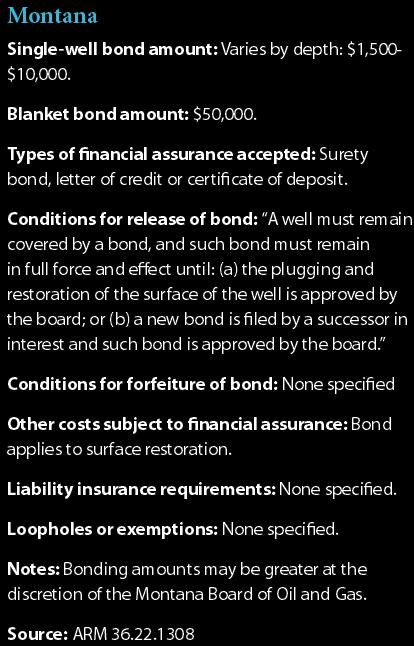
Montana Bonding Requirements
Montana bonding requirements. These amounts are simply inadequate to cover damages to individual property and the community, especially those that occur over time.
Source: Administrative Rules of Montana

Other insurers will certainly follow suit.

  • Often a driller or well operator’s insurance won’t cover damages, according to a summary published by the  New York State Bar Association. Homeowners may have to sue for damages and, even if they win, may not get paid for all damages since drillers admit in their regulatory filings that they may not carry enough insurance.
  • A white paper from Environment America Research and Policy Center , which I strongly recommend you download if you are concerned about this subject, explains the magnitude of the risk imposed by a lack of financial assurance to individual property owners and communities:

Current state and federal financial assurance rules for fracking are intended to ensure that oil and gas wells are plugged and well sites are reclaimed when production is complete. Few states, however, require financial assurance in amounts sufficient to complete plugging and reclamation, much less account for damage to natural resources, broader environmental cleanup or the compensation of victims. By releasing drillers from financial assurance requirements too early, current rules also leave the public potentially liable for environmental and public health damage that emerges over a longer period of time. Finally, while some states have used financial assurance tools imposed by fracking on infrastructure and public services (editor’s note: this does not include Montana), these tools have been insufficient to fully protect taxpayers.

The long-term impact on communities
Over the last three days we’ve now looked at  how oil and gas drilling creates a triple threat of problems for the surface rights holder: diminished property values, a reduction in the amount of available capital for borrowing, and insufficient assurance against damages. These all happen with little input from or control by the surface rights owner.

Basically, your property rights are taken away by the oil and gas companies, and you’re getting little protection from state agencies. These factors have immediate impacts, but what’s more disturbing is that they have negative consequences for the long-term economy and way of life in rural communities, and they’re well documented.

Six states

The study showed that in six states, including Montana, the longer the period of oil and gas exploration continues, the more negative the economic impact when it ends. You can see from the map that Carbon and Stillwater counties have primarily escaped these impacts, but we may not be so lucky during the fracking boom.

The negative long-term impacts of increased reliance on oil and gas drilling are summarized in a study from The Headwaters Institute entitled   Oil and Gas Extraction as an Economic Development Strategy,” which looks at the longitudinal impacts of  drilling booms since the 1980s in six states, including Montana, from 1980 – 2011.

Their findings are stark. Counties that participated most heavily in the boom and specialized most intensively in oil and gas industries actually saw greater declines in income, higher crime rates, and lower rates of educational attainment in the 1980 to 2011 period.

“The magnitude of this relationship is substantial,” the authors write, ” decreasing per capita income by as much as $7,000 for a county with high participation in the boom (greater than 8% of income from oil and gas) and long-term specialization (greater than 10 years) versus an identical county with only one year of specialization in oil and gas.”

This suggests that U.S. towns and counties that specialize too heavily in oil and gas development can indeed suffer from what’s known as the “resource curse.” They become too reliant on a single industry, and when the oil and gas stops flowing, the counties end up worse off than if they’d never enjoyed a surge of production in the first place.

  • For counties that experience increases in oil and gas production, per capita income declines with longer specialization.
  • The longer the duration of oil and gas specialization, the higher the crime rate.
  • Educational attainment declines with longer specialization.

We need to be in action
If you’ve been reading this blog, you know that all over North America communities have embraced the immediate economic impact of fracking, mostly because they didn’t know what was coming. We’ve seen it through the personal stories and other posts in the Bakken, in Wyomig, in the Marcellus Shale in Pennsylvania, in the Eagle Ford Shale in Texas.

Along the Beartooths we have the advantage of seeing the mistakes that others have made, and we can learn from them. There are actions available to us to manage this. If we don’t take them we have only ourselves to blame.

See also:
The New York Times has compiled hundreds of pages of documents related to drilling and property rights and values that include federal guidelines, emails from realtors and mortgage brokers, memos from bankers etc.

Posted in Fracking Information | Tagged , , , , , , , | 10 Comments

Mortgage lenders increasingly worried about fracking

fracking-mortgage2Yesterday we looked at the clear evidence that fracking in a community causes property to lose significant value. Today we turn our attention to documenting how the mortgage industry, recognizing how drilling adds risk and reduces value, is beginning to tighten policies on lending on properties that have wells on or near them, or that are subject to leasing.

As more and more Americans live closer to oil and gas wells, what lending institutions are most worried about are the additional risks brought by drilling:

  • Uninsurable property damage for oil and gas activities outside of a landowner’s control.
  • Lending institutions refusing to provide mortgage loans on homes with gas leases because they don’t meet secondary mortgage market guidelines.
  • The possibility of default because a borrower signed a mineral lease
  • Prohibitively expensive appraisals and title searches made complicated by the long paper trail associated with mineral rights and attached liabilities.
  • Difficulty of getting construction loans, which require a risk-free property.
It makes sense for local communities to establish rules like setbacks from residences. Photo: Spencer Platt, Getty Images

Photo: Spencer Platt, Getty Images

While some lending institutions continue to make loans in oilfields, the number of banks that are applying stringent conditions or refusing to make loans to properties associated with oil and gas drilling is increasing. Here are some examples:

  • In North Carolina the State Employees’ Credit Union (NCSECU) has announced that it will no longer approve mortgage financing for split estates. The credit union, which manages almost $12 billion in residential mortgages, said it considers loans on such land to be riskier than those where the mineral rights remain with the land. “You could end up where someone puts a drilling platform on a property,” says NCSECU President Jim Blaine, “We’d have to tell their neighbors, ‘we’re sorry, your property value just went down.'”
  • According to American Banker, at least two mortgage lending institutions in addition to NCSECU — Tompkins Financial in Ithaca, NY and Spain’s Santander Bank — will no longer write mortgages on land where oil or gas rights have been sold to an energy company.
  • Language in the Federal Home Loan Mortgage Corporation’s (Freddie Mac) standard mortgage contract prohibits a “borrower from taking any action that could cause the deterioration, damage or decrease in value of the subject property.” If a landowner breaks that clause by signing a drilling lease or entering into a mineral rights agreement, Freddie Mac has the legal authority to exercise a call on the full amount of a mortgage, according to an agency spokesman.
  • According to a white paper prepared for the New York State Bar Association, Wells Fargo, one of the largest home mortgage lenders in the United States, is approaching home loans for properties that have gas drilling leases attached to them with a high degree of caution.
  • The Tompkins Trust Company has prepared a white paper that details how several companies, including Provident Funding, GMAC, FNCB, Fidelity and First Liberty, First Place Bank, Solvay Bank, and CFCU Community Credit Union, are putting hard-to-meet conditions on mortgages or denying loans altogether on properties with oil and gas leases.
  • Fracking and associated injection wells can lead to earthquakes that can damage property, a concern for a number of lenders.
  • A Pennsylvania couple was recently denied a new mortgage on their farm by Quicken Loans because of a drilling site across the street. According to the lender, “gas wells and other structures in nearby lots…can significantly degrade a property’s value” and do not meet underwriting guidelines. Two other lenders also denied the family mortgages.
  • Federal lending and mortgage institutions (FHA, Fannie Mae, Freddie Mac) all have prohibitions against lending on properties where drilling is taking place or where hazardous materials are stored. A drilling lease on a property financed through one of these agencies would result in a ”technical default.” FHA’s guidelines also don’t allow it to finance mortgages where homes are within 300 feet of an active or planned drilling site.

As we’ve seen over and over, increased oil and gas drilling causes irreparable damage to a community. Lending institutions are reacting because it’s their money that’s on the line. Their increasing unwillingness to lend will further hurt property values and drive up mortgage rates.

Another industry that will shy away from increased risk is insurance. Tomorrow we’ll look at how major insurers are writing fewer policies in areas impacted by drilling.


Posted in Fracking Information | Tagged , , , , , , | 15 Comments

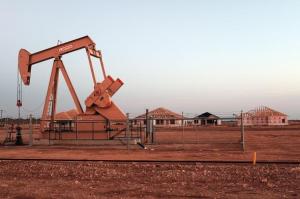
rural fracking2One myth about oil and gas drilling is that it creates riches in a community in the form of increased property values. “With all the new jobs,” the industry says, “buyers will be falling all over themselves to buy your property.” Not true.

Over the next three days I’m going to look at how the expansion of oil and gas drilling in a community actually lowers property values, reduces the ability of property owners to borrow against their property and prevents them from obtaining insurance against the damage drilling causes.

One important thing to understand about fracking is that it has brought drilling closer to the homes of more and more Americans. The technology is so much more efficient than conventional drilling that it is now more economical to drill in places where it was never possible to do so before. According to the Wall Street Journal, more than 15 million Americans now live within a mile of an oil or gas well. If you are one of the 20,000 people living in Stillwater or Carbon County this is not good news.

Most properties in our part of Montana are split estates — the surface rights are split from the mineral rights. The mineral rights are dominant, so if you don’t own the rights to oil and gas under your land, you get very little benefit from having the drillers extract oil from your property, and the damage they do in getting it out — even if it’s on a neighbor’s property — devalues your home and your land.

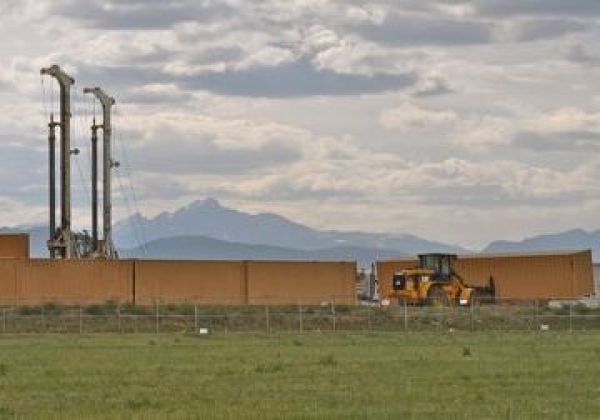
rural frackingAnd there’s really not much you can do to protect your property rights from the oil and gas companies. They traditionally pay a small one-time fee for access (although not always), it’s very difficult to get compensation for the direct damage they do to your property, and it’s impossible to protect yourself against the devaluation of property in the community when it becomes the site of heavy industry associated with drilling.

There’s now clear evidence that drilling destroys property values. Read on.

  • In a 2013 survey of 550 people in Texas, Alabama and Florida, a strong majority said they would decline to buy a home near drilling site. The study, published in the Journal of Real Estate Literature, also showed that people bidding on homes near fracking locations reduced their offers by up to 25 percent. The bottom line conclusion of the study, is that drilling drops home values by 5-15%. It’s logical that this would be the case. Why would you pay top dollar when you’ve got a noisy business running next door that fouls the air and threatens your water.
  • Realtors in Colorado are documenting that buyers are becoming increasingly hesitant about buying homes near drilling sites, with fewer and fewer bids rolling in. “Some don’t want to even look at anything remotely close to any existing or proposed well sites,” Boulder County real estate agent Nanner Fisher told the Colorado Independent. She also told the Boulder Journal that “if there is a well that’s visible when you show a property, the prospective buyer will ask to look for something else. A lot of it is the visual effect of the well site,” she said. “And, they think if you can see it, it’s gotta be close enough that it’s not healthy.”
  • Denver Realtor Adam Cox wrote in a column in the Colorado Statesman that “potential buyers balk at buying homes near a drilling site, even though that’s often where the discounted homes are” because they are so close to oil and gas activity. Similarly, he said, homeowners near drilling sites “often have to sell at significantly lower prices than when originally purchased due to the oil and gas industry neighbors.”
  • In Pavilion, Wyo., where the EPA has linked groundwater contamination with fracking, Louis Meeks saw the value of his 40-acre alfalfa farm all but disappear completely. In 2006, his land and home were appraised at $239,000. Two years later, as ProPublica reported, “a local realtor sent Meeks a letter saying his place was essentially worthless and she could not list his property. ‘Since the problem was well documented … and since no generally-accepted reason for the blowout has been agreed upon,’ she wrote, ‘buyers may feel reluctant to purchase a property with this stigma.’ ”
  • A study conducted by researchers at Duke University found that the risks and potential liabilities of drilling outweigh economic benefits like lease payments and potential economic development in Washington County, PA. Even though lease payments can add overall value to homes with wells drilled on them, the possibility of contaminated water decreases property value by an average of 24 percent. The boost that comes from signing a lease offsets the increases, leaving a net decrease in value of 13 percent. But keep in mind that the lease payments assume that the estate is unified — something much more common in the East than in Montana.
  • A 2010 study of the Texas real estate market in the heavily drilled suburban-Dallas area near Flower Mound concluded that homes valued at more than $250,000 and within 1,000 feet of a drilling pad or well site saw values decrease by 3 to 14 percent.
  • Faced with a boom in coal-bed methane development in the early 2000s, officials in La Plata County, Colorado studied the impacts of oil and gas development and found that properties with a well drilled on them saw their value decrease by 22 percent.
  • In a 2005 peer-reviewed study, researchers found that oil and gas production “significantly affect the sale price for rural properties.” The study determined that the presence of oil and gas facilities within 2.5 miles of rural residential properties in Alberta, Canada reduced property values between 4% and 8%, with the potential for doubling the decrease, depending on the level of industrial activity.
  • In Montana, where the oil and gas industry gets a tax holiday, surface owners wind up subsidizing them by paying property taxes on the land the drillers are using to get the oil. It’s a hidden cost, and as a taxpayer you pay and they don’t.

If you don’t know whether you own the mineral rights under your property, you need to find out. If you do, it’s possible (but not guaranteed) that the lease payments will offset your losses. If you don’t, you are vulnerable to having your property rights trampled on by oil and gas companies.

Tomorrow I’ll be looking at how drilling impacts your ability to get a mortgage.

Posted on by davidjkatz | 13 Comments

A personal story: Christine Pepper, Bradford County, Pennsylvania (with Daily Show clip)

“If they took care of the landowners and the local people you’d be so much further ahead, but they won’t. And that’s what pissed me off.”

-Cory Pepper, Bradford Township, Pennsylvania

Telling personal stories
Today we have a slightly different take, a much lighter one, in our weekly series on personal stories about how the oil and gas boom in North America has affected people’s lives. Leave it to The Daily Show to use humor to show how seriously we should be concerned about the dangers of fracking.

Previous posts in the series:
Tim and Christine Ruggiero, Wise County, Texas
Laura Amos, Encana, Colorado
Helen Ricker, Poplar, Montana
Diana Daunheimer, Didsbury, Alberta
John Fenton, Pavillion, Wyoming
Linda Monson, Williston, North Dakota
Bob Deering, Pennsylvania

The Daily Show: “The Benefits of Fracking”
Today’s story starts with a clip from The Daily Show, which does its usual great job of using humor to expose hypocrisy, in this case the smug assuredness of the oil and gas industry, contrasting it against the hopelessness of their victims. The segment is ironically entitled “The Benefits of Fracking.”

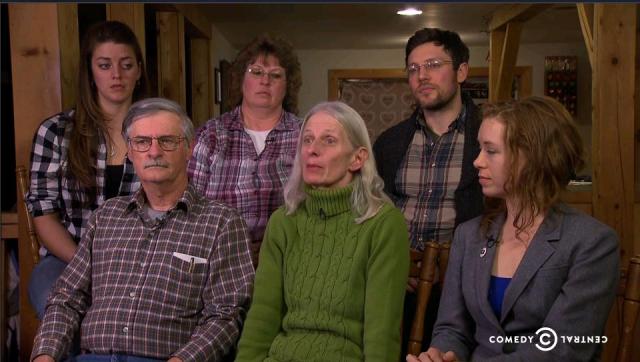
In the segment “reporter” Aasif Mandvi interviews six Pennsylvania residents whose lives have been affected by fracking. He mocks and belittles their complaints, suggesting that perhaps the nosebleeds their cows have experienced might be because they are snorting cocaine.

Mandvi then talks to Marita Noon, Executive Director of an industry organization called Energy Makes America Great, who tells him how responsible the oil and gas industry is, how much they care about communities, and how safe fracking is.

He then moves into a litany of environmental disasters caused by fracking, with suitable video of explosions, leaks, and other ugly incidents. He even trots out one of our favorite examples of industry hypocrisy, the famed Pennsylvania pizza giveaway.

Definitely worth a watch. Sorry I can’t embed the video, but you can get to it by clicking on the picture below. Give the video a minute to load.
dailyshow_Fracking2

Christine Pepper, Bradford County Pennsylvania 
But what’s not funny at all are the stories of the earnest people who appeared in the video, who are so committed to justice that were willing to subject themselves to ridicule to get their stories out.

Take Christine Pepper, the woman in the upper left in the photo above. She’s locked in a battle with the Pennsylvania Department of Environmental Protection (DEP)  to resolve what appears to be irreparable damage done to her water supply. Her family has no water to drink, to shower, or wash their clothes so they’re making calls to inlaws and saving single gallon plastic jugs to store water in.

Pepper famil

The Pepper family (click to enlarge)

It started the day Christine splashed water on her face from the kitchen faucet and a burning sensation shot through her skin. “It felt like my face was on fire for 20 minutes,” she said. Later she developed red bumps on her face.

The next thing that happened was that there was no water at all. The Pepper’s spring-fed well, which had produced water for more than 50 years, went completely dry.

“I’m not saying we’ve never had low water,” explains Christine’s husband Cory, “but it always comes right back, but it’s stayed dry for two weeks. And… I’ve never seen anything like it! I’m 42, I’ve lived here 42 years, and my Dad was 18 when he bought this house.”

Previous water problems in the area
The Peppers live on Southside Road in Leroy Twp. Bradford County, where  drinking water problems have  been described in the documentary Triple Divide. The Pennsylvania Department of Environmental Protection (DEP) has pending Gas Migration Investigation (GMI) cases throughout the area, with Leroy Twp. being famous for two GMI’s in the last three years: the Atgas 2H well blowout in April 2011, and the Morse 5H well subsurface problems in 2012. Both wells are within three miles of each other.

According to DEP, the Morse 5H well is currently in inactive status due to regulatory procedures. But there is a second well on the same pad, the 3H, which the Peppers were told went into production the same week their well went dry.

“They opened up the 3H well and the next day we have problems,” explains Cory, who happens to work locally for the gas industry but has been skeptical that fracking had anything to do with stories of water contamination in the area.

When Cory saw his family’s spring dry up, and found out that the 3H well had been put online, he and Christine called DEP to submit a complaint.
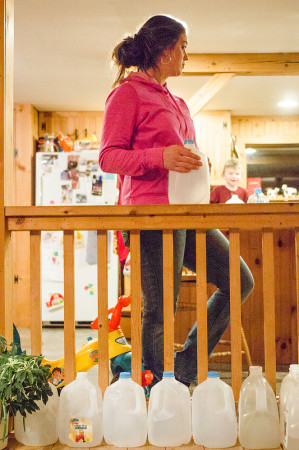
Christina Pepper with empty water bottles

Chrstine with plastic bottles used for water

Once a homeowner submits a drinking water complaint the Department has 45 days to make a determination about whether oil and gas activities have impacted the water supply.

The DEP investigation has dragged out and has caused nothing but problems for the Peppers. It took several days for the DEP to get out and investigate the complaint. The investigator cam out on February 11, which was the day the DEP started the clock ticking on their 45-day investigation. .

As Christine recalls, “DEP came that day and told me that bare minimum it would be 45 days to several years before they come up with a conclusive decision. And the one gentleman told me that it was highly unlikely it had anything to do with the drilling over there.”

The Pepper family is no stranger to DEP or impacts from fracking. Christine’s mother (the woman with gray hair in The Daily Show video) is Carolyn Knapp, and Carolyn has spent years educating Bradford County about the impacts from drilling while criticizing DEP for how they handle water complaints. So since this isn’t Carolyn’s first water rodeo, Christine had her mother act as the liaison for her complaint.

The case should have had a quick resolution. The Morse 5H well located on the same pad is also responsible for blowing out and impacting a creek down the road on the farm of Tim Pepper, Cory’s brother. With this and other incidents happening nearby within the past two years, the DEP could have acted quickly. Instead they’ve left the Pepper family without water.

“If they took care of the landowners and the local people you’d be so much further ahead, but they won’t. And that’s what pissed me off.” Cory says angrily.

Now, nearly two months later, the DEP has violated its standards for complaint resolution, and the Peppers are just another family whose lives have been disrupted by the oil and gas industry.

The Public Herald, an independent non profit dedicated to investigative journalism, has gathered information about 285 cases of citizen water complaints related to fracking in Bradford County, PA alone and has made them public at PublicFiles.org.

We’ll report back as new developments occur. You can read more about the Peppers’ case here, and get behind the scenes information on their Daily Show appearance here.

Implications for Montana
What has happened to Christine Pepper and her family is what we’ve seen in other personal stories all over North America: the disregard of the oil and gas industry for personal property rights, and the complete inability of state and federal government bureaucracies to do anything about it.

This doesn’t have to happen in Stillwater and Carbon Counties. Citizens can demand that drilling companies meet standards that will protect their water before they drill. But this will only happen if you are willing to act. If you sit passively and hope it won’t happen to you it probably will.

 

Posted in Fracking Information, Personal stories | Tagged , , , , , , , , | 3 Comments

What does Australia know that Montana doesn’t?

Sometimes it’s useful to look at business practices in other countries to see clear examples of how oil and gas policies in the US disempower property owners..

In Montana and throughout most of the West, most estates are split: surface rights are separated from mineral rights. Mineral rights have preference, so without local action to protect surface rights owners most of us are stuck. We can’t keep the drillers out. The most we can hope for is a small payment and a negotiated agreement that pays us something when the inevitable property damage occurs.

Drilling AustraliaIt doesn’t have to work that way. Just this week in Australia two energy companies signed a pledge to farming groups committing the companies to not drill when it’s against the landowner’s wishes.

Just as in Montana, most Australian estates are split. The crown (government) owns most of the mineral rights under the land. And just as in the US, the landowner receives a payment because the energy companies need their land to access the resources. It’s just that in Australia oil and gas companies respect the property rights of surface estate owners, but in the US they don’t.

Protecting your property rights
Montanans are justifiably concerned about involving the government with their right to do whatever they choose on their own property, but to me this is a fundamental question of protecting your property rights from the oil and gas industry. ECA or another energy company can pay you a small one-time fee for access, drive their trucks all over your property, build access roads and pipelines, spill chemicals, foul the air you breathe, and make a ruckus day and night.

In the United States, there’s no help coming from the drilling companies or Washington or Helena. Unless you own the mineral rights under your land, your property is going to be damaged when they leave. And on top of the damages, your property value is going to be damaged.

Getting local government involved in restricting the ability of oil and gas companies to run roughshod over your property doesn’t seem like government intrusion to me. To me it’s just a case of the people of a community getting together to protect their property rights. There’s nothing intrusive about restricting the ability of corporations to destroy your property without paying you fair compensation.

This week I’ll be looking at the clear evidence that shows how drilling destroys your property value, limits your ability to get loans and keeps you from getting insurance.

What does Australia know that we don’t?

Posted in Community Organization, Politics and History, Fracking Information | Tagged , , , , , , , , | 2 Comments

Ravalli Republic Letter to the Editor: Reform the Board of Oil and Gas

The following Letter to the Editor appeared in the online editon of the Ravalli Republic (Hamilton, Montana)  on March 30, 2014:

The Red Lodge area has been described as the gateway to Yellowstone National Park, nestled in the beautiful Beartooth Mountains. Come experience hiking, fishing and exploring among Montana’s highest mountain peaks. See the astonishing wildlife. This area offers extraordinary beauty and Western hospitality. Not only is this one of Montana’s shining stars as far as tourism goes, but here, farmers and ranchers can produce healthy crops and livestock by utilizing our pristine water system and rich soil.

But how long will this last? Will another generation of Montanans and travelers be able to enjoy our treasure?

Thanks to the Board of Oil and Gas, this area could soon be changed forever. They have already given Energy Corporation of America the license to start drilling and fracking. This company proudly claims, “This will be the next Bakken.” Is this what you want for Montana?

It is not too late to stop this massive destruction. But talking to the Board of Oil and Gas will do no good. They’ve shown they have their minds made up to drill. Our only hope is to work with our legislators to reform the board: its makeup, lack of transparency, lack of enforcement of existing rules and oversight of active wells, and the barriers to public participation.

This is not just an environmental issue. This is about our land, water, recreational opportunities, tourism economy, and the strength of our rural communities. It’s time for us to stand up and demand change.

Nancy McManus,

Billings

Posted in Shared Letters and Posts, Uncategorized | Tagged , , , , , | Leave a comment

The four ways hydraulic fracturing contaminates water

For over a decade, oil and gas executives and the policy makers who support them have repeated a single bold claim: there has never been a single documented case where fracking contaminated groundwater. Well, if you repeat a lie often enough you can hope that it becomes the truth, but in the case of fracking the facts are impossible to ignore, and they tell a very different story.

Proving contamination
Proving contamination requires knowing the source of the water, the pathway it has taken, and where it was received. (click to enlarge)

As with many lies, there’s a kernel of truth inside. What the oil and gas execs are doing is telling a very narrow story. We’ve discussed it before — if you define contamination narrowly and after the fact, it’s a very difficult thing to prove. The scientific standard is burdensome, and it’s often hard to reconstruct exactly how contamination occurred. Proving contamination requires knowing the source of the water, the pathway it has taken, and where it was received. And then there’s politics, which often gets in the way of any rational discussion. In Pavillion, Wyoming, for example, local residents have had their water supply permanently contaminated, and they’re left in limbo while politicians argue over a variety of extraneous matters.

But in many ways this discussion is extraneous. Water gets contaminated in a number of ways during the fracking process, and there are many, many examples of this happening. You can’t define away the problem. It’s real. It happens, and it destroys not only water supplies, but people’s lives.

Four ways hydraulic fracturing can cause water contamination
Now we have a new study that shows that risks to water resources from hydraulic fracturing through four major routes, according to Duke scientists Avner Vengosh, Robert Jackson and colleagues at Duke University. The study was published in the journal Environmental Science and Technology last month, and is a review of the scientists’ existing research.

The study found that water contamination due to oil and gas drilling can occur in four primary ways:

  • Stray methane from formations could leak from improperly constructed wells into shallow aquifers.
  • Wastewater from shale gas drilling could spill at the surface or could be improperly disposed of in streams and rivers.
  • Metals or radioactive elements can collect in rivers and streams where partially treated wastewater effluent is released.
  • Freshwater withdrawals for fracking can stress groundwater availability in drought-prone regions.

According to EnergyWire (July 10, 2012, subscription required), other studies have challenged the Duke findings, saying  migration might have been naturally occurring if the topography of the region allowed it. But the Duke scientists showed statistically that topography could not be the only reason to have contamination in northeastern Pennsylvania.

Let’s deal with it
As with many other issues, it’s time to stop using science to create a political wedge against responsible behavior. We need to accept that fracking causing environmental harm, and develop policy accordingly.


Posted in Fracking Information | Tagged , , , , , , | 4 Comments

The impact of truck traffic associated with fracking in rural areas

One issue we’ve touched on several times is how oil and gas drilling increases the flow of traffic, and the problems this causes in rural areas.

A single well can require 400-800 or more truck trips, and wells are frequently grouped together, so a rural well location can stress roads well beyond their ability to handle the traffic. Here’s a quick breakdown of the kind of traffic required:

  • When drilling begins, heavy excavation equipment must be hauled in to grade the access road and level a multi-acre drilling pad. Then trucks haul in hundreds of tons of crushed stone for final construction of the road and drilling pad.
  • Multiple tractor-trailer loads are then required to haul in the various parts of the drill rig, while later hauling away these same parts from the gas well site.
  • The largest volume of truck traffic begins with the hydraulic fracturing of gas wells, especially if more than one well is fracked at the same time. Frac pumps, holding tanks, tanker trucks and a wide variety of support trucks and equipment eventually crowd the frac site. During fracking, tractor-trailer loads of sand are continually delivered to the well site.
  • Once the frac is complete, scores of trucks from service companies arrive to complete the wells. Finished wells require regular visits from well tenders and other service equipment. Some individual trucks weighed as much as 80,000 to 100,000 lbs when fully loaded.

Dirt roadA real world example
Our place is on Stillwater River Road at the Beehive in Nye, and our road doesn’t look too different from the main road of Towanda Township, in Bradford County Pennsylvania. On the Stillwater, thanks in large part to the Good Neighbor Agreement with the Stillwater Mine, traffic  is modest. That 45 mile speed limit in Towanda is a little aggressive for our stretch of the road.

We’d like to keep it that way, and I’ll bet the people of Towanda wish they’d have been able to.

Dirt road2Here’s how that same road looks today, after a high volume of overweight drilling trucks and a wet winter. They’re going to have to reduce that speed limit or pave the road, neither of which is a very good option for residents of the area.

And anybody who thinks Governor Bullock will be here any time soon to cut the ribbon on new road construction had better think again. Montana’s oil and gas tax holiday means there’s just not going to be adequate money from the state to maintain the roads if fracking becomes common practice.

So what’s the answer? Professor Susan Christopherson of Cornell University conducted interviews with residents of areas affected by fracking. One key theme was a mistrust of state regulators, and a desire to have local government regulate the fracking industry to make sure that their quality of life was maintained.

It’s a reasonable approach.


Posted in Uncategorized | 3 Comments

A Personal Story: Bob Deering, Pennsylvania. “Our Dream Has Become a Nightmare”

(T)he shale isn’t going anywhere, it has been there for hundreds of years. Why the rush? If technology had time to catch up, I think the drilling could be completed much more efficiently and have less environmental impact.

-Bob Deering

Telling personal stories
The oil and gas boom has been underway for a number of years in many locations across North America, and there are now a lot of stories about individuals and families whose lives have been personally affected. This post is part of a regular series of those stories on this blog to help you envision what could happen if drilling expands along the Beartooth Front. Look for these once a week.

Today’s story comes from Pennsylvania, and it offers several lessons for Montanans:

  • Be careful what you sign. The landmen aren’t representing you. You need an attorney.
  • No matter what anybody tells you, drilling is a mess. Your life will be disrupted, and not for the better.
  • Things happen fast, and outside of your control.

Bob Deering is plain spoken and honest. His story is worth listening to.

Previous posts in this series:
Tim and Christine Ruggiero, Wise County, Texas
Laura Amos, Encana, Colorado
Helen Ricker, Poplar, Montana
Diana Daunheimer, Didsbury, Alberta
John Fenton, Pavillion, Wyoming
Linda Monson, Williston, North Dakota

Bob Deering, Pennsylvania
About 5 years ago land men started showing their faces on our mountain. They talked to all the landowners, showing us different contracts for leasing our grounds. Very few of us had any idea what the ramifications of signing that lease would be.

Most of the contracts were for 5 years with an option for renewal. The leases ranged from $5-$50 per acre per year. Most of the hunting camps in the area saw this as a little extra money to help pay property taxes. Some signed and the fun began.

First, seismic testing crews showed up. They carved paths through the woods, drilled holes all over the place, helicopters flew overhead from morning until night, and flags were tied everywhere. It probably would not have been too bad if it was once and done, but we are now on are third time around for testing. Every time it seems to go a different direction: NE-SW, N-S, SE-NW, etc. Each new round of testing wore more paths through the woods. Soon they will be starting again.

“Our 15 foot gravel road is now like a highway”
About 3 ½ years ago the first trucks made a visit. I didn’t invite them, the state did. The trucks carried massive construction equipment: graders, track-hoes, bulldozers, tree cutting equipment, tree shredders. Our rural area started to change: our 15 foot gravel road is now like a highway.

To top it all off, they took over the road repair and traffic control. Now they tell us when it’s safe for us to use our own roads, that is when they’re not using it for their trucks. When winter comes you never know if you’ll be blocked off the roads by a broken down or stuck truck.

Now for the drilling operations. The first several sites were so deep in the State Forest no one knew exactly what was being done. As the sites expanded closer to view, the scope of them was revealed. Each site is approximately 10-15 acres or larger if they have a frack pond. Some of the pad sites are almost adjacent to each other with interconnecting roads and pipelines.

They schedule their workers day and night. Between the noise, dust, and fumes from the trucks, simple things like enjoying a Saturday cookout on the deck have been ruined.

Adding infrastructure
The drilling companies are now in the process of what they call “adding infrastructure”: pipelines, water lines, roads and storage areas. Current laws allow some of these features to be built almost on top of your property. Where we once had darkness we now have stadium lighting. At night it looks as though a shopping center has been added to our neighborhood.

I have been in this area since I was 2 years old. In 2001 my wife and I started to build our retirement home – our dream home really. Well, our dream home is turning into a nightmare. What if conditions deteriorate to the point where we’re forced to move?

Our latest change? The local gas drilling company is building an open-pit frack wastewater retention pond. The site is on ground purchased adjacent to our property.

My wife and I are not “tree huggers,” but we do like wildlife and nature. It might be a coincidence, but bird patterns have changed since the industry came. We’ve kept records of migratory birds passing through our yard for 8 years. For the past 2 years we haven’t gotten grosbeaks or cedar-waxwings. These birds usually show up in the fall like clockwork, within a calendar day or two each year. Evidently the birds are smarter than the people: they moved on.

No more hunting
I won’t get into much about hunting, there are other variables causing changes as well; DCNR and Game Commission rule changes. All I can say, this is the first year since 1965 that I haven’t purchased a hunting license. I would feel guilty shooting any of the few animals we have left.

Some people feel gas drilling is a great thing. Personally, I have reservations. First, the shale gas isn’t going anywhere, it has been there for hundreds of years. Why the rush? If technology had time to catch up, I think the drilling could be completed much more efficiently and have less environmental impact.

I hear stories about the lumber and strip mining days of over 100 years ago, stories about the total devastation of the forests. Well, we certainly haven’t learned much from our past mistakes.

Posted in Personal stories | Tagged , , , , , , | 2 Comments