Finding the truth about the health impacts of drilling in the Information Age: a remarkable new study

We are coming closer to a “smoking gun” that ties fracking to negative health outcomes. It will take time — the Shale Revolution is only ten years old and the health impacts will take years to reveal themselves, and the oil and gas industry is doing everything it can to keep us in the dark.

Today’s post highlights an important  step forward. It’s about a new study that is remarkable in its conception — it promises to cut through the secrecy and legal protections that the oil and gas industry enjoys by employing technology, science, and the collaboration of creative scientists and citizen activists all over the world.Photo: Simon Fraser University Communications

Here are the pieces that came together to make this happen:

  • Brian Schwartz

    Brian Schwartz

    Brian Schwartz, an environmental epidemiologist, and a group of researchers at the Johns Hopkins Bloomberg School of Public Health in Maryland were interested in studying the health effects of living near a drilling or fracking site. The most logical state in which to do this is Pennsylvania, where the Marcellus Shale is Ground Zero in the shale revolution.

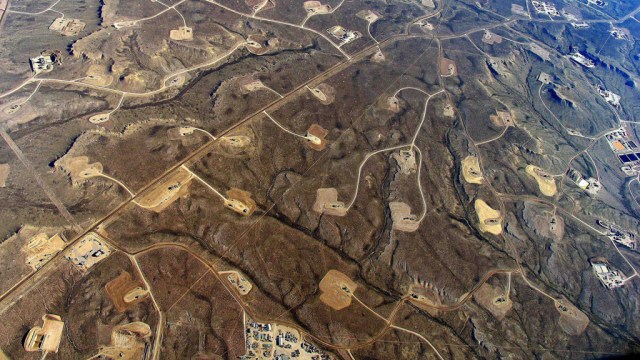
  • There is no public map or dataset of existing drilling sites, so the researchers went to an organization called SkyTruth and its FrackFinder Program, which “maps drilling and hydraulic fracturing (fracking) across the United States using crowdsourced image analysis of aerial and satellite imagery.” In other words, the program trains volunteers to view satellite images and identify drilling sites.
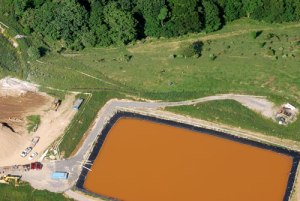
  • To find the sites, volunteers were trained to find impoundments, or ponds, where produced water from fracking is stored. Skytruth asked volunteers to look at aerial imagery of locations where drilling permits had been issued, and respond to very simple questions about what they saw on imagery taken in 2005, 2008, 2010 and 2013. The project used a multi-phased approach to make sure there was no confusion about what was an impoundment and what was a duck pond, a shadow, or a manure lagoon. The images were shown to multiple trained volunteers, and over 70% agreement was required for each site to verify that it was indeed an impoundment.
  • Here are the number of impoundments that were discovered in each year:
Year Number of Ponds Area – Average (sq meters) Area – Median (sq meters)
2005
11
608.9
344.9
2008
237
1,040.9
558.8
2010
581
3,416.9
2,001.6
2013
529
7,552.8
6,209.7

In 2005 the shale revolution was just beginning, and so there were very few ponds near permitted drilling sites. As you can see, as drilling ramped up the ponds got larger. “As of 2013, the total impoundment surface area measures nearly four million square meters, scattered across (Pennsylvania). (New York’s Central Park measures 3.4 million square meters.) ” These were not all the same ponds — of the 581 ponds identified in 2010, only 116 were still there in 2013.

impoundment-81The next step will be to analyze the prevalence of individual diseases by distance from drilling sites. This will take several months, but at the end we should have some very good data about the health impacts of drilling on people living close to drilling sites.

The beauty of this is that the oil and gas industry has depended for years on keeping secrets. They come into a community and rely on spreading fear, uncertainty and doubt. They purchase loyalty and silence, and work to encode this in the law. One of their tools is secrecy about well locations, which is a barrier to research.

In the Information Age, it is harder and harder to do that. In Pennsylvania the combination of technology, science, collaboration and citizen activism is breaking the code of silence. The more we know about the real dangers of oil and gas drilling, the more we can do what’s best for our communities.

More…

Click here for an interactive map of impoundments related to shale gas drilling in Pennsylvania, as identified by SkyTruth staff and volunteers on USDA aerial survey photography from 2005, 2008, 2010 and 2013.

Posted in Fracking Information, Health impacts, Health information | Tagged , , , , , , , , | 5 Comments

A don’t miss event: see Helen Slottje in Billings this Saturday

If you can, take advantage of the opportunity this weekend to see one of the great heroes of the fight for citizen rights against unregulated oil and gas drilling. She’s Helen Slottje, an upstate New York attorney who is the deserving winner of this year’s Goldman Environmental Prize, which annually honors grassroots environmental heroes across the globe.

She’ll be the keynote speaker at the annual meeting of Northern Plains Resource Council this Saturday, November 15 at the Crowne Plaza Billings from 11:30 – 12:30. You can attend just this session, the entire two-day meeting, or join Northern Plains by clicking here.

Helen Slottje
Helen Slottje

Helen has spent the last four years crafting a successful legal strategy utilizing zoning laws to prevent oil and gas fracking from entering communities across New York, and she hopes her speech can help do the same for Montana.

“The communities are on the front lines of the impacts of hydraulic fracturing,” she said. “Communities have always had the right to make local decisions that affect the places where this might happen. They’re the people who bear the costs and the burdens of this, so they should have the right to make decisions that impact that.”

This video of her, made for the Goldman Prize announcement, includes this inspirational summary of the impact of her work:

“She changed the paradigm of human interaction with the oil and gas industry. As citizens we have the right to say no. “

We’ve written extensively about her on this blog. She was the subject of a personal story, and we presented a remarkable video of the David-and-Goliath tale of how the town of Dryden, New York took control of its own destiny and banned fracking. Over 170 towns in New York have taken advantage of Helen’s work by issuing bans.

Last July, the New York Court of Appeals upheld the right of cities in that state to ban fracking, the ultimate validation of Helen’s work.

Citizen groups in Carbon and Stillwater Counties are working on signature gathering to establish citizen initiated zones along the Beartooth Front. These zones would not ban fracking, but would establish the rules under which oil drilling would take place, making sure that the rights of property owners and communities are balanced with those of oil and gas companies.

Update 11/13/2014: Audio of Helen Slottje interview with Deb Courson Smith of Public  News Service

Posted in Community Organization, Politics and History, Fracking Information | Tagged , , , , | 2 Comments

Falling gas prices and the uncertain future of the Shale Boom

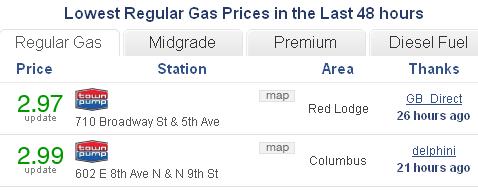
Gas pricesWho’d have guessed it? Gas prices under $3.00. That’s what you pay these days in Red Lodge and Columbus. Great news, right?

Maybe not for Energy Corporation of America and other companies that have plans to bring “a little bit of the Bakken” to the Beartooths.

The continuation of the shale boom in the United States depends on the price of oil. The costs of getting the oil out of the ground and to the pump — labor, equipment, refineries, shipping — don’t fluctuate much. So if the price of oil goes down, it means revenues decline and getting the oil out of the ground becomes less profitable.

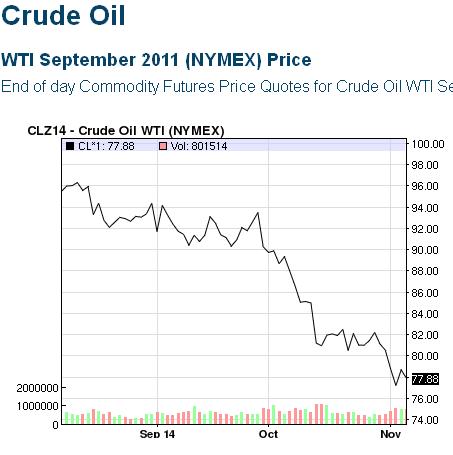
Oil prices August - November 2014. Click to enlarge.

Oil prices August – November 2014. Click to enlarge.

And make no mistake about it, the price of oil is coming down. In the last three months the price per barrel has declined from $96 to $77.88 as of November 6. The price has dropped 25% since June is now hovering at right around a three-year low.

There are several reasons for this. There’s the increase in North American production, an increase in Libyan production, reduced demand in Europe and Asia, and a recent cut in prices by OPEC, among others.

In the short term you can’t worry too much about oil price fluctuations. It’s nice to pay less at the pump, but we’re used to seeing gas prices rise and fall.

But what happens if these price levels continue?

At $100 a barrel, oil produces about $15 of profit per barrel. Because costs are relatively fixed, at $90 a barrel that profit goes down to $5, and at current prices it is not profitable to pull oil out of the ground.

For large stable companies that is not a problem in the short run. But for smaller companies that have taken on substantial debt to drill in shale plays, the drop can be catastrophic.

In the longer term a drop in price will mean that production goes down, and it will affect production first in areas where reserves are not as rich as in the Bakken.

We don’t know what’s going to happen. But here’s the key point for elected officials and residents along the Beartooth Front. An oil economy is by its very nature a boom and bust ride, and there’s nothing local communities can do to control when it booms and when it busts.

We can look at the wealth generated in the Bakken and wish that it comes here, but even if there are substantial oil reserves in Belfry and Roscoe, whether it gets pulled out of the ground will depend on events in Washington and Saudi Arabia and China and Europe and Iran and elsewhere outside our control. And if, as many believe, the reserves here aren’t as rich as in the Bakken, operators will vacate here if the returns don’t match those in North Dakota.

Our responsibility in the face of this uncertainty is to maintain the long term viability of the community: to make sure personal property is protected, to require the preservation of our water, and to enable the continuity of a way of life along the Beartooth Front. These are the things that need to be constant no matter what happens to the price of oil.


Posted in Fracking Information, Uncategorized | Tagged , | 5 Comments

Energy Corporation of America re-issued permit for Dean well site

A sharp-eyed reader spotted this in the November 5 Great Falls Tribune:

In Stillwater County, a re-issued permit was approved for Energy Corporation of America to drill the Holman Morse 1-H,  a Lakota Formation well with an SHL (surface hole location) at SE SE 12-5S-16E (988 FSL (from south line)/466 FEL (from east line)) and a PBHL (proposed bottom hole location) of 6,200 feet at SW SE 7-5S-17E (502 FSL/2162 FEL).

This is a horizontal permit for the well across from Montana Jack’s in Dean. According to Montana Board of Oil and Gas (BOGC) records, the well was originally permitted on October 31, 2013 and has been renewed twice at six month intervals, on May 1 and again on October 30 of this year.

The permit needs to be re-issued every six months, so it is not clear whether the re-issue is related to future activity at the well.

Montana Jack well history

You can look this up yourself at the BOGC web site. Search under Operator –> Equal to –> Energy Corporation of America.  Results will appear down the left side. Click on the “Holman Morse” well.

Posted in Fracking Information | Tagged , , | 7 Comments

Lessons from Tuesday’s election

You may have focused on the top races for control of the Senate or governorships across the county, but oil and gas drilling was on the ballot too. Today I’ll catch you up on a few ballot measures that will have an impact on the future of oil and gas drilling along the Beartooth Front  and across the country.
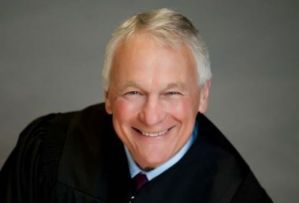
Mike Wheat. Click to enlarge.

Mike Wheat. Click to enlarge.

Montana
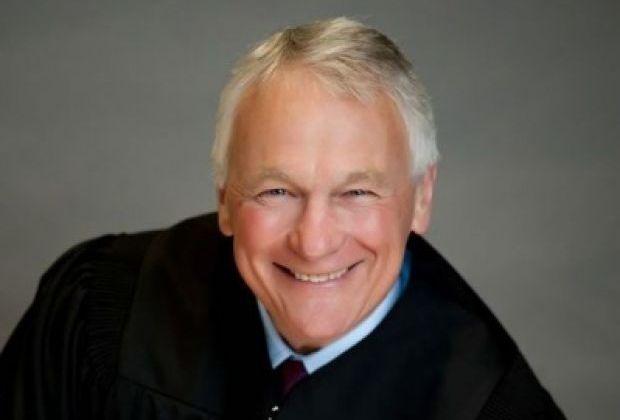
First, Montanans showed the good sense to return state Supreme Court Justice Mike Wheat to the bench by a margin of 59% – 41%. Outside corporate interests wound up spending over $500,000 to replace Wheat with an unqualified judge who was committed to follow an agenda driven in part by the oil and gas industry.

Carbon and Stillwater Counties agreed, by slightly smaller margins:

Wheat_CarbonWheat_StillwaterA great outcome that holds promise for making sure that Montana’s approach to oil and gas drilling balances the needs of communities and the environment with those of the oil and gas industry.

In other Montana election news of concern to readers of this blog, Yellowstone County incumbent Virginia Court defeated Tom Richmond in Montana House District 50. Court, who has served in the House since 2011, is a successful small business owner who supports a sound economy, a good education system, and clean water and air. Readers will remember Tom Richmond as the longtime administrator of the Montana Board of Oil and Gas Conservation (BOGC) who offended so many local residents when he spoke at the Elks Club in Red Lodge last January, and who was instrumental in denying Silvertip residents the opportunity to testify against the permitting of an oil well in Belfry. Good choice, Yellowstone County.

Denton, Texas
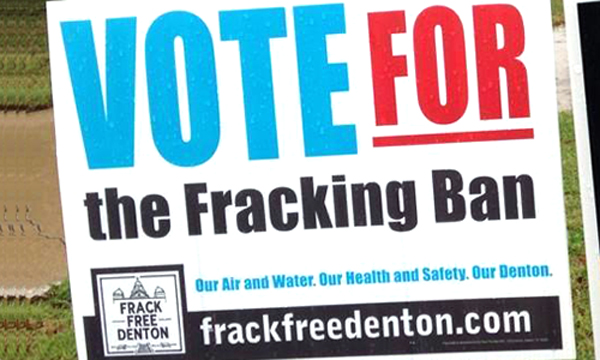
Nationally, the most visible victory of the night came in Denton, Texas, located in the middle of the rich Barnett Shale. Last summer the local city council refused to act on citizen concerns about the dangers of fracking. Undeterred, the citizens went to the ballot to pass a fracking ban.

Denton fracking banThe oil companies pumped huge amounts of money into the campaign and threatened to sue if the initiative passed. But the measure won 59% – 41%, making Denton the first city in the largest oil and gas producing state in the county to pass such a ban.

A lesson for elected officials in Texas, but for Montana County Commissioners as well: private land owners who demand to control what happens on their own property should be ignored at your own risk.

Athens, Ohio
Athens became Ohio’s fifth city to ban fracking Tuesday when voters approved a local ordinance to ban the practice inside the city limits.

The Athens Community Bill of Rights passed with about 78 percent of voters casting ballots in favor.

The measure modifies Athens municipal laws to prohibit shale gas and oil extraction and related activities.

Other Ohio cities that have passed Bill of Rights fracking bans include Oberlin, Cincinnati, Broadview Heights and Yellow Springs.

Mendocino, California
In Mendocino County in northern California, residents also adopted a “Community Bill of Rights” law banning fracking by a vote of 67% – 33%. California’s deep drought and Mendocino’s location on a major earthquake fault were the deciding factors for local residents.

What makes these Bill of Rights initiatives of particular interest to Montanans is that the initiative establishes the rights of the people of Mendocino County to a “healthy environment,” including clean air and water. Fracking is banned as a violation of that right. The extraction or sale of local water for use in fracking anywhere in the state is also banned, along with the dumping of toxic fracwater.

Article 2, Section 3 of the Montana Constitution establishes the “inalienable right” of citizens

to a clean and healthful environment and the rights of pursuing life’s basic necessities, enjoying and defending their lives and liberties, acquiring, possessing and protecting property, and seeking their safety, health and happiness in all lawful ways.

The similarities are striking. You have to wonder whether this right might be a future reason to ban fracking.

San benito county fracking banSan Benito County, California
In rural San Benito County, located just south of Silicon Valley, the oil and gas industry spent nearly $2 million, fifteen times more than the group in favor of the ban.

Although there is currently no fracking in the county, the industry was clearly concerned about the precedent it would set. The initiative passed 57% – 43%.

“This is a testament to the power of ordinary people when they decide to determine
their own future,” said Andy Hsia-Coron, one of the leaders of the Coalition to
Protect San Benito. “Millions were spent to confuse the people of our county and it
didn’t work. Now we can export hope to communities far and wide who believe that
the people not outside corporations should be in charge.”

Some bans failed on Tuesday
However, not all proposed fracking bans were successful on Tuesday. In Santa Barbara, California, where there is already extensive offshore oil drilling, voters sent Measure P to a decisive 63% – 37% defeat.

Local oil producers threatened lawsuits against Santa Barbara County if Measure P succeeded. And Californians for Energy Independence, an industry group with major funding from Chevron and Aera Energy, funneled $7.6 million against the initiative. Overall the industry outspent initiative proponents 20-1.

Three other Ohio cities — Gates Mills, Kent, and Youngstown — turned down similar fracking bans to the one in Athens.

What it means for the Beartooth Front
Right now there are no movements to impose fracking bans along the Beartooth Front similar to the ones that were passed Tuesday. Local citizen groups are working with County Commissioners to establish citizen initiated zones that will define the legal requirements for how and where drilling will take place.

Citizens have consciously adopted this balanced approach to find solutions that are fair to land owners who are concerned about damage to their property and livelihood from drilling, yet want to be respectful of the rights of their neighbors who might benefit from mineral extraction.

Click to view full letter

Click to view full letter

However, ballot initiatives could take place in the future, particularly if oil companies place legal roadblocks in the way of this fundamental citizen right, or if the County Commissioners choose to ignore the legal right of citizens to take this action.

Energy Corporation of America has threatened to pursue legal action outlined in the letter at right, if the Carbon County Commissioners work with local citizens to establish a citizen initiated zone.

It is clear that citizens across the United States are recognizing the dangers of oil and gas drilling more clearly, and are beginning to take action to protect themselves. Communities in Carbon and Stillwater Counties, recognizing those same dangers, are taking a different path, but one that leads the door open to more comprehensive measures if necessary.

I’ll be writing more in the future about these community bill of rights initiatives.

Posted in Community Organization, Politics and History | Tagged , , , , , , | 12 Comments

If you missed the call on health impacts of oil and gas drilling it was my fault. But have no fear — you can listen below

Must have been daylight savings time or something.

Sincere apologies to those of you who tried to get into the learning call regarding the science of health impacts. I had the time wrong, and you were an hour late.

Have no fear. Here’s a recording of the call.

If you have a problem listening to the presentation, try clicking here.

And you can download the presentations by clicking on the graphics below:

Dr. Detlev Helmig spoke on Air  Quality Impacts of Oil and Gas Devleopment. Much of his talk relates to his study on the Uintah Basin in Utah, which we reported on last week.

dr helmig

Dr. Michelle Bamberger talked about her work on “Health Impacts of Unconventional Fossil Fuel Extraction”, the basis for her book The Real Cost of Fracking: How America’s Shale-Gas Boom is Threatening our Families, Pets and Food.

You can download her presentation here:

dr bamberger

Dr. David Brown discussed “Unconventional Natural Gas Drilling and Health: What Needs to be Looked at Next”. Download here:

dr brown

Again, apologies, but hopefully no harm, no foul. Enjoy.

Posted in Fracking Information | Tagged , , | 2 Comments

Don’t miss out: Presentation on health impacts of oil and gas drilling today at Noon. Presentations included.

A reminder about a great learning opportunity available today at Noon. Three experts will be describing the state of the science on the health implications of fracking.The event is offered by the Collaborative on Health and the Environment (CHE), a nonpartisan organization with a mission of strengthening the science dialogue on environmental factors impacting human health.

It’s a one-hour conference call, with some time for Q&A at the end. You can register by clicking here:

click here2

This event should be outstanding whether you’ve been studying the health impacts of drilling for a long time or if you’re a novice just starting to find out about drilling and health. You can find out more about the event and the presenters here.

CHE has posted the presentations online. If you’re attending you may want to review the slides beforehand, or if you can’t attend you may want to have a look anyway. Download presentations by clicking on the graphics below:

Dr. Detlev Helmig will be speaking on Air  Quality Impacts of Oil and Gas Devleopment. Much of his talk relates to his study on the Uintah Basin in Utah, which we reported on last week.

dr helmig

Dr. Michelle Bamberger will be talking about her work on “Health Impacts of Unconventional Fossil Fuel Extraction”, the basis for her book The Real Cost of Fracking: How America’s Shale-Gas Boom is Threatening our Families, Pets and Food.

You can download her presentation here:

dr bamberger

Dr. David Brown will be discussing “Unconventional Natural Gas Drilling and Health: What Needs to be Looked at Next”. Download here:

dr brown

Also…

This is not a political blog and we don’t usually endorse candidates, but you should not miss the opportunity to vote for Mike Wheat for another term on the Montana Supreme Court. To find out why, click here.

Posted in Fracking Information | Tagged , , , , | 3 Comments

Evidence of the “endless war” the oil and gas industry is fighting against local communities

Over the last several months we’ve looked at evidence that demonstrates how the oil and gas industry operates in secret to keep the public from understanding the dangers inherent in the Shale Revolution. As new technologies and techniques bring those risks closer and closer to where people live, it has become increasingly clear that the industry is fighting an “endless war” to keep the public confused about the impact of oil and gas drilling on local communities.

Health impactsToday we have a rare opportunity to get an inside look at the scheming that goes on behind this war. In a secretly recorded presentation to oil and gas industry leaders reported in the New York Times, we learn some of the inside workings of the industry:

If the oil and gas industry wants to prevent its opponents from slowing its efforts to drill in more places, it must be prepared to employ tactics like digging up embarrassing tidbits about environmentalists and liberal celebrities, a veteran Washington political consultant told a room full of industry executives in a speech that was secretly recorded.

The blunt advice from the consultant, Richard Berman, the founder and chief executive of the Washington-based Berman & Company consulting firm, came as Mr. Berman solicited up to $3 million from oil and gas industry executives to finance an advertising and public relations campaign called Big Green Radicals.

The company executives, Mr. Berman said in his speech, must be willing to exploit emotions like fear, greed and anger and turn them against the environmental groups. And major corporations secretly financing such a campaign should not worry about offending the general public because “you can either win ugly or lose pretty,” he said.

Rick Berman. Photo: Daniel Rosenbaum, New York Times

Rick Berman. Photo: Daniel Rosenbaum, New York Times

We’ve heard from Berman, aka “Dr. Evil,  before.

“Big Green Radicals”
Under the umbrella of the Center for Organizational Research, his organization, Big Green Radicals, has launched advertising efforts aimed at discrediting the EPA, challenging the validity of the US Green Building Council’s rating system for sustainability and efficiency of buildings, and mocking local residents who seek to control oil and gas drilling in their communities.

One of the key tactics of the group is to manufacture doubt about scientific issues by creating confusion through the media. In the case of oil and gas drilling, that means citing as sources such groups as two well-known climate change-denying organizations, the Heartland Institute and the George C. Marshall Institute.

John Mork. Click to enlarge.

John Mork. Click to enlarge.

What is particularly troubling about this speech is that somebody with Berman’s pedigree would be brought in by an oil industry advocacy group like the Western Energy Alliance. The group lists many major oil companies among its members, board of directors and advisors. It is the same group that co-sponsored a speech by Energy Corporation of America CEO John Mork on the changing economics and science of energy. Mork, of course, is the guy who promised to bring “a little bit of the Bakken” to the Beartooth Front.

“There is total anonymity”
Mr. Berman boasted in his talk about how he could get six-figure checks from oil executives in the room and then make those people invisible in the campaign.

“People always ask me one question all the time: ‘How do I know that I won’t be found out as a supporter of what you’re doing?’ ” Mr. Berman told the crowd. “We run all of this stuff through nonprofit organizations that are insulated from having to disclose donors. There is total anonymity. People don’t know who supports us.”

Opposition research on their opponents
According to a colleague of Berman’s quoted in the New York Times:

There is nothing the public likes more than tearing down celebrities and playing up the hypocrisy angle,” his colleague Mr. Hubbard said, citing billboard advertisements planned for Pennsylvania that featured Robert Redford. “Demands green living,” they read. “Flies on private jets.”

Mr. Hubbard also discussed how he had done detailed research on the personal histories of members of the boards of the Sierra Club and the Natural Resources Defense Council to try to find information that could be used to embarrass them.

This ad mocking the intelligence of those who challenge the oil and gas industry is an example of the kind of disinformation spread by Berman’s organization:

You can download a transcript of Berman’s remarks with links to ads, as well as a list of attendees at the meeting, by clicking here.

How the oil and gas industry keep local citizens out
Over the last several months we’ve looked at a lot of evidence that this kind of secret power play is typical of the oil and gas industry. Here are some of the things we’ve discussed. Together they paint a compelling picture of what Berman describes as an “endless war.”

At the federal level:

At the state level:

At the local level:

“Endless War”
As Rick Berman told the oil and gas executives, “Think of this as an endless war.” As local residents, it’s good to know what we’re up against. The oil and gas industry is waging war against us, the goofy people in the ad above. We need to understand what we’re up against, and recognize we need to work together as a community to protect our land, our water, and our way of life from a well-funded and relentless adversary.


Posted in Fracking Information | Tagged , , , | 3 Comments

More new evidence of public health risk at drilling sites all over the United States (with awesome diagram of chemical health effects)

The evidence documenting the dangers to community health from oil and gas drilling continues to mount. As the shale revolution brings industrial production areas into communities all over the country, more and more people are exposed to increasingly well-documented health risks.

We are approaching a time when there is universal consensus about the health risks of oil and gas drilling.

Drill pad near home in rural Wyoming. Photo: John Fenton. Click to enlarge.

Drill pad near home in rural Wyoming. Photo: John Fenton. Click to enlarge.

Yesterday a study was published in the journal Environmental Health that is the first peer-reviewed study of hazardous air pollutants near fracking and other oil and gas production sites in multiple US locations. You can also download the report, which is written in layman’s terms.

This follows the release last week of a study that pinpoints the source of airborne pollutants at oil and gas drilling sites in the Uintah Valley in eastern Utah.

What makes yesterday’s announcement so compelling is that residents of communities heavily affected by oil and gas production were trained to collect samples using equipment and methods certified by federal agencies, which were then analyzed by an accredited independent laboratory. Residents collected air samples when they personally observed activity at the sites or when they suffered symptoms such as headaches, dizziness or breathing problems.

Produced water discharge canal, Elk Basin Wyoming. Photo: Deb Thomas. Click to enlarge.

Produced water discharge canal, Elk Basin Wyoming. Note that this is just a few miles up the hill from the Belfry well recently permitted by the Montana Board of Oil and Gas. Photo: Deb Thomas. Click to enlarge.

This method of engaging local communities solves the problem of delays between local observation and the engagement of state and federal agencies.

Samples were collected in Arkansas, Colorado, Ohio, Pennsylvania, New York and Wyoming.

Key findings of the study

  • Eight chemicals classified as volatile compounds (VOCs) were found in concentrations in excess of either the US EPA’s most hazardous cancer risk level or the minimal exposure levels for non-cancer risks set by the Agency for Toxic Substances and Disease Registry (ATSDR). About 38 percent of the samples contained concentrations of VOCs exceeding these federal standards.
  • The chemicals that most often exceeded health and safety standards were formaldehyde, which is a known human carcinogen, and hydrogen sulfide, a nerve and organ toxin known by its rotten egg odor.
  • Seven samples, all from Wyoming, contained hydrogen sulfide in concentrations ranging from more than twice to 600 times the level classified by the EPA as immediately dangerous to human life.
  • Fourteen samples — seven from Arkansas, six from Pennsylvania and one from Wyoming — contained concentrations of formaldehyde exceeding the EPA’s most hazardous cancer risk level.
  • Several other chemicals were detected at concentrations above health and safety standards. Four samples from Wyoming contained benzene, a known carcinogen, in concentrations above EPA’s most hazardous cancer risk level. Seven samples from Wyoming and one from Pennsylvania contained hexane, a nerve toxin, at levels above either ATSDR minimal risk levels or the workplace safety standards for long-term exposure set by OSHA. One Wyoming sample contained hexane at 7000 times OSHA’s minimal risk level. Five Wyoming samples contained levels of the nerve toxins toluene and xylene at levels exceeding either the short-term or long-term minimal risk levels.

If you’re having trouble keeping score about the effects of different chemicals used in oil and gas drilling, the study includes this awesome diagram. Not for the faint of heart. You can click to enlarge.

This image indicates the common symptoms and health impacts known to be linked to chemicals associated with unconventional oil and gas development, including some of the chemicals captured in air samples as part of this project. Click to enlarge.
This image indicates the common symptoms and health impacts known to be linked to chemicals associated with unconventional oil and gas development, including some of the chemicals captured in air samples as part of this project.

Conclusions and recommendations
The peer-reviewed data in this study is compelling, and describes the very real dangers to public health from oil and gas drilling. Here are the recommendations:

  • States must put in place more robust monitoring protocols and practices. Community monitoring can be a powerful tool for assessing potential risks, and it should inform the action of regulators to better protect public health.
  • Companies that produce fossil fuels must fully and publicly disclose the compounds used in fracking and other production activities. Regulators, public health officials, workers and citizens cannot properly safeguard public health if they are kept in the dark about chemicals in their communities. Federal policies that shield corporations from disclosing “confidential business information” should be shifted to support citizens’ right to know. Health care providers should be free to inform patients of the health risks of chemicals used in their communities.
  • State and federal agencies must use a precautionary approach when permitting oil and gas development operations. (See recent post on this blog, Oil Drilling and smoking: the precautionary principle)

What it means for the Beartooth Front
For us as citizens, we need to say enough is enough. Montana does not provide the protections communities need. Our water, our environment, our property rights and our health are at risk. We have identified ways for citizens to take action. If you have the opportunity to sign up to participate, do it.

For our elected officials, particularly our County Commissioners, who have a clear responsibility to protect the people who elected them, there is a requirement to be precautionary in dealing with this issue. It is fine to look at potential revenues coming into the community, but it is not fine to risk public health for short-term economic gain. County Commissioners should be proactive in dealing with their communities to make sure rules are put in place that protect public health and safety.

Posted in Fracking Information | Tagged , , , , , , , , | 5 Comments

Event this Saturday in Sheridan, WY: Energy and Censorship

Yesterday’s Laramie Boomerang brings news of an event this Saturday in Sheridan with the provocative title “Living Behind the Carbon Curtain: Wyoming, Energy and Censorship.” The speaker will be University of Wyoming professor Jeff Lockwood.

Jeff Lockwood
Jeff Lockwood

Lockwood is working on a book with the same title for 2016 publication.  “I’m digging into the ways in which the energy industry has colluded with the government in both Wyoming and nationally — as well as internationally,” Lockwood said, “to shape public discourse, and in some cases to explicitly censor free speech, particularly forms of speech the industry finds inconsistent with its interests.”

The book highlights five examples of such censorship that have taken place in Wyoming, he said. His talk this weekend will focus on two chapters and one example, about the cancellation of an art show.

The artwork Carbon Sink, before (top) and after removal. Click to enlarge

The artwork Carbon Sink, before (top) and after removal. Click to enlarge

“Art work was censored from the Nicolaysen Art Museum in Casper because it was deemed offensive to the energy industry,” Lockwood said.

Lockwood wrote a controversial online piece on the removal of the artwork, entitled Carbon Sink, in which he described why this happened:

Given the extraordinary generosity of the legislature to UW, the institution is indebted to the politicians who are, in turn, beholden to the energy industry. Even though the piece was as much about individual responsibility as corporate accountability, legislators from energy-rich counties were unhappy with Carbon Sink. The declining demand for coal and the falling prices for natural gas made a fossil-fueled state government grumpy. Commonsense, experience with the Wyoming Way, and conversations with legislators leaves little doubt that the university administration traded free speech for political pacification (“extortion” is such an ugly word).

The University of Wyoming has denied the allegations.

Censorship a relevant topic for Montanans
The topic of censorship is an interesting one for Montanans who live along the Beartooth Front. We have seen it occur in various ways. Land owners in Carbon County had to go to court to be able to testify on a well permit before the Montana Board of Oil and Gas Conservation (BOGC), and at recent hearings the BOGC heard from citizens about its lack of transparency.

It is a topic we should be aggressive in pursuing. The BOGC, which is responsible for regulating oil and gas in Montana, is, by its very structure, an organization designed to promote the drilling of wells for profit.

The public is invited to attend the event, which is part of the annual meeting of the Powder River Basin Resource Council.

The event will be at the Sheridan Holiday Inn at 7:30pm. Sheridan is about a two-hour drive from Billings.

Posted in Community Organization, Politics and History | Tagged , , , , , | 2 Comments