Action update: Tell the DNRC about ECA illegal water use in Belfry

This is an update to Monday’s post about activity at the ECA well in Belfry.

Update Wednesday: Illegal water theft has been stopped!

We told you that ECA is drawing water out of a gravel pit on a neighboring property, which is not covered by the permit.

Yesterday local residents and members of Carbon County Resource Council filed a complaint to the Department of Natural Resources and Conservation (DNRC) to request that the agency investigate and stop the illegal taking of water.

Please support these local farmers by telling the DNRC that ECA’s water use at the Belfry well needs to be investigated. Stealing water is wrong and cannot be ignored.

You can support this protest by contacting the Regional Director of the DNRC Billings office as soon as you can.

Kim Overcast
406-247-4422
kovercast@mt.gov

Kim’s message machine says she is out of the office until May 21. Make sure she has plenty to listen to when she returns.

Please support the fight against irresponsible drilling.

Update May 21, 11:48am

According to Ed Kemmick at Last Best News, ECA has issued the following statement:

“Energy Corporation of America (ECA) is working with a local vendor to purchase water for our operations.  It is our understanding that this particular vendor has an agreement directly with a surface owner in the area who has a gravel pit on his property that has filled with water.  Under their agreement, the vendor draws water from this gravel pit, which he then transports and ultimately sells to ECA.

“It is important to note that the location in question is simply a gravel pit that has filled with water.  There are no surface streams or other water sources running into or out of the gravel pit.

“We have discussed this situation with our counsel and he has advised us that we have taken all necessary steps to appropriately and lawfully utilize the water being drawn from the gravel pit.  Therefore, we believe we are in full accordance with the law and, as we strive to with all of our operations, we are operating responsibly — utilizing local vendors and working hard to be a good neighbor.”

I’m not a lawyer, so take this with a grain of salt, but let me provide my interpretation: “We signed an agreement with a local trucker, and we have no idea what his agreement is with the local landowner. We think we’re protected because our agreement with the local trucker protects us from liability.”

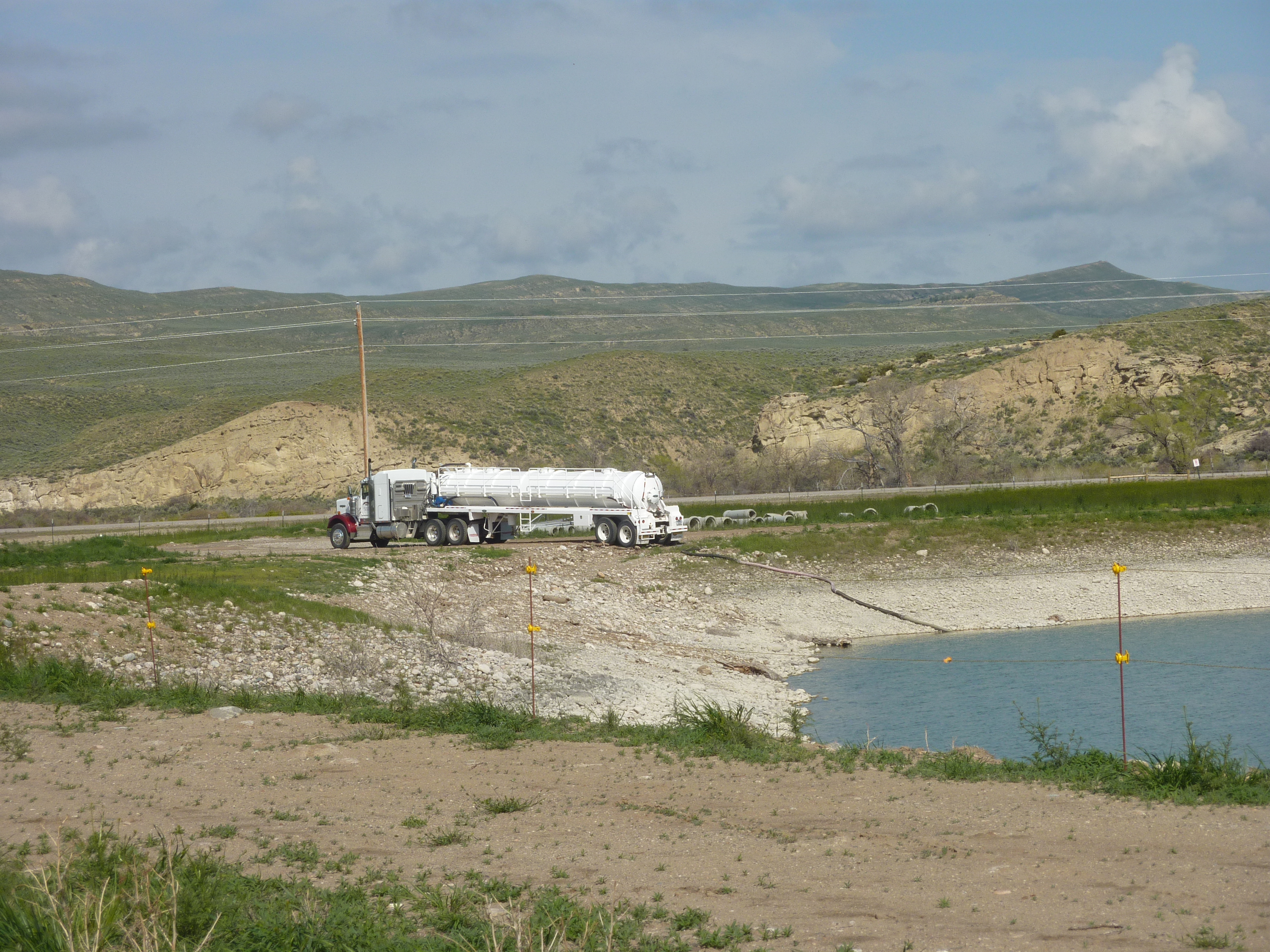
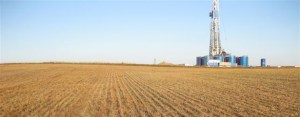
Here’s a photo of water being taken form the pit by two tankers at the site. Click to enlarge.

Illegal water taking Belfry

Posted in Community Organization, Politics and History | Tagged , , , , , | 8 Comments

Important update: Lease of BLM parcel near Dean

Today we have better news on the drilling front.

BLM_Stillwater

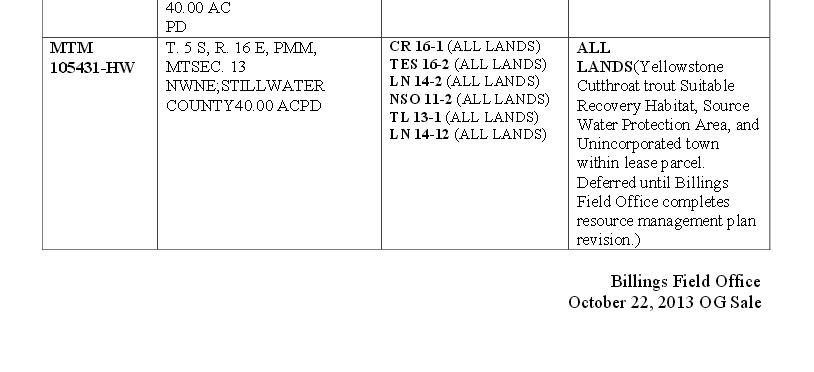
BLM lease listed in Stillwater County (click to enlarge)

You’ll recall that in April, working with Northern Plains Resource Council and Stillwater Protective Association, we posted an action alert regarding the lease of a BLM parcel in Dean. It was an urgent request for you to file public comment on the proposed lease of a parcel adjacent to the one where ECA has constructed a well pad across the road from Montana Jack’s.

The Stillwater Protection Association and Northern Plains Resource Council worked with their membership to generate letters and support

You responded. According to the preliminary environmental assessment issued by the Billings Field Office of the BLM on May 19, 40 of you sent letters expressing your opposition to the leasing of this parcel.

Well, the verdict is in. It looks like the leasing of the parcel will be deferred past the proposed sale date of October 21, and won’t be considered again until the end of calendar 2015 at the very earliest.

So for those of you who took time from your schedules to write letters, take five minutes to pat yourself on the back. Citizens who take the time to speak to government can have an impact. But after five minutes you need to stop and recognize there is still much to be done.

And for those of you in Carbon County who think this post doesn’t concern, you need to read at least the last two sections, because there’s a lot at stake for you too.

Where we are in the process
The BLM leasing process was spelled out in detail in the previous post, but here’s a summary.

  1. Request to lease: A company like ECA makes a request to lease the minerals under a parcel of land for which BLM controls the mineral rights.
  2. BLM recommendation: Guided by a resource management plan (RMP), the BLM field office makes a recommendation on how to proceed.
  3. Public scoping: Involvement of the community in determining whether there are environmental impacts that need to be considered. This phase ended on April 9. Our community generated “40 letters in opposition to leasing (p. 9).”
  4. Preliminary environmental assessment: This is where we are today. This document was issued on May 19. It is 109 pages long, and it is full of very detailed language about things that were considered for all parcels in the Billings Field Office during this round. You are welcome to read the entire document if you please, but here is the bottom line. The recommendation is for lease of the Dean parcel to be defered until the RMP is completed because of the following three considerations:
      1. The parcel is a recovery area for Yellowstone Cutthroat Trout
      2. The parcel is part of the unincorporated area of Dean, and is closer than is allowed for public buildings
      3. the parcel has been designated by the Montana Department of Environmental Quality as part of a source water protection area.


  5. There will now be a 30 day public comment period, after which the environmental assessment will become final.

The decision is to defer leasing until after the next RMP is issued, at which time the lease will be reconsidered.

The BLM decision on the Dean parcel

What does this mean for the future?
It’s likely that we are safe for now. The new RMP will come out sometime in 2015, most likely in the latter part of the year. Once the RMP comes out, all bets are off.

At that point, all requests for leasing that are on file will go into a queue for consideration again. That means they have to go through the same process from the beginning — preliminary EA, final EA, sale. And because there are many deferred leases piled up, that may take awhile.

But this is the part that should ultimately concern you. Based on my discussion with the BLM Billings Field Office, there will almost certainly be mitigations in the new RMP for each of the three stipulations that are blocking the lease this time around:

  • The first two, the Yellowstone Cutthroat Trout recovery area and the distance from buildings in an unincorporated area, will likely be addressed by allowing leasing with no surface access. In other words, they won’t allow a well to be drilled on the parcel because of these stipulations, but they will likely allow resources to be taken from outside the lease area. Horizontal drilling used in fracking enables extraction from outside the parcel, so it would likely be permitted.
  • The third stipulation, source water protection area, is a state designation. According to the BLM Field Office, the state DEQ would then likely require the Montana Board of Oil and Gas Conservation (BOGC) to put restrictions in a permit to address the requirements for source water protection. Whenever the terms BOGC and source water protection get mentioned in the same sentence I tend to throw up my hands and scream. As we’ve often discussed, this isn’t going to happen.

So sometime in late 2015 or 2016 this parcel is going to be put up again, and it’s likely to be leased. At that point we will need to have local restrictions in place to keep our friends at ECA from continuing their path of serial pollution.

Watch out Carbon County!
For those of you in Carbon County who have been ho-humming your way through this post, you need to wake up and pay attention, because the BLM leasing process is going to come back and bite you.

According to the BLM Field Office, about two years ago somebody put up every single BLM parcel in Carbon County for lease. Nearly every one of these was deferred because Carbon County is a prime habitat for the greater sage-grouse.

Once the new RMP is in place, these parcels will all be put up again and go through the process. They will likely all be approved with a no surface occupancy stipulation, which means they will all be available for lease and fracked access.

We’re talking 10,000+ acres here, so we need to be paying attention.

A salute to the sage grouse
So let’s take a one-minute time out to salute our friend the greater sage-grouse, who has been protecting us from ECA on BLM land in Carbon County for two years, and will probably continue to do so for two more.

The bottom line
Even that awesome strut won’t protect us forever. You’ve all done good work, and my particular gratitude to those of you who wrote letters. It’s a nice win, but not a permanent one.

We still have much to do to protect Carbon and Stillwater Counties. You’ve shown you are willing to roll up your sleeves and speak to government to make things happen. More will be required.

Stay tuned.

Posted in Community Organization, Politics and History | Tagged , , , , , , , , , , , , , , , , , , , | 9 Comments

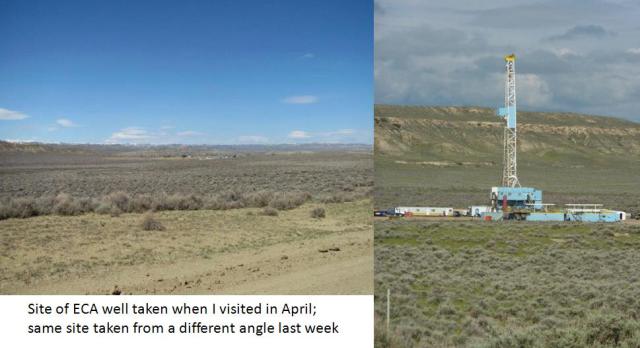
ECA is hard at work on the Belfry well, and — no surprise — they’re already “bringing the Bakken to the Beartooths”

Energy Corporation of America (ECA) began work last week on the well in Belfry recently permitted by the Montana Board of Oil and Gas Conservation (BOGC). A local resident reports, “They unloaded equipment on Wednesday and Thursday, and by Saturday we had a full city, including phone.” 

Belfry well_051714

Consistent with the company’s pledge to “bring the Bakken to the Beartooths, ” ECA is already engaging in questionable activity. The company is drawing water out of a gravel pit on a neighboring property, which, according to local residents, is not covered by ECA’s permit. The residents say they have been told by the Montana Department of Natural Resources Conservation that even though the pit is on private property, the water in the pit belongs to a common ditch and is the common property of area residents. Neighbors share this ditch, which is governed by a board of property owners. The board would have to give permission before the water could be used.

The residents plan to file a complaint today.

This behavior is consistent with everything we have learned about ECA. We know that they were serial polluters in Pennsylvania and West Virginia, with 66 inspections with violations, 90 separate violations, 55 enforcement actions, with fines totaling over $80,000 in Pennsylvania alone. We know that the company was sued in a class action lawsuit alleging they failed to pay royalties due landowners. 

At the very least the company is guilty of failing to deal with neighbors of the Belfry well in a straightforward way. Those who hoped ECA would be a “good neighbor” were dreaming. This kind of contentious behavior, where drillers ignore the concerns of local citizens, is apparently what John Mork meant when he promised to bring “the Bakken to the Beartooths.”

One note — trucks on site are from Larry Songer Trucking in Lewistown and Triple H Trucking out of Bridger.

If you’re new to this subject you might want to read these related blog posts:

ACTION UPDATE on 5/20/2014 at 10PM

A protest has been filed with the DNRC. Support the protest by contacting the head of the DNRC office in billings:

Kim Overcast
406-247-4422
kovercast@mt.gov

Please do it right away!

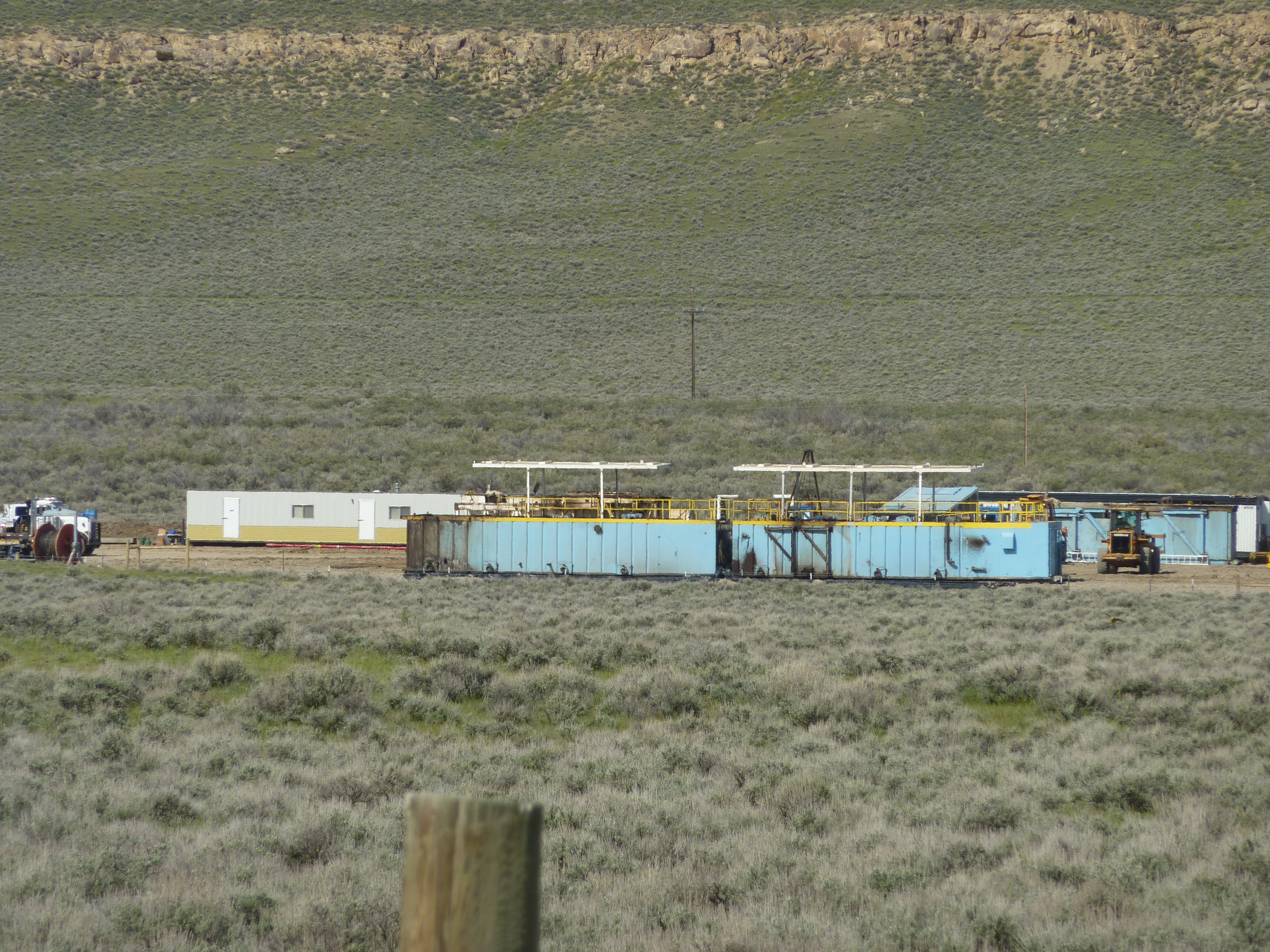
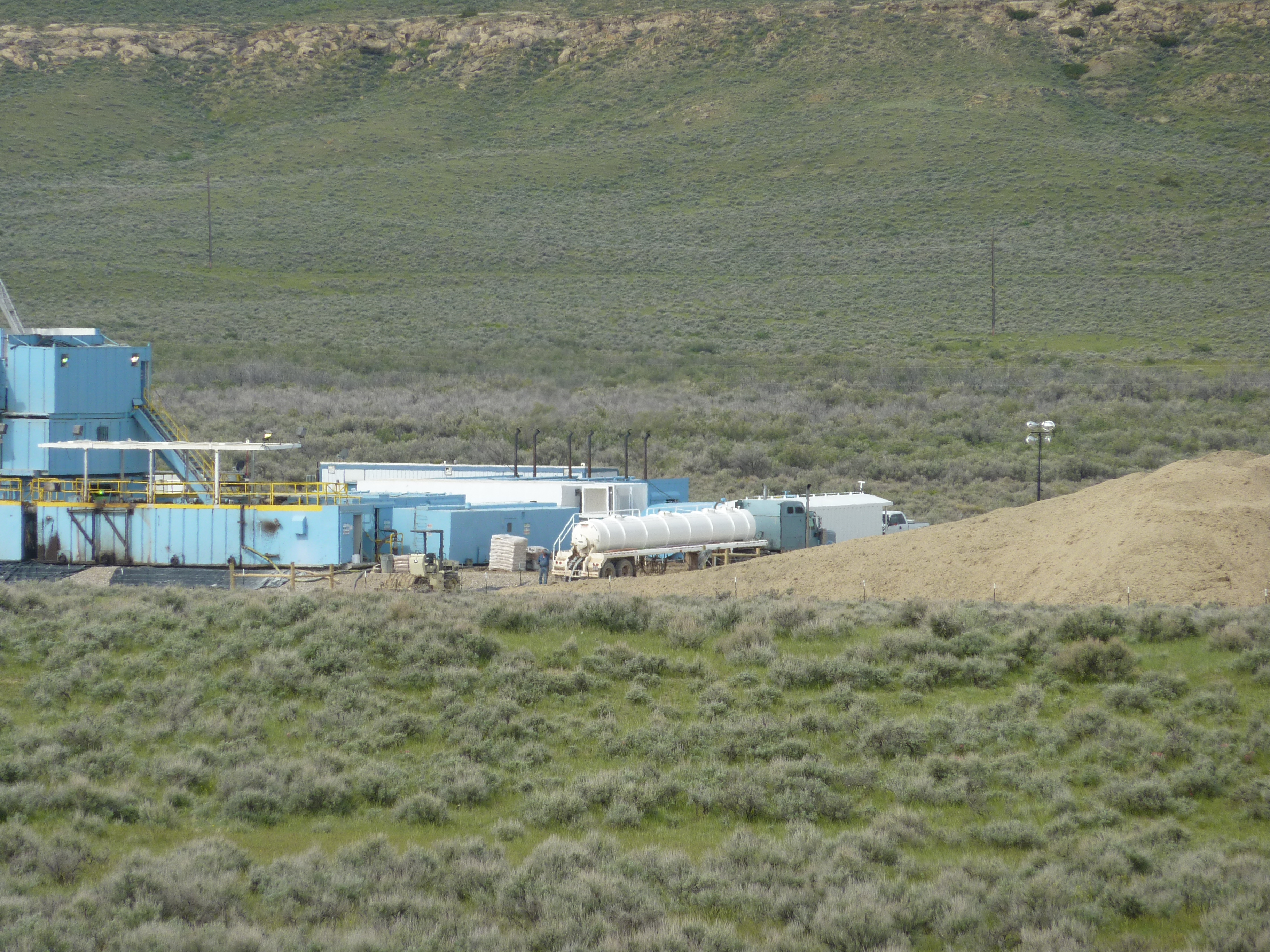
More photos taken in the last few days:

Oil pad construction
Well pad construction

Well pad construction

Tanker truck
Tanker truck

Oil Development 017

Posted in Community Organization, Politics and History | Tagged , , , , , , , , | 1 Comment

Last week we reported on the Halliburton Loophole to the Safe Drinking Water Act of 1974. It’s the law that Dick Cheney engineered in 2005 that enables the oil and gas industry to keep from telling us what chemicals they use in fracking fluid. Under the law, companies are able to claim that these chemicals are protected “trade secrets” that they don’t have to disclose.

It often happens that, as soon as I write a post, there’s a news item that amplifies my understanding of how much the world is tilted in favor of Big Oil. This one was no exception, and it’s pretty unbelievable.

If you follow the news about the Bakken, you probably noticed that there was a recent nasty spill near Tioga in northwestern North Dakota that spewed a toxic mist over nearby farms. The leak was plugged on Tuesday.

According to a news report, “the well sprayed mist and emitted hydrogen sulfide, prompting air-quality monitoring and road closures in the area near Tioga after it was discovered Friday. The spill was contained to the well site, according to the well owner, which said it was still assessing how much liquid leaked.” Nearby residents, who live as close as 1200 feet from the well, were advised “to shelter in their homes.”

An earlier spill near Tioga last fall

Some of the mist migrated off site. Levels of hydrogen sulfide, a potentially dangerous product of the natural gas that is usually burned off or captured at well sites, reached as high as 20 parts per million, according to Terry O’Clair, the state Health Department’s air quality director.

“We get concerned when it’s more than 10 parts per million,” O’Clair said, noting that levels of 100 parts per million can be deadly.

I’m sure the people “sheltering in their homes” appreciate your concern.

But here’s the thing that really got me about this story:

Alison Ritter, a public information officer with the Department of Mineral Resources, said the well is on confidential well status, which limits the amount of information her office can release to the public about the well for six months. The status is granted to entice exploration and protect oil companies from competitors.

So, in other words, the people who lived 1200 feet away and had a toxic mist sprayed over them don’t get to find out what toxins they have been exposed to for six months? To protect Emerald Oil’s trade secrets? And North Dakota feels it needs to grant this “protected status” to “entice exploration”?

Come on. North Dakota isn’t having any problems enticing exploration. Saying you need to protect the chemical content of fracking fluid to entice exploration is like saying you need to protect the identity of a teenaged girl’s perfume to entice her boyfriend to be interested in kissing her. It’s not really necessary. A company’s trade secrets protection ought to end when they start spewing toxic mist around the neighborhood.

Posted on by davidjkatz | 4 Comments

What’s wrong with the Montana Board of Oil and Gas Conservation

The Montana Board of Oil and Gas Conservation (BOGC) is not serving the needs of the people of the state and is in need of substantive reform.

The current BOGC model may have worked better back in history when mineral extraction was the center of the Montana economy and, for the most part, oil and gas drilling occurred away from where people live.

But fracking has changed all that. It has brought heavy industry into landowners’ back yards, and it threatens not only their land, water and air, but also the rural way of life in Montana’s small towns, farms and ranches and the property rights of landowners.

Let’s look at how the BOGC works:

Purpose of the BOGC
The primary mission of the BOGC is threefold:

  1. To prevent waste of oil & gas resources,
  2. To conserve oil & gas by encouraging maximum efficient recovery of the resource, and
  3. To protect the correlative rights of the mineral owners, i.e., the right of each owner to recover its fair share of the oil & gas underlying its lands.

That makes it pretty clear. The word “conservation” is not about conserving natural resources, but about conserving oil and gas, and protecting the rights of mineral holders.

Horizontal well, Richland County. Click to enlarge.

Horizontal well, Richland County. Click to enlarge.

However, the board “also seeks to prevent oil and gas operations from harming nearby land or underground resources.” It does this in a number of ways, including “establishing spacing units, issuing drilling permits, administering bonds (required to guarantee the eventual proper plugging of wells and restoration of the surface), classifying wells, and adopting rules,” and regulating injection wells.

When a company wants to drill a well, the oil & gas operator has to apply for a permit , providing specific data about the company and other required information. BOGC staff performs a technical review of the proposal, which also goes through a public notice and hearing process. Then, the BOGC can issue, modify, or deny the permit; regulate the volume and characteristics of the fluids to be injected; and impose operational requirements or limitations for the well.

Now this is more encouraging. The BOGC process calls for public engagement, and then issuance of a permit that can be modified based on the individual characteristics of the well, the land on which it is being drilled, the proximity of water sources, how close it is to private dwellings, and so on.

However, you have to question the structure of a system in which the agency designed to protect mineral interests is also charged with protecting surface interests. The two are often in conflict, as we have learned in our discussion of split estates, and so the wisdom of charging one agency with both tasks has to be questioned.

Composition of the board
Part of the problem is way the board is structured. According to its rules, the board consists of seven members, as follows:

  • Three members “shall be from the oil and gas industry, and have had at least 3 years’ experience in the production of oil and gas,”
  • Two of the members shall be landowners from oil producing areas of the state but not actively associated with the oil and gas industry.
    • one of these two owns both mineral and surface rights, and
    • one of these two owns surface rights only
  • Two at-large members, one of whom must be an attorney

All are appointed to four year terms by the governor. The first four are appointed when he/she takes office, and the other three are appointed two years later.

This structure is a problem. With three members coming from the oil and gas industry and one a mineral rights holder, you start with four votes from members who have a financial interest in the expansion of oil and gas drilling. If the governor is not careful in the appointment of the other three, there is a danger of a runaway board that acts only in the interest of the industry.

That is where we stand today.

Current board members
Current members, with city of residence, classification and date of term expiration:

Linda Nelson, Chair, BOGC

Linda Nelson, Chair, BOGC

Industry representatives
Wayne Smith, Valier, Vice Chair, 1/1/17
Jack King, Billings, 1/1/15
John Evans, Butte, 1/1/17

Land owners
Linda Nelson, Chair (with minerals), Medicine Lake, 1/1/17
Bret Smelser (without minerals), Sidney, 1/1/15

Public members
Ronald Efta (attorney), Wibaux, 1/1/15
Peggy Nerud, Circle, 1/1/17

How it works in reality
Now let’s look at an actual well permit as an example of how this works in real life.

In October, 2013 Energy Corporation of America CEO John Mork announced in Billings that his company planned to drill 50 wells along the Beartooth Front in Carbon and Stillwater Counties. He said that hydraulic fracturing technology made this drilling economically feasible.

The company filed a permit for its first exploratory well, in Belfry, and a public hearing was scheduled for December 10 at the BOGC offices in Billings.

According to the Billings Gazette, Northern Plains Resource Council members had hand-delivered, mailed and faxed notices of a protest to the permit “weeks in advance” of the hearing.

But the hearing was cancelled after the board’s attorney said that Carbon County Resource Council members had failed to file the final document, a “service list,” an official list of the parties they had served.

Bret Smelser

Bret Smelser

So, their board hearing was canceled and the permit was granted without a hearing by the board’s administrator.

Community members were particularly angered by board member Bret Smelser, who lectured them in what they felt was an arrogant way about the importance of oil and gas drilling to the state’s economy, and, as one community member reported, the need to “put up with a few inconveniences” to support US energy independence.

It’s worth pointing out that Smelser’s family business, Border Steel and Recycling, has thrived during the Bakken oil boom, expanding to to include three Montana locations in Glendive, Sidney and Plentywood plus one in Williston, ND. And that one of the “inconveniences” Smelser is willing to put up with was a non-functional sewage system caused by illegal waste dumping in Sidney, where Smelser was mayor at the time.

Lawsuit filed
Northern Plains Resource Council and Carbon County Resource Council quickly filed suit demanding the permit be revoked and a hearing held.

Charles Sangmeister Chair of the Stillwater Protective Association observed that, “This oil well is the beginning of what ECA says could be a large development in Carbon and Stillwater counties. We have many members whose lives and property will be directly affected by both this well and the others along the Beartooth Front and Bighorn Basin. That’s why we couldn’t stand for the BOGC to simply keep the public from testifying on this permit.”

We documented the concern about the introduction of fracking onto the Beartooth Front in this post, which looks in detail at how the local community would be impacted by the permitted well.

Bonnie Martinell, an organic farmer who lives near the well, spoke at the hearing

Bonnie Martinell, an organic farmer who lives near the well, spoke at the hearing

Public hearing
At the public hearing, several members of the public spoke and asked the board to acknowledge the environmental risks of using hydraulic fracking at the well site, where groundwater was positioned both above and below the shale belt through which ECA intends to drill. Witnesses also asked the board to consider the road dust and soil erosion. They asked that area water be tested throughout the project’s lifespan to assure the water supply wasn’t fouled.

Licensed geologist Mark Quarles provided expert testimony at the hearing. He presented several concerns with the permit as requested:

    • There is no stated plan for hydraulic fracturing, yet it is expected. Since there are many environmental risks associated with fracking, and because this well is located in a populated area, it makes sense to ask the permit to be modified to include a hydraulic fracturing plan. Such a plan should include such information as fracturing fluid makeup, source water options for millions of gallons of water, disposal plans to fracturing liquids and flowback, and use of production and associated waste pits.
    • Use of pits is antiquated, is not needed, and presents substantial risks. The BOGC should require that ECA use a closed loop system does not include a reserve pit or on-site evaporation and disposal of wastes. Further, calculations should be included to demonstrate that any in ground waste storage pits, if used, are designed to meet all emergency rainfall and snowmelt volumes, in addition to anticipated maximum waste volumes for the proposed vertical well and the horizontal well. Solid wastes should not be allowed to remain in the pits permanently because of the porous soils, shallow groundwater and widespread use of irrigation water that will still be used to grow crops.
    • There is no plan for management of exploration and production (E&P) waste associated with the well. The BOGC should require an amended Application for Permit to describe the plan for proper management of all of these associated E&P wastes and require closed loop systems.
    • Groundwater risks are not fully defined. The application misidentifies the locations and distance of water wells from the drilling site. There needs to be a new groundwater use map that illustrates the horizontal well component, and identifies all wells within a one-mile radius of any portion of the vertical and horizontal component, as well as any regional aquifers that might exist, and any springs.
    • ECA has a recent history of non-compliance drilling in Pennsylvania and West Virginia. This is something that has been well documented on this site, and is easily available in the public record. In Pennsylvania, ECA has been cited in 66 inspections, with 90 separate violations, and 55 enforcement actions. The violations have been for pit failures, methane migration from failed seals, unpermitted discharges to surface water, stream crossings without a permit, erosional control deficiencies, operational deficiencies, and failure to properly close sites.

The consultant made a number of recommendations for changes in design of the well, for industry best practices to be followed in well design, and for the use of more advanced technology than was being proposed at the site.

testifyWhat the BOGC did
As you read through the public and expert testimony, you can see that these are real property owners who have legitimate concerns and are asking for help from the state. They’re not trying to stop drilling; they’re trying to preserve their property, their water supplies, and their ability to make a living. They’re asking the BOGC to take action to protect Montana citizens, as they are empowered to do.

So what did the BOGC do? Well, they completely ignored all the public and expert input, and went ahead and approved the permit as submitted, without any discussion, by a 6-1 vote, with Peggy Nerud dissenting.

Tom Richmond, BOGC administrator at the time, said there was nothing exceptional about the Belfry well. “The ECA permit proposes drilling a wildcat well, much like the other 35,000 wildcat wells drilled in Montana that have produced oil and gas over the years,” Richmond said.

“There’s nothing special with what’s proposed here that would require special conditions or stipulations.”

What Richmond didn’t say is that, according to Montana regulations adopted in 2011, when ECA decides to fracture the well, which their CEO publicly announced they planned to do and which the expert testimony said is certain, they need to provide notification to the BOGC only 48 hours in advance, with no public notification required.

In other words, the BOGC treated this like any other well permit, knowing that public concerns about hydraulic fracturing are legitimate and that fracking is certain to occur.

Members of the public later called the experience “exasperating.” The BOGC board didn’t even make a show of honoring public input. The body language of the members, which included walking out during testimony, turning away from the presenters and eye rolling, was exaggerated and offensive.

What’s wrong with the Montana Board of Oil and Gas Conservation
What’s wrong with the BOGC is that it is the fox guarding the henhouse. The board cannot serve two conflicting interests. Its primary mission to maximize the profits of the oil and gas industry and mineral rights holders. If it does that, the interests of surface rights holders to protect their property values and conserve water cannot be supported.

The BOGC does not have the resources to protect the safety of citizens of Montana even if it had the inclination. Right now the BOGC has only seven inspectors for the entire state — two in Billings, two in Shelby, and one each in Miles City, Sidney and Plentywood. According to the a study done by the Western Organization of Resource Councils (WORC), this number has grown by only one inspector since 1999. while the number of active wells in Montana has grown by 54% during that time.

Enforcement is also a problem. While the number of violations issued by Montana state inspectors more than doubled from 2004-2011, there’s no teeth in it. According to the WORC study, there were only 26 fines issued in the state over the four-year period from 2007-2010, with total fines issued of $18,950 over those four years.

By comparison, keep in mind that ECA alone received 90 citations in Pennsylvania with fines over $80,000.

The BOGC is in desperate need of reform to protect Montana citizens from runaway oil and gas development.

Reform would need to start with changing the composition of this state agency. It is just bad government to have industry representatives on a state board, and to have them represent 43% of the total votes! This truly is the fox guarding the henhouse. A government agency should not be run by the industry it is charged with regulating. A seven-member board should balance pro-business interests with pro-community and environmental interests.

A reformed BOGC would also be accountable to the public for hearings, record keeping and communication. Right now the BOGC web site is pathetic. There is little information there beyond an annual report for the year 2012. Like Pennsylvania and West Virginia, there should be a searchable database of all wells, inspections, violations, and penalties. The public should not have to sue to get a hearing on a well that will have a dramatic impact on a local community.

It’s time for Montana to grow up. The current oil boom has transformed the eastern part of the state, and it’s not a pretty picture. Now the industry is knocking on the door in southern Montana, the Bighorn Basin, and undoubtedly other areas. The state has left communities to fend for themselves against an industry with unlimited resources that controls the permitting, inspection and enforcement of standards through the BOGC.

What should local communities do?
It’s time for local community government to wake up. The BLM and BOGC quite simply are not going to protect Montana’s citizens and way of life. We have seen local governments make thecommon mistake of expecting someone else to protect them all over the country — in Pennsylvania, West Virginia, Texas, Colorado, Wyoming, North Dakota and other parts of Montana. Our watersheds are fragile. Contamination could be disastrous.

Montanans are understandably wary of government getting unnecessarily involved in their lives. But this a case of needing local government to take action to protect local water and landholder rights.

The BOGC needs complete reform, but this is going to take a long time. Local communities need to understand that there is a serial polluter on our doorstep, and nobody in Washington or Helena or Billings is looking out for us. If we want to protect ourselves, local government agencies need to act now. It’s the only way to protect our rights, our water and our way of life.

Posted in Community Organization, Politics and History, Fracking Information | Tagged , , , , , , , , , , , , , , , , , , , , , , , | 48 Comments

A personal story: Steve and Jacki Schilke, Williston Basin, North Dakota

“I have gone from living in an agricultural community to living in an industrial area.”

                              -Jacki Schilke

Telling personal stories
The oil and gas boom has been underway for a number of years in many locations across North America, and there are now a lot of stories about individuals and families whose lives have been personally affected. This post is part of a regular weekly series of those stories on this blog to help you envision what could happen if drilling expands along the Beartooth Front, and what is possible to keep that from happening.

Today’s story clearly illustrates the powerlessness of an individual property owner in the face of oil and gas drilling. The lack of response from the oil company, state agencies in North Dakota, and the EPA in the face of the Schilkes’ problems is a story that we’ve seen repeated all over the country. We know there are health impacts from drilling, but we aren’t clear on what they are, and we don’t even know what chemicals the drillers are using. The burden of proof is on the landowner, and the standards of proof are unclear.

You can see other personal stories in this series by clicking here. Note that you can find more by clicking “Older Posts” at the bottom of the page.

 Steve and Jacki Schilke, Williston Basin, North Dakota
This story was first reported in January, 2012 by Deena Winter, then working with  the Great Plains Examiner. Deena currently works for Nebraska Watchdog.

Steve and Jacki Schilke spent six years searching for their dream home, a 160-acre ranch here in northwestern North Dakota. It wasn’t much to see – an old farmhouse, a few rundown outbuildings and a slice of prairie. But for the Schilkes, it was a chance to return to country life.

“We came across this place and it was a dream come true,” said Jacki, remembering the day in 2006 when they bought the spread. “We didn’t ask for much. All we wanted was a little place for our cattle.”

Jackie Schilke
Jackie Schilke

But it wasn’t long before noisy drilling rigs, clogged roads and the chaos of the oil boom found the Schilkes and their piece of paradise.

Steve and Jacki Schilke understand oil: Jacki said she worked on drilling rigs in oilfields for seven years in the 1980s and Steve spent most of his life working in the oil business in Alaska and Canada. “There was no doubt in my mind that this was safe,” she said. “I’m familiar with the process from beginning to end.”

Animals get sick
Until, one by one, their animals started getting sick after an oil well was drilled on a hill about a half-mile away from their ranch.

First, Oasis Petroleum wanted to drill a well across the road from the Schilkes’ farm on a neighbor’s property. When workers started, they discovered the water level was too high, so they approached the Schilkes.

The Schilkes don’t own the mineral rights below their ranch, but were offered $10,000 to put a well pad on their property. Still, they declined.

“I have 160 acres and cattle – we don’t have a square inch to spare and they want four, five acres,” Jacki said.

So Oasis went to the neighbor to the west, just across the property line. Not long after the oil company started drilling in the summer of 2010, the Schilke’s 5-year-old dog, Blue, got sick and died. A few days after the wells were fracked, Jacki walked outside to work on a corral, and her lungs started burning. She ended up in an emergency room. She says tests showed high arsenic and germanium levels in her blood and urine.

One of Jacki’s four Yorkies fell ill – coughing up “yellow, foamy stuff” and producing diarrhea with blood. The veterinarian said it was an intestinal infection.

“The vet thought he got poisoned,” Jacki said. “We don’t have any poison on the place – not even mouse poison.”

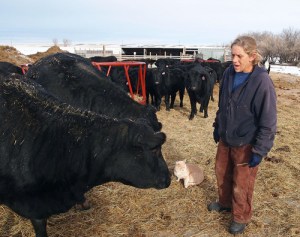
After that, her cows, a pet goat, and a bull “went lame.” One of the cows died. Some of the animals went blind.

Schilke cattle

This cow on the Schilkes’ ranch  lost most of its tail, one of many ailments that afflicted her cattle.    Click to enlarge.

Cattle began limping, with swollen legs and infections. Cows quit producing milk for their calves, they lost from 60 to 80 pounds in a week and their tails mysteriously dropped off. Eventually, five animals died.

“My vet was getting sick of us,” she said. “We were there constantly. They couldn’t figure it out.”

Jacki gets sick
Jacki began noticing that she felt sick when she went outside – she’d get lightheaded, dizzy and have trouble breathing. She saw local doctors for almost a year and they couldn’t pinpoint her problem.

schilke1The normally spry 53-year-old suddenly couldn’t walk without a cane, and couldn’t drive or breathe easily. She hasn’t worked for a year.

“I was so sick last winter I thought I was gonna die,” she said.

She contacted the U.S. Environmental Protection Agency in Denver, and they referred her to the state health department. But the health department employee told her it was “probably just diesel fumes.” But she didn’t smell diesel.

“There was no smell to it, that was the scary part,” she said.

Water like 7 Up
One day she walked outside to pump water for her cattle, and the water came out bubbling.

“It was just like 7 Up. I stood there and I looked at it and I thought, ‘What the hell?’”

She filled up a five-gallon bucket of water and watched it bubble. She says it continued to bubble for three days. She took the water to Williston and had it tested in a lab, which found a high number of bicarbonates, total dissolved solids, sulfates and sodium.
Schilke3The ranch had good well water – hard, rusty North Dakota groundwater – when they moved in. Now, sometimes the kitchen faucet spews black water, and she showed a visitor a jar as proof. Jacki’s doctor recommended the Schilkes not use the water anymore, so they go to a Laundromat 50 miles away and shower at the homes of friends in town. They haul drinking water from town in plastic jugs.

Kris Roberts, from the state water division, is skeptical of claims that water wells can be contaminated by oil activity. Roberts says the much-publicized natural gas fracking problems in Pennsylvania are primarily related to disposal of flowback water in municipal sewage systems. And despite many press reports indicating natural gas fracking has contaminated water wells, he says, “I’m going to keep an open mind on that until we see some good scientific papers showing it.”

Asked whether it’s possible that fracking could contaminate someone’s water, he conceded that it was possible. But then he continued, “that’s not happening.”

Roberts said that he and other staffers have visited the Schilke ranch, and so far, they’ve not found any environmental link to the Schilkes’ problems.

He said water samples showed no link to oilfield activities, and air tests only showed “ammonia-like compounds” inside her house and in one of the outbuildings. He said the only extreme readings came from cracks in the walls of her basement. State employees have covered a square mile with the instrument that checks air quality, he said, and detected no oilfield odors.

A very different version of events
Jacki’s version of events differs sharply: She says a state worker tested the air with a handheld device he had never used before and didn’t know how to calibrate. She said he stuck it in a manure pile at one point and couldn’t get it to go off.
The Schilkes' property

The Schilkes’ property

Jacki says her own air quality tests showed benzene, methane, chloroform, butane, propane, toluene and zylene. Some of those chemicals are found in cigarettes, vehicles with combustion engines, oil wells and pipelines. Her water tests found magnesium, maganese, boron and strontium and sulfates.

Roberts says Jacki has never sent him the results of her tests. “I’ve done as much as I can,” Roberts said.

Finally, Jacki saw a glimmer of hope when an EPA toxicologist said that based on her medical records and blood tests, it’s likely an air quality problem. However, the EPA official said, North Dakota has jurisdiction. The EPA suggested Jacki call a lawyer.

So she did hire a lawyer and began to work on a strategy for leaving town.

Jacki now leaves her windows open year-round – no matter how far below zero the temperature drops – and bought a carbon monoxide detector and explosive gas alarm. She says if she closes her windows, the monitors chirp.

“They chirped for nine days straight in the winter when it was 20 below,” she said.

She’s spent $3,800 on water tests and nearly $9,000 on air tests. She has taken two trips to see a Detroit doctor and one at Mayo Clinic in Minnesota. She figures she’s spent almost $30,000 total on tests and doctors in the past year.

She called the owner of the oil well, Oasis Petroleum, and was told her problems were probably caused by farm chemicals. She is appalled that the oil company blames the farmers.

Oasis Petroleum representatives did not respond to repeated requests for comment.

Dale Henry, the expert on fracking and cementing, said oil companies always take that position. “They’re going to defend their position from the very start,” he said.

The Schilkes and Oasis couldn’t even agree on basic facts when a heater treater, which separates oil, water and solids, blew out at the well on Dec. 30, 2010. Oasis initially estimated one gallon of fluid from the flare pit was released. Jacki said it was much more than that.

Strange things keep happening at the Schilkes’ farm. The creek didn’t freeze, despite frigid North Dakota temperatures and some days it bubbled with warm water. Another day it was covered with white foam.

She believes the cows got sick from something in the creek, so the Schilkes fenced it off and trained the cows to drink the well water.

According to state drilling records, when the Oasis well was fracked, about 4.7 million pounds of “frac sand” were detonated underground to open up cracks and allow the oil to flow. The oil industry says this “frac sand” is 90 percent water, 9.5 percent sand and .5 percent chemicals the industry refuses to disclose.

Drilling problems up the hill
State records show that when the well up the hill from Schilkes was being drilled, drillers ran into circulation problems 102 to 158 feet below the surface.

Henry said the records indicate the drillers hit an area with high permeability and poor porosity.

“You already know from drilling the hole you’ve got problems at that depth,” he said. “When you run the casing and get ready to do cement, if those problems already exist, you better try to take care of them because the same problem will (occur) when you put cement (down). The possibility of losing way more fluid is even higher.”

Henry thinks that’s how the Schilkes’ water may have been contaminated.

Erik Schlenker-Goodrich, director of the climate and energy program at Western Environmental Law Center, said the pace of an oil boom often outpaces the scientific understanding of the environmental impacts.

“A lot of times it’s not well known precisely what the impacts are, but the production goes ahead anyway,” Schlenker-Goodrich said.

Today, wells, drilling rigs, compressor stations, water stations and trucks carrying oil and water pock the prairie in the oil patch around Williston. Farmland is crisscrossed with pipelines to move oil.

“I have gone from living in an agricultural community to living in an industrial area,” Jacki said. Now, two oil pumpers bob up and down relentlessly on the hill and another oil well was recently fracked to the east of their home. Trucks regularly rumble by on the gravel roads, which crumble in places, strained by the weight, and kicking dust into the Schilke farmyard.

That’s also how Schlenker-Goodrich describes an oil patch: like a big factory spread across thousands of acres.

Steve Schilke, a burly man of fewer words than his wife, says the Bakken boom has just been “too much, too fast,” without enough supervision and regulation.

Steve and Jacki don’t intend to wait around for the state or science to catch up with the boom: they have been trying to move to Montana for two years, but have had trouble selling their property. They want to get out of the Bakken and move to an area where there is no oil and gas activity.

Posted in Personal stories | Tagged , , , , , , , | 6 Comments

According to a Congressional investigation, the federal government has failed to inspect thousands of oil and gas wells it considers potentially high risks for water contamination and other environmental damage,

This is another case of the oil and gas industry getting way out ahead of the ability of federal and state agencies to control it. This time the blame falls on the Bureau of Land Management (BLM), which, according to the report, continues to have policies on the books based on outdated science and incomplete monitoring data.

The audit also said the BLM did not coordinate effectively with state regulators in New Mexico, North Dakota, Oklahoma and Utah.

The problem, according to the report, is that the agency “cannot accurately and efficiently identify whether federal and Indian resources are properly protected or that federal and Indian resources are at risk of being extracted without agency approval.”

Part of the problem is limited money and staff, according to the report, which covered 14 states, not including Montana.

States do not monitor wells effectively
In March we posted the results of a report by Earthworks Action that said:

  • Every year hundreds of thousands of oil and gas wells – 53 to 91% of wells in the states studied (close to 350,000 active wells in the six states, including Pennsylvania) are operating with no inspections to determine whether they are in compliance with state rules.
  • When inspections do uncover rule violations, the violations often are not formally recorded – and the decision whether or not to record a violation is often left to the discretion of the individual inspector.
  • When violations are recorded, they result in few penalties.
  • When penalties are assessed, they are minor. They provide little incentive for companies to stop the offense.

One example given in the report was that in Pennsylvania in 2010, 91% of wells went uninspected. This means, of course, that the disturbing Pennsylvania safety record of Energy Corporation of America, which includes 66 inspections with violations, 90 separate violations, and 55 enforcement actions, with fines totaling over $80,000, is vastly understated. They’re serial polluters, plain and simple.

While Montana isn’t included in the study, it won’t be mush different.The state has a total of only seven field inspectors: three in Sidney, two in Billings, and two in Shelby.

We need to act locally
We make this point over and over with regard to drilling inspection in Stillwater and Carbon Counties, but it needs to be repeated:

  • As today’s report shows, the BLM will not do adequate inspections of wells on their land
  • Montana doesn’t have adequate resources to do inspections

Therefore, if we value our water and our land, we are going to have to manage oil and gas locally to make sure that our water doesn’t get contaminated, our air fouled, our roads destroyed. The oil and gas industry will not regulate itself, nor will it be controlled by Washington or Helena. If we care about our land we need to protect our rights by acting locally.

A note: I’ve changed the header photo on the blog to reflect the beauty of the Beartooth Front in spring. Thanks to Bob and Lyn Hilten, who take wonderful photographs.

Posted on by davidjkatz | 3 Comments

Blog update: Search bar added

blog2In my project to organize the material on the blog I’ve added a search bar in the upper right corner of the page. You can use this to find posts on any topic. Enter a key word, a phrase, or the title of the post and you’ll get a list of relevant posts..

Thanks as always for your support, and thanks to Bob Hilten for the photograph below.

beartooth8


Posted in Uncategorized | Tagged , , | 1 Comment

It was pretty big news last month when Baker Hughes Corporation, the large Houston-based ($22 billion in annual revenues in 2013) oilfield services company, said it is ready to divulge all the chemicals it uses in hydraulic fracturing.

Baker Hughes Corporate Headquarters

In a statement posted on its website, Baker Hughes says it “believes it is possible to disclose 100 percent of the chemical ingredients we use in hydraulic fracturing fluids without compromising our formulations — a balance that increases public trust while encouraging commercial innovation.”

This seems like pretty big news. One of the most powerful ways in which the oil and gas industry has made the fracking process unsafe is by refusing to disclose the chemicals used in the fracturing process. The industry claims these chemicals are “trade secrets” that they need to protect in order to preserve the competitive structure of the oil and gas industry.

Because we don’t know what chemicals are used, it is impossible for landowners to know what tests to conduct to determine the purity of their well water. If you don’t know what chemicals are used in the fracking process, you don’t know whether your water has been tainted. And, not coincidentally, you can’t prove in court that fracking was responsible for any contamination.

Background
The Safe Drinking Water Act (SDWA) of 1974 was established to protect America’s drinking water. It authorizes the EPA to set national health-based standards for drinking water to protect against both naturally-occurring and man-made contaminants. The EPA, states, and water systems then work together to make sure that these standards are met.

The Energy Policy Act of 2005 exempted hydraulic fracturing from SDWA oversight,  leaving drinking water sources in the 34 oil and gas producing states unprotected from the toxic chemicals used during fracking. Also known as the Halliburton Loophole, this law turns over control of water quality to the oil and gas companies, and this is why they do not have to tell us what chemicals they use in the fracking process.

Dick Cheney It's his fault
Dick Cheney
It’s his fault

How did this happen? No surprise — at the dawn of the modern fracking era, Vice President Cheney chaired Pres­i­dent Bush’s Energy Pol­icy Task Force, which rec­om­mended frack­ing be excluded from the SDWA. Congress dutifully followed along.

It is now left to the states to regulate chemical disclosure.

FracFocus shortcomings
The new disclosures, the company said, would eliminate any trade secret claims about its reports to FracFocus, an industry-backed database that some states use as a clearinghouse for fracturing-fluid data.

It contains data on more than 68,000 U.S. oil and gas well sites.

Last year, a Harvard University study said FracFocus has “serious flaws” because it allows oil producers to withhold information on the fracturing fluids they use, by asserting trade secret exemptions.

And last month, an Energy Department advisory board of engineers and environmentalists concluded FracFocus disclosures hold back too much information, with companies invoking trade-secret exemptions on more than 84 percent of all the registered wells. In Texas, the advisory board noted, more than 5,500 of the 6,400 disclosures invoked a trade secret exemption between last June and March.

Baker Hughes says its new data format will calm those concerns, as it will include in its newly formatted reports a complete analysis of its fluid mixtures, down to tiny trace elements of ammonium hydroxide.

A start, but don’t get too excited
This is certainly a step in the right direction, but the battle for chemical disclosure is far from over. It’s not clear how much information Baker Hughes is actually going to disclose. A sentence buried in the company’s announcement makes it clear the industry isn’t going to be reformed overnight. Baker Hughes said it will provide complete lists of the products and chemical ingredients used in frack fluids “where accepted by our customers and relevant governmental authorities.”

In other words, if their customers, who are drilling companies, and individual states, which are often in the pockets of the oil and gas industry, don’t want them to disclose, they won’t.

The bottom line here is that if we wait for the oil and gas industry to regulate itself, we’re all going to be drinking a lot of strontium.

What needs to happen to solve the problem of non-disclosure is the Halliburton Loophole should be repealed. There’s no chance of tha in the near term, so we need Montana to follow the lead of Wyoming, which is inching its way toward full disclosure after decades of being poisoned by oil and gas.

Related:
Oil and Gas Industry exempted from most major environmental legislation
More on federal loopholes: How the Clean Air Act enables polluters in Wyoming
Hydraulic fracturing and water contamination
The four ways hydraulic fracturing contaminates water
Act now to protect your water
A report from the water testing seminar in Lewistown, MT
A personal story: John Fenton, Pavillion, Wyoming
A personal story: Linda Monson, Yellowstone River southwest of Williston, North Dakota


Posted on by davidjkatz | 2 Comments

How a small town changed fracking in New York state, a powerful video

Dryden: The small town that changed the fracking game

Status of legal activity related to fracking in New York (click to enlarge)
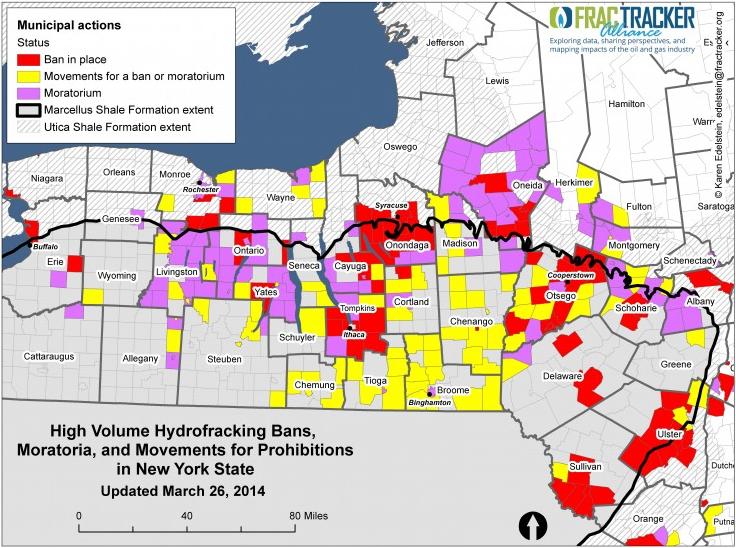
Status of bans/moratoria in New York      (click to enlarge)

Yesterday we told the personal story of Helen Slottje, who took on the oil and gas industry in New York, and whose work has led to local action to control fracking throughout the state. Today’s video shows the impact of Helen’s work in New York.

It’s a powerful video, in which real people talk about how drilling has affected them, their experience of fighting for their property rights, and their sense of empowerment at being able to control their own destiny.

I strongly recommend you take the 11 minutes to watch this. It shows what local communities can do when they unite to defend their rights and their way of life.

Posted in Community Organization, Politics and History | Tagged , , , , | 1 Comment